
Don't Fence Me In

Album: Hollywood Canteen (1944)
Charted: 1
Play Video

Songfacts®:

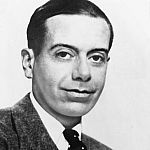
  • Movie audiences first heard this performed by Roy Rogers in the 1944 Warner Bros. musical Hollywood Canteen, just two months after Kate Smith introduced it on her popular radio program. But it was written by Cole Porter ten years earlier for a 20th Century Fox musical, Adios, Argentina, that never got made.

    Porter found inspiration in the western poem Open Range by the Montana engineer Robert Fletcher, who sold him the rights in 1934. He spun the ode to the western terrain into a cowboy song about the commitment-phobic Wildcat Kelly, who desperately wants to avoid being fenced in - whether by jail or by marriage.
  • The Bing Crosby/Andrews Sisters version topped the charts for eight weeks in 1944-45.
  • Porter was given sole credit despite wanting Fletcher to be listed as co-writer. He later re-negotiated to have the poet's name listed on future publications and voluntarily gave him a portion of the royalties.
  • Roy Rogers' version became a beloved rendition, and the title was used for one of his most popular Western films in 1945 (which included another performance of the song). The clip of him singing the tune in Hollywood Canteen was also used in the 1946 Cole Porter biopic Night and Day.
  • The land-loving cowboy is not always called Wildcat Kelly, as written by Porter. Rogers sang about "Wildcat Willy," while versions from Frank Sinatra, Bing Crosby, and others stick to the first-person narrative and bypass any mention of a cowboy.
  • This was also covered by Ella Fitzgerald, Bob Hope, Gene Autry, Eddy Arnold, Hoyt Axton, Frankie Laine, and Willie Nelson (with Leon Russell). David Byrne covered it for the 1990 Cole Porter tribute album Red Hot + Blue.
  • The hit 1945 cover from Billy Williams and the Sammy Kaye Orchestra was prominently featured on Pretty Little Liars in 2015. During the climax of the Season 5 finale, "Welcome to the Dollhouse," the girls are literally fenced in by their captor while the song plays.
  • The Killers recorded this in 2013 for a Nevada tourism ad campaign.
  • This was parodied in the 2002 Simpsons episode "The Lastest Gun in the West." Bart, Lisa, and Ralph are singing it in Apu's convenience store. When Homer wants to use the bathroom, this exchange happens to the tune of "Don't Fence Me In":

    Apu: [singing] "Sir you cannot pee unless you are an employee."
    Homer: [singing] "Can't keep it in."
  • Robert Fletcher included his original "Open Range" poem in his 1936 collection Corral Dust.
  • Back when Clint Eastwood was known as the star of the Western TV series Rawhide, he recorded this song for the 1963 album Rawhide's Clint Eastwood Sings Cowboy Favorites.
  • Bob Hope sang this during his 1978 appearance on The Muppet Show. The bit also marked the debut of Paul Revere, a talking horse that wears New Balance sneakers and houses a tape deck in his saddle.

Comments

Be the first to comment...

Editor's Picks

Muhammad Ali: His Musical Legacy and the Songs he Inspired

Muhammad Ali: His Musical Legacy and the Songs he InspiredSong Writing

Before he was the champ, Ali released an album called I Am The Greatest!, but his musical influence is best heard in the songs he inspired.

Michael Sweet of Stryper

Michael Sweet of StryperSongwriter Interviews

Find out how God and glam metal go together from the Stryper frontman.

Devo

DevoSongwriter Interviews

Devo founders Mark Mothersbaugh and Jerry Casale take us into their world of subversive performance art. They may be right about the De-Evoloution thing.

Dennis DeYoung

Dennis DeYoungSongwriter Interviews

Dennis DeYoung explains why "Mr. Roboto" is the defining Styx song, and what the "gathering of angels" represents in "Come Sail Away."

Tom Bailey of Thompson Twins

Tom Bailey of Thompson TwinsSongwriter Interviews

Tom stopped performing Thompson Twins songs in 1987, in part because of their personal nature: "Hold Me Now" came after an argument with his bandmate/girlfriend Alannah Currie.

Evolution Of The Prince Symbol

Evolution Of The Prince SymbolSong Writing

The evolution of the symbol that was Prince's name from 1993-2000.