
The Coast

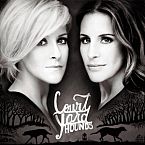
Album: Court Yard Hounds (2010)
Play Video

Songfacts®:

  • This is the lead single from is the self-titled debut album by American country duo the Court Yard Hounds, who were founded as a side project of the Dixie Chicks by sisters Emily Robison and Martie Maguire. The record was mainly recorded in Maguire's home studio in Austin.
  • Robison explained in press materials why they recorded the album. "We had been on hiatus from The Dixie Chicks for about a year, I was getting very restless and needed to be creative for my own sanity. And at the same time I was going through my divorce so it was very fertile ground for writing."
    Maguire added: "Emily was just writing and writing all of these deeply personal and truly beautiful songs. She was initially going to pitch them to other artists and I kept telling her no, no, you have to save that for you. It's too good and too personal."
    So Robison held onto the songs, thinking perhaps they could be new material for The Dixie Chicks. Eventually the sisters realized that The Dixie Chicks hiatus would last longer than originally anticipated, and they decided to record the songs together as The Court Yard Hounds.
  • This song celebrates the south coast of Texas. Robison explained to The Boot: "The inspiration comes from he phenomenon of people in South Texas when -- on spring break or the weekend -- they say, 'I'm going down to the coast,' our coast at the Gulf. It just seems like a destination for a lot of people hanging out there, and the culture down there seems very relaxed. A lot of my friends go down there and my ex took me down there a lot with the kids. The song came fairly quickly to me. I woke up one morning and I heard the melody in my head, and I went and wrote it in about an hour -- which is very not like me. It usually takes me a few weeks to finish a song. So it was just so clear to me, it was more of painting a picture of this place. Everyone is familiar with the East coast and the West coast, but not so much the Texas coast."
  • Robison explained to The Boot why the song has a Californian coast feel to it. She said: "I wanted it to be laid back and I heard fiddle on it; I heard Martie's instrumentation on it. I don't want to make it more than it is. To me, it's just a portrait of a place. It's easy and it's a comfortable place to be, and I wanted to write a song about that."
  • Robison and Maguire named Court Yard Hounds after The Courtyard Hound, a novel within the 2008 David Benioff novel City of Thieves. "I wanted a well-worn name, one that sounded like it had been around for a while," Robison told Billboard magazine. "There's an excerpt about talent and how it's a fanatical mistress, how it can be with you at one point and then after a while it can leave you. It's very relevant for our own lives as far as just taking advantage of when you are inspired and not letting the time pass you."

Comments

Be the first to comment...

Editor's Picks

Little Big Town

Little Big TownSongwriter Interviews

"When seeds that you sow grow by the wicked moon/Be sure your sins will find you out/Your past will hunt you down and turn to tell on you."

Millie Jackson

Millie JacksonSongwriter Interviews

Outrageously gifted and just plain outrageous, Millie is an R&B and Rap innovator.

Don Dokken

Don DokkenSongwriter Interviews

Dokken frontman Don Dokken explains what broke up the band at the height of their success in the late '80s, and talks about the botched surgery that paralyzed his right arm.

Martyn Ware of Heaven 17

Martyn Ware of Heaven 17Songwriter Interviews

Martyn talks about producing Tina Turner, some Heaven 17 hits, and his work with the British Electric Foundation.

Sending Out An SOS - Distress Signals In Songs

Sending Out An SOS - Distress Signals In SongsSong Writing

Songs where something goes horribly wrong (literally or metaphorically), and help is needed right away.

John Lee Hooker

John Lee HookerSongwriter Interviews

Into the vaults for Bruce Pollock's 1984 conversation with the esteemed bluesman. Hooker talks about transforming a Tony Bennett classic and why you don't have to be sad and lonely to write the blues.