My Sacrifice

Album: Weathered (2001)
Charted: 18 4
Play Video

Songfacts®:

  • Creed lead singer Scott Stapp told Kerrang! that "My Sacrifice" is about "coming out of the throes of a dark period in your life, whether that be a dark depression or a period of substance abuse or alcoholism, and then reconnecting with yourself."

    His struggles with addiction and mental health started around 1998 when Creed's debut album, My Own Prison, was taking off and he was suddenly in the public eye. When the band released "My Sacrifice" in 2001, they were more popular than ever but Stapp's addictions were also more acute. The song is hopeful, basically a conversation with his better self as he finds his courage:

    It feels so good to reunite
    Within yourself and within your mind


    Stapp needed a lot more help, though, and in 2004 his addictions and volatile behavior led to the band's breakup. The returned in 2009 but again parted ways in 2012, with Stapp still having problems. He finally got sober and found proper treatment in 2015 after learning he had bipolar disorder.

    "I had tried to get better alone for so many years, and I would have times when I would come back and hold on for a period of months, but then I'd fall again," he explained.
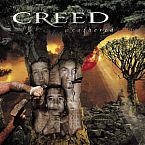
  • "My Sacrifice" was the first single from Creed's third album, Weathered. Reaction was split: Fans were happy to have more Creed; everyone else thought, Not more Creed!

    You see, their music was everywhere in 1999 and 2000 because their 1997 debut album, My Own Prison, took a year or so to find an audience, and their next album, Human Clay was issued in 1999 and was loaded with hits that kept them on the radio well into 2000. By the end of that year, it felt like Creed were being foisted on us by the media elite. The thing is, Creed made it on their merit and were simply victims of their own success. That first album they made in a home studio on the cheap and distributed on their own, taking copies to record stores and radio stations. A station in Tallahassee (where they formed) put "My Own Prison" into rotation, the album started selling, and soon they had a record deal.

    So when "My Sacrifice" started getting airplay at the end of 2001, many of us were burned out on Creed and worried another musical onslaught was coming. The song did well, as did the next single, "One Last Breath." After that, it wasn't until 2009 that another Creed song charted on the Hot 100.
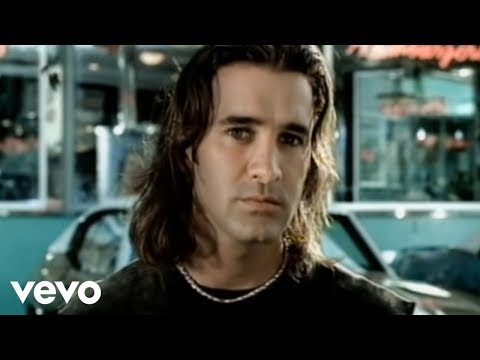
  • Creed made a lot of interesting videos with very creative directors. "My Sacrifice" was directed by David Meyers. It takes place on a flooded city street where Scott Stapp is in a rowboat and lots of things are happening around him. He reaches into the water and pulls his doppelgänger into the boat, representing him saving himself.
  • TikTok users are fond of turning the song's opening line, "Hello my friend we meet again," into memes.

Comments

Be the first to comment...

Editor's Picks

Graham Nash

Graham NashSongwriter Interviews

Graham Nash tells the stories behind some of his famous songs and photos, and is asked about "yacht rock" for the first time.

Ralph Casale  - Session Pro

Ralph Casale - Session ProSongwriter Interviews

A top New York studio musician, Ralph played guitar on many '60s hits, including "Lightnin' Strikes," "A Lover's Concerto" and "I Am A Rock."

Rob Halford of Judas Priest

Rob Halford of Judas PriestSongwriter Interviews

Rob Halford dives into some of his Judas Priest lyrics, talking about his most personal songs and the message behind "You've Got Another Thing Comin'."

Corey Hart

Corey HartSongwriter Interviews

The Canadian superstar talks about his sudden rise to fame, and tells the stories behind his hits "Sunglasses At Night," "Boy In The Box" and "Never Surrender."

Incongruent Opening Acts

Incongruent Opening ActsSong Writing

Here's what happens when an opening act is really out of place with the headliner, like when Beastie Boys opened for Madonna.

Edwin McCain

Edwin McCainSongwriter Interviews

"I'll Be" was what Edwin called his "Hail Mary" song. He says it proves "intention of the songwriter is 180 degrees from potential interpretation by an audience."