"Susie Q," which sometimes shows up as "Suzie Q" or "Susie-Q," was written and originally recorded by the rockabilly singer Dale Hawkins in 1956.
His version hit #27 in the US a year later, and although it wasn't a big hit, it was a musically inventive and very influential song that got the attention of Creedence Clearwater Revival leader John Fogerty, who had the band cover it. Their rendition, released in 1968, went to #11 and remains the most popular version of the song.
This was Creedence Clearwater Revival's first single (not counting "
Porterville," which was released when the band was known as The Golliwogs). They went on to become one of the biggest bands of the late '60s and early '70s thanks to a string of hits written by John Fogerty. Early on though, they recorded more cover songs, including "
I Heard It Through the Grapevine." "Susie Q" was their only single not written or co-written by Fogerty to reach the Top 40.
John Fogerty had big plans for "Susie Q" from the start. He wanted it to define CCR's musical character. In Bad Moon Rising: The Unofficial History of Creedence Clearwater Revival, he said, "I knew I needed to work on arranging the song so that the band would sound like Creedence Clearwater Revival, would sound professional, mysterious and also have their own definition. The song I chose was 'Susie Q.' I decided not to wring the song myself. I decided to pick something that existed because it'd just be easier. I'd be less self-conscious about doing things."
The Dale Hawkins original is a tight 2:14, but CCR's "Susie Q" stretches to 8:39 on the album version. It evolved into a lengthy jam because the band had to fill long sets at their gigs, and they didn't have many songs to choose from.
The Rolling Stones covered the song in 1964. Creedence had been playing the song at their concerts, but stopped when The Stones released their version.
On this song, John Fogerty used a lot of analog studio tricks that were popular in the late '60s when he produced the song. Put headphones on and listen for that wide stereo separation, feedback, and vocal distortion.
On the album version, about five minutes into the song the band sings some words that are hard to distinguish. CCR bass player Stu Cook explained: "They were just simple rhymes. John hated it when songwriters used simple rhymes just to make things rhyme, so this was a statement against that. It was sort of anti-Dylan."
The song became popular on the West Coast before it was available on vinyl. The band brought a cassette tape of the song to a San Francisco DJ, who played it in appreciation for the group's earlier support of a DJ strike.
Few parents name their little girls Susie these days, but it was a pretty popular name in the 1950s and 1960s. It sings well, so it made it into a lot of songs back then, most famously "
Wake Up Little Susie" by The Everly Brothers in 1957. In the '50s there was also "
Susie Darlin'" by Robin Luke and "
Pretty Little Black Eyed Susie" by Guy Mitchell.
The guitar riff on the Dale Hawkins original version was created by James Burton, who was inducted into the Rock and Roll Hall of Fame in 2001 as a sideman. John Fogerty said that when he heard Burton's riff for the first time, he was in his mother's car and got very excited. "I went crazy and immediately began banging on the dashboard."
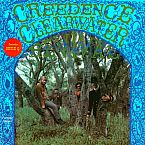
CCR also included a cover of Screamin' Jay Hawkins' (no relation to Dale) "
I Put A Spell On You" on their self-titled debut album. The band's label, Fantasy Records, released their renditions of these songs as singles around the same time; "Susie Q" peaked at #11 US in November 1968 and "I Put A Spell On You" reached its apex of #58 in December.
The next seven CCR singles hit the Top 4 with their A-sides:
"
Proud Mary" (#2)/"Born on the Bayou"
"Bad Moon Rising" (#2)/"Lodi" (#52)
"Green River" (#2)/"Commotion" (#30)
"Down on the Corner" (#3)/"Fortunate Son" (#14 the week before
Billboard decided to combine both sides into one chart position)
"Travelin' Band"/"Who'll Stop the Rain" (#2 combined)
"Up Around the Bend"/"Run Through the Jungle" (#4 combined)
"Lookin' Out My Back Door"/"Long as I See the Light" (#2 combined)
The single was titled "Susie Q (part 1)" and ran 4:33. The B-side was "Susie Q (part 2)," clocking in at 3:48.
This is one of the few Creedence songs where vocals of band members besides John Fogerty are heard. You can hear his bandmates in the second part of the song.
"Susie Q" has an almost comically basic lyric - it's really just there to support the groove. It does get the point across though: This guy is really into Susie.
You'll see three songwriters credited on this song: Dale Hawkins, Eleanor Broadwater and Stan Lewis. There were a lot of shenanigans in the 1950s when it came to songwriting credits. Dale Hawkins wrote the song himself, but shared credits with the other two people because they helped promote it - Broadwater was the wife of a Nashville DJ, and Lewis owned a record store. Those credits became quite valuable when CCR turned the song into a hit.
When "Susie Q" earned Creedence Clearwater Revival their first hit, it lit a fire under John Fogerty because he didn't want to be a one-hit wonder. He went a little overboard, manically writing song after song. It was enough to fill up three albums in 1969, and remarkably, they were all good ones, filled with hits and going multi-Platinum.
"I was staying up every night, writing songs all day, constantly thinking about what's good for my band," Fogerty told Rolling Stone. "I managed to come up with those three albums by working harder than anybody else I knew - like working two or three jobs, two or three shifts."