Pusherman

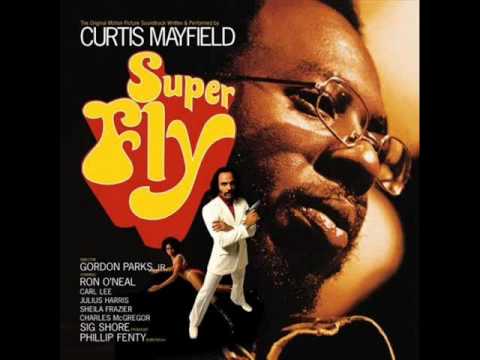
Album: Super Fly Soundtrack (1972)
Play Video

Songfacts®:

  • "Pusherman" was first released on the soundtrack of the 1972 Blaxploitation film, Super Fly. Curtis Mayfield wrote and produced all the songs on the soundtrack, which went on to be one of the few movie soundtracks to out-gross its associated film. With a pair of million-selling singles, "Freddie's Dead" and "Superfly," Curtis Mayfield struck gold in 1972 for the album and in 1973 for the title track.
  • Curtis Mayfield used each song on the album, Super Fly, to demonstrate a different aspect of the problems he noticed were plaguing inner-city America. "Pusherman," the second track, takes on drug dealing. We see the Pusherman (the drug dealer) as a businessman, trying to make a living and a better life for himself in the tough situation. The Pusherman is both good and evil. Mayfield sings, "Ain't I clean, bad machine, super cool, super mean," to show the man's tough exterior, but he implies that the Pusherman is just as much a victim as he is a villain with, "A man of odd circumstance, a victim of ghetto demands."
  • Mayfield takes an observer's view on this song, refraining from judgment and showing the pusherman from the perspective of a potential client. To a kid on the street, the drug dealer shows up everywhere, and can take on many forms: mother, father, doctor, friend. Said Mayfield: "The first thing I wanted to do was not condone what was going down, but understand it, and speak in terms of how one can keep from getting locked into these things which youngsters and a lot of people see all around them."
  • Super Fly, was one of many albums that Mayfield produced on his own record label, Curtom. Curtom was founded by Mayfield and his manager, Eddie Thomas, in 1968 and was one of the first record labels to be owned by an African-American recording artist. Mayfield acquired an old RCA studios building in Chicago, Illinois for use in cutting demos. Most of the album was recorded in this tiny studio.
  • This is one of the first popular songs to use the N-word in the lyrics, as Mayfield sings, "I'm that ni--er in the alley." This didn't stop it from getting plenty of airplay on Album Oriented Rock (AOR) and R&B radio stations. The song wasn't released as a single and no "clean" edit was issued, but the word never posed a problem, as it was done not for shock value and fit in with the gritty subject matter.
  • The Curtis Mayfield Experience, made up of Mayfield and his backing band, appear in the film, Super Fly, performing "Pusherman" on a club stage. "Pusherman" was recorded at Bell Sound Studios in New York City while the band was on location to make their cameo appearance. It was the only song to be recorded outside of Chicago, and the only song on the album not to feature Morris Jennings on the drums (Tyrone McCullen stepped in for the absent Jennings). Also, "Pusherman" was the only track on the album to be recorded without arranger, Johnny Pate, and a full backing orchestra.
  • Ice-T sampled this on his 1988 track "I'm Your Pusher," where instead of selling drugs, he's pushing music.

Comments

Be the first to comment...

Editor's Picks

Gary Lewis

Gary LewisSongwriter Interviews

Gary Lewis and the Playboys had seven Top 10 hits despite competition from The Beatles. Gary talks about the hits, his famous father, and getting drafted.

Jack Tempchin - "Peaceful Easy Feeling"

Jack Tempchin - "Peaceful Easy Feeling"They're Playing My Song

When a waitress wouldn't take him home, Jack wrote what would become one of the Eagles most enduring hits.

Keith Reid of Procol Harum

Keith Reid of Procol HarumSongwriter Interviews

As Procol Harum's lyricist, Keith wrote the words to "A Whiter Shade Of Pale." We delve into that song and find out how you can form a band when you don't sing or play an instrument.

Richie Wise (Kiss producer, Dust)

Richie Wise (Kiss producer, Dust)Songwriter Interviews

Richie talks about producing the first two Kiss albums, recording "Brother Louie," and the newfound appreciation of his rock band, Dust.

Donald Fagen

Donald FagenSongwriter Interviews

Fagen talks about how the Steely Dan songwriting strategy has changed over the years, and explains why you don't hear many covers of their songs.

Don Dokken

Don DokkenSongwriter Interviews

Dokken frontman Don Dokken explains what broke up the band at the height of their success in the late '80s, and talks about the botched surgery that paralyzed his right arm.