Album: Traditional (1859)
Play Video

Songfacts®:

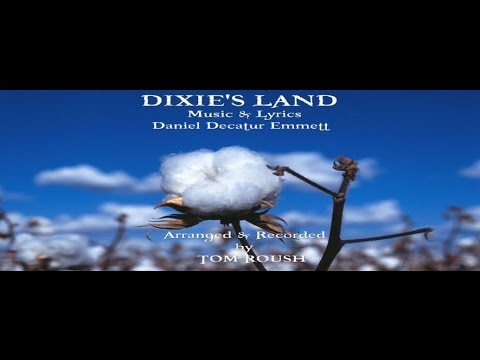
  • This song is also known as "I Wish I Was in Dixie" or "Dixie's Land." Although this would become an anthem for the Civil War South, with lyrics like "In Dixie Land I'll take my stand to live and die in Dixie," the roots of this song are actually planted in Northern soil. Daniel Decatur Emmett wrote the song for a New York minstrel show in 1859, though he sometimes claimed he learned the tune from an African American man who lived near his Ohio farm. Despite his Northern origin and his stance against slavery, his song would forever be associated as the battle cry of the Confederacy and a staple of Southern pride.
  • During the Civil Rights Movement of the '50s and '60s, activists called this song racist with its offensive stereotypes of African Americans and demanded it be banned from sporting events where it was often played.
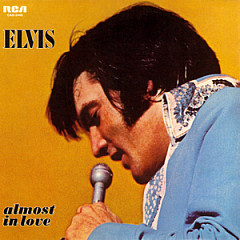
  • Mickey Newbury used the opening verse from "Dixie" as the introduction for his three-song medley "An American Trilogy" in 1972, together with "All My Trials" and "The Battle Hymn of the Republic." His version peaked at #26 on the Hot 100, while a cover by Elvis Presley, also released in 1972, reached #66.
  • Despite its ties to the Confederacy, this song was a favorite of Abraham Lincoln's.
  • Another war waged between the battling brothers during the Civil War as they fought to claim this song, with each side spinning the minstrel number into a war song. Confederate officer Albert Pike added lyrics to boost Southern morale:

    Southrons! hear your country call you!
    Up! lest worse than death befall you! ...
    Hear the Northern thunders mutter! ...
    Northern flags in South wind flutter; ...
    Send them back your fierce defiance!
    Stamp upon the cursed alliance!


    Celebrated hymn writer Fanny Crosby added her own spin to bolster Union spirits:

    On! ye patriots to the battle,
    Hear Fort Moultrie's cannon rattle!
    Then away, then away, then away to the fight!
    Go meet those Southern traitors,
    With iron will.
    And should your courage falter, boys,
    Remember Bunker Hill.

    Hurrah! Hurrah! The Stars and Stripes forever!
    Hurrah! Hurrah! Our Union shall not sever!
  • Instrumental versions of this can be heard in Max Steiner's score to the 1939 Civil War epic Gone with the Wind and in Ken Burns' 1990 Civil War documentary.
  • Bob Dylan performed this for the 2003 comedy-drama Masked and Anonymous. He also starred in the film as a rock star named Jack Fate.
  • Kevin Spacey performed this in the Netflix series House of Cards, when his character, Francis Underwood, sings it at his alma mater.
  • This inspired the catchphrase "Whistling 'Dixie,'" meaning to prattle on about nonsense. If your words have some credence, you might hear "You ain't just whistling 'Dixie.'" The Bellamy Brothers named their 1979 song after the latter phrase.

    Sometimes, people literally whistle "Dixie," though. In 1993, Senator Jesse Helms famously whistled the tune while he shared an elevator with Carol Moseley Braun, the first female black senator (and the only black senator at the time), after a vote on the Confederate flag insignia.

Comments: 4

  • AnonymousI played the music and read the lyrics. Not racist!!
  • Peter from AlbertaThat’s quite a shallow comment Eric White! If I were to stoop to your level, I might be inclined to say the same thing about Portland! LOL
    Dixie is a great tune, it has endured to this day & will be around a lot longer than us!
  • Eric White from OregonIt should be confined to the dust bin of history.
  • Dr John from Smithville, MissouriI am from the South--Gulfport Mississippi. If I were to travel further south, then I would get my feet wet in the Gulf of Mexico. I am not a racist and enjoy the different versions of Dixie. Some of my dearest friends are black or brown Americans.
see more comments

Editor's Picks

Stephen Christian of Anberlin

Stephen Christian of AnberlinSongwriter Interviews

The lead singer/lyricist for Anberlin breaks down "Impossible" and covers some tracks from their 2012 album Vital.

Emilio Castillo from Tower of Power

Emilio Castillo from Tower of PowerSongwriter Interviews

Emilio talks about what it's like to write and perform with the Tower of Power horns, and why every struggling band should have a friend like Huey Lewis.

Art Alexakis of Everclear

Art Alexakis of EverclearSongwriter Interviews

The lead singer of Everclear, Art is also their primary songwriter.

Graham Bonnet (Alcatrazz, Rainbow)

Graham Bonnet (Alcatrazz, Rainbow)Songwriter Interviews

Yngwie Malmsteen and Steve Vai were two of Graham's co-writers for some '80s rock classics.

They Might Be Giants

They Might Be GiantsSongwriter Interviews

Who writes a song about a name they found in a phone book? That's just one of the everyday things these guys find to sing about. Anything in their field of vision or general scope of knowledge is fair game. If you cross paths with them, so are you.

Who's Johnny, And Why Does He Show Up In So Many Songs

Who's Johnny, And Why Does He Show Up In So Many SongsSong Writing

For songwriters, Johnny represents the American man. He has been angry, cool, magic, a rebel and, of course, marching home.