Please Come To Boston

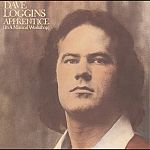
Album: Apprentice (In A Musical Workshop) (1974)
Charted: 5
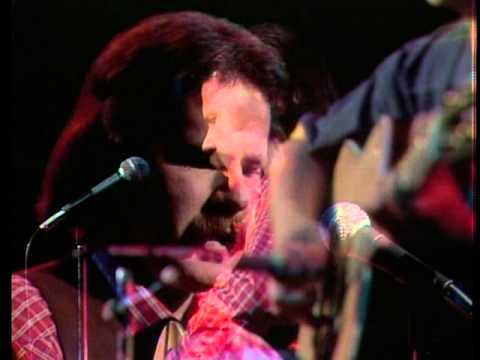
Play Video

Songfacts®:

  • In this soft-rock hit, Dave Loggins drifts to different cities around the US and pleads with the girl he loves to join him. She refuses, wanting him to come home and build a life with her. Loggins was on tour with the Nitty Gritty Dirt Band when he got the idea for the song. They made stops in Boston, Denver, and Los Angeles - all places the Tennessee-born singer-songwriter had never visited before - which became the locales for the lonely drifter in the tune.

    "The story is almost true, except there wasn't anyone waiting [here] so I made her up," Loggins explained on his former website. "In effect, making the longing for someone stronger. It was a recap to my first trip to each of those cities and out of innocence. That was how I saw each one. The fact of having no one to come home to made the chorus easy to write. Some 40 years later, I still vividly remember that night, and it was as if someone else was writing the song."
  • Loggins was a second cousin of Kenny Loggins but, according to the "Footloose" singer, their families weren't close and they only met briefly. Unfortunately there's no chance for a collaboration as Dave died on July 10, 2024 at age 76.
  • After issuing a mostly forgettable debut, Personal Belongings (it did boast "Pieces Of April," which became a hit for Three Dog Night the following year), on Vanguard in 1972, Loggins got lucky when he made the move to Epic and released the follow-up, Apprentice (In A Musical Workshop). "Please Come To Boston" was the album's lead single, and it peaked at #5 on the Billboard Hot 100 and #1 on the Adult Contemporary chart.
  • Loggins continued to plug away at a recording career throughout the rest of the '70s and early '80s but rarely made the charts. His last hurrah as a singer was a hit duet with Anne Murray in 1984, "Nobody Loves Me Like You Do." Loggins shifted his focus to songwriting and penned hits for country acts like Alabama ("She And I,") The Oak Ridge Boys ("Everyday"), The Nitty Gritty Dirt Band ("I Love Only You"), Juice Newton ("You Make Me Want To Make You Mine"), Gary Morris ("I'll Never Stop Loving You"), Kenny Rogers ("Morning Desire"), and Reba McEntire ("One Promise Too Late"), among others. He also composed "Augusta," the long-running theme of the Masters Golf Tournament.

    Loggins was inducted into the Nashville Songwriters Hall of Fame in 1995.
  • This was nominated for a Grammy Award for Best Male Pop Vocal Performance at the 1975 ceremony, but lost to Stevie Wonder for Fulfillingness' First Finale.
  • Many artists have covered this, including David Allan Coe, Joan Baez, Reba McEntire, Tammy Wynette, Glen Campbell, Garth Brooks, Willie Nelson, Kenny Chesney, Lee Hazlewood, Babyface, Brandy, and Tori Amos.

Comments: 1

  • Seattleguy from SeattleThis is on my list of most beautiful songs.
see more comments

Editor's Picks

Graham Nash

Graham NashSongwriter Interviews

Graham Nash tells the stories behind some of his famous songs and photos, and is asked about "yacht rock" for the first time.

Ralph Casale  - Session Pro

Ralph Casale - Session ProSongwriter Interviews

A top New York studio musician, Ralph played guitar on many '60s hits, including "Lightnin' Strikes," "A Lover's Concerto" and "I Am A Rock."

Rob Halford of Judas Priest

Rob Halford of Judas PriestSongwriter Interviews

Rob Halford dives into some of his Judas Priest lyrics, talking about his most personal songs and the message behind "You've Got Another Thing Comin'."

Corey Hart

Corey HartSongwriter Interviews

The Canadian superstar talks about his sudden rise to fame, and tells the stories behind his hits "Sunglasses At Night," "Boy In The Box" and "Never Surrender."

Incongruent Opening Acts

Incongruent Opening ActsSong Writing

Here's what happens when an opening act is really out of place with the headliner, like when Beastie Boys opened for Madonna.

Edwin McCain

Edwin McCainSongwriter Interviews

"I'll Be" was what Edwin called his "Hail Mary" song. He says it proves "intention of the songwriter is 180 degrees from potential interpretation by an audience."