Don't Drink The Water

Album: Before These Crowded Streets (1998)
Play Video

Songfacts®:

  • "Don't Drink The Water" is about the European slaughter of Native Americans, as the colonization of North America caused the near-extinction of the Native American populace. Dave Matthews is South African, which gave him an outsider's perspective on American history when he moved to Virginia in 1985 when he was 18. Had he stayed in South Africa, he would have been conscripted into the military in a country that was still under Apartheid.

    Matthews told this story from this travels to illustrate the song: "I remember one time standing at the edge of Lake Superior, up there, we were camping up on the northern side of it and looking out and imagining these little rocks that jut out, families of people going past in canoes and hunting on the side of the lake there, and also like if you sit and look at the Grand Canyon and get a little distance between you and that McDonald's that's peering down over the canyon with you, and just imagine the quiet that must have been there and the people that enjoyed it before we came, and I just get awed because it's sort of an overwhelming feeling looking at those things just going, 'Man does that suck, does it suck.' That you could erase somebody, ya know? Take somebody's whole universe away. It's just unbelievable for those people... just the fact that a little bit of our history has a lot of poison in it and that maybe we can't reverse things but maybe pay a little tribute to it every once in a while."
  • That's Alanis Morissette singing background vocals at the conclusion of the song, and Bela Fleck of Bela Fleck and the Flecktones and The New Grass Revival on banjo.
  • The song is part of the Before These Crowded Streets album, released in 1998 after the band was well established. They were strictly a live band the first few years after they formed in 1991. When they signed to a major label (RCA) they had lots of well-honed songs that became radio hits, including "Ants Marching" and "Satellite."

    The sessions for Before These Crowded Streets were different because the band had no idea what they were going to record when they headed into the studio. Matthews booked studio time before he had any songs written, so the pressure was on to create something from scratch. What followed was lots of experimentation from each band member to figure out what did and didn't work. It especially took awhile to figure out this track, which became the album's lead single.

    "'Don't Drink The Water' kicked our asses," Matthews recalled in MTV's documentary about the album. "We all hated it, and then we were all in bad moods, furious."

    Once producer Steve Lillywhite played it back to them, however, the band realized the song's potential and it became a fast favorite.
  • In a 1998 interview with Allstar Music, Matthews said the song started out with him imagining the civilizations and societies that made up North America before the colonization but became about "any sort of genocidal attitude toward other people." He added: "I think we forget about it somehow, behind the horrors, whether we're talking about South Africa or all of Africa, really, or South America or Japan going to China or China going to Tibet."
  • In this song, Matthews was also addressing the tendency to rewrite history by excusing atrocities under the guise of fighting for freedom, an idea sparked by reading the work of philosopher/political activist Noam Chomsky.

    "There's this method of writing history with slogans in which you can erase the real part of history, you know," he said. "I was reading Noam Chomsky when he said this country was built on freedom and justice... he says you can just as easily and more accurately suggest - at least for the first 300 years - that in the development of this country and the arrival of the English and the battle between the English and Spanish, that it was more [built on] slavery and genocide. But if you put behind it a good idea underneath it all, say we were fighting for free ideals and a just society - you know, it was those curly-haired, clever handsome fellows that were on top of everything - they were the ones who had the freedom ... that was the inspiration."
  • Matthews cites "Don't Drink The Water" as the best song he's ever written.

    "I have nothing to apologize for that," he told GQ. "I was as clear as I could be. Why am I mad at the history of North America? The thing I'm maddest about is all of the knowledge and all of the culture and all of the perspective that we erased for greed and to steal the future away from our children. The idea of conquering people is deeply misguided, arrogant, and stupid."
  • The band didn't release singles for sale in America at this time, but "Don't Drink The Water" was issued as the first promotional single from the Before These Crowded Streets album, meaning it was sent to radio stations an MTV to garner airplay. "Stay (Wasting Time)" was the next single from the album, followed by "Crush."

    The album debuted at #1, as did their next six, a remarkable run that's a testament to their loyal fanbase.
  • The song is sung from the perspective of a colonizer, so it sounds rather nefarious. "I realized that the best way for me to say that was to be the villain, and that's the part that I like so much about that song," Matthews told GQ. "It's like being the hunter: 'Where are the skulls I've gotta crush? This is all mine.' Then the 'don't drink the water' part is turning around and facing what you've done."
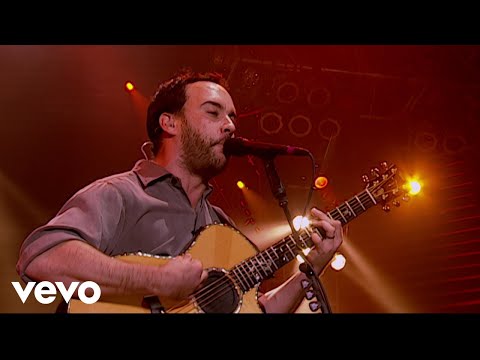
  • The music video, directed by Dean Karr, shows native people holding the severed, singing head of Dave Matthews - quite the visual!

    The footage came from the Amazon forest in Venezuela, where members of the Indigenous Yanomami tribe were filmed holding a prop head. Matthews' face was filmed separately against a green screen and composited onto the prosthetic head during post-production. This allowed the head to appear to "sing" the lyrics in the jungle scenes.
  • Living in Virginia, which was part of the Confederacy during the American Civil War, Matthews came to realize that there was a skewed perspective on what parts of the country were considered racist.

    "In America we've told this oversimplified story that the racism of America primarily existed in the South," he said. "But the truth is, when you look at our history, the racism was everywhere. Of course it was enormously central to the South, but when I talk to people in Virginia or Louisiana about race issues, you might find the most overtly secessionist people, but you also find the most aggressively progressive people in the country. Down there is the front line. That's where you find the people that have changed the country, because that's so much of where it happened. Of course, it happened everywhere, but it really happened there. A lot of the hopes of that we have for resolving the problems in this country will be found in the southeast."

Comments: 21

  • Jon from New YorkThis song's meaning is largely determined by each listeners experiences and biases. The song's true meaning can only be found in the mind and heart of the song writer itself. Dave, being from South Africa and having lived in Virginia no doubt drew from a few different experiences of people's being displaced. A South American could draw comparisons to the Spanish conquest of their lands. A Native of North America could apply it to their experience. It is conceivable that a Brittan could say this song is about the Romans or a Puerto Rican about the Spanish and/or the US.
  • Brandon Jeralds Iv from New York, Deciple Very interesting poetry if I say so myself, but Megalovania has way much more to offer.
  • Chris Ehrbar from Staten Island N.y.indigenoupeoplesThis song is about Satan. Yes, on the surface it seems to be about our Native Americans or other indigenous peoples pushed off their land. But if if you've read the Bible than it all falls into place. Every lyric. "Your horse is leaving", lol. The natives didnt even have horses until we got here. "Your boat is leaving"? Anyone rember Noah and his ark? The ark is a type of Christ, saving man from judgement. "Hiding"and "seeing". Adam anyone? Man forfeited his domion over the earth and Satan became the god of this world, trying to make it his "home". His wings? The fire? Your Father's Spirit"? "Lay your arms down"? Raising one's arms in praise is a form of "spiritual" warfare. Notice how the narrator is being bossy but by the end of the song he begins to fess up, so to speak, of his crimes and of his character and begins to practically beg for us to listen to him. The "water" is the gospel message of Jesus Christ and without His shed blood atoning for our sins the gospel is without power and effect. Satan's plea: don't believe the gospel because it has the power to save men.
  • Brandon from Warren, MiThe most important truth to take from this is that the water is like alcohol. In the society that we live there is a deeper issue and that is that too many people drink. I myself drink, I'm sure that you drink. I know DMB drinks. What of the Indians and what of the water they drank. It is that water that the white man brought over to America. For the record I'm a white republican. We must think outside of our self's and see that he is every were. The truth is right there.
  • Mel from Riverbank, CaFor some reason this song reminds me of the HBO show Deadwood, when Hearst came to town and ran over anyone in his path. Much like the white man ran over the natives, be they in North America, Africa, Asia, South America...
  • Mel from Riverbank, CaThe extermination of Native Americans continued long after the United States won the revolutionary war. Don't appreciate the 'just killing to clear the land' comment, it went way deeper than that. And of course Europeans were killing the natives after the revolutionary war as well, the spanish and missionaries were killing off natives until California joined the union in 1849/1850.
  • Kate from Philadelphia, PaActually, this song (and video) fit better with the colonization of South Africa. The colonists were said the have killed so many natives that the river ran red with blood (a battle was called the "Battle of Blood River."). Considering Dave's heritage, it's appropriate to assume that the song was at least partially about that extermination of native peoples. There are Zulu warriors depicted in the video as well.
  • Chris from Sturbridge, MaTo kyle from Atlanta, This song is about the Europeans slaughtering the Native Americans, The U.S. was not formed yet. They were just Europeans traveling to colonize the land, and they did so by killing off the Native Americans.
  • Rob from Wilkes-barre, PaLike most other Dave songs this only gets better and better each time you hear it, especially live.
  • Matthew from Milford, MaThis song, is one my favorites, along with "The Last Stop", "Too Much", "The Stone", "Halloween", and "The Dreaming Tree". This kind of song is why Dave Matthews Band is my favorite music artist!
  • Kyle from Atlanta, GaI think this song was about the United States slaughter of the Native Amercans, not the europeans
  • Joseph from Bronx New York, Nykinda like what we did to the mexicans during the alamo or was it the spanish anyway we lost but later we traded general santa anna for the whole state of texas! worst deal ever made for the spanish. what were they thinking?
  • Samia from Geneva, SwitzerlandWhy is it that recent slaughters that have been "branded" patriotic war rarely get spoken about in the US? I see a lot of propaganda on these pages...
  • Patrick from Tallapoosa, GaThe water in Mexico dies have bacteria in it that foreigners are not accustomed to. Those born in Mexico, who have consumed it for decades, will not get sick, but people born in other countries will. The condition is called "Montezuma's Revenge" named after an Aztec ruler who supposedly put a curse on the Spanish Conquistadors. Anyone who drinks the water in Mexico will get extremely sick. There are medications you can get through your doctor if you ever plan on going to Mexico.
  • Gabe from New York, NyDDTW is about colinization and the abuse of Native Americans, as said. Around 98/99 Dave and Tim would often play Bartender (2000 Lillywhite Sessions, officially released on Busted Stuff in 2000). Both Bartender and DDTW are in Drop D tuning.
  • Stephen from South Charleston, WvThis song is actually talking about how you shouldn't drink the water in Mexico because it will make you sick because you are not used to it.
  • Kelly from Los Angeles, CaOne of my favorite songs EVER. I saw the "Storytellers" episode on VH-1 where he talked about this song being about the land the Native Americans had inhabited and then we come and take it away, and this song perfectly illustrates it and pays the tribute that he was talking about. It is a bloody but thought-provoking song. Dave rocks!
  • Annabelle from Eugene, OrWhen I think of the lyrics, "Don't Drink The Water", I think of the time of the Great Stink Of London in 1858, when the bad stench of the polluted water in the Thames River caused many people to leave the city! It kind of makes me think of what the Londoners thought back then, "There may be fresh water in England, but Don't drink the water from the River Thames!"
  • Kieran from Brewster, NyWatch the video, it's really self explanitory.
  • Tommy from Southboro, MaOn VH1 he tells the story behind it...among other things he says he was in awe when he thought of what North America was like before "we" came. He says it's his way of paying a little tribute to the natives we slaughtered
  • Adeeb from Dhaka, OtherAH HAH. I was right on the money with this one. It brings to my mind of the wide open spaces of the great american west. Of the eagles circling the desert. Looking with sharp eyes for prey. (When says; And here I will spread my wings"). Very bloody song...heh... Dave Mathews Band seems to be best at this dangerous edgey mood.
see more comments

Editor's Picks

Gary Brooker of Procol Harum

Gary Brooker of Procol HarumSongwriter Interviews

The lead singer and pianist for Procol Harum, Gary talks about finding the musical ideas to match the words.

Andy McClusky of OMD

Andy McClusky of OMDSongwriter Interviews

Known in America for the hit "If You Leave," OMD is a huge influence on modern electronic music.

Waiting For The Break of Day: Three Classic Songs About All-Nighters

Waiting For The Break of Day: Three Classic Songs About All-NightersSong Writing

These Three famous songs actually describe how they were written - late into the evening.

Donald Fagen

Donald FagenSongwriter Interviews

Fagen talks about how the Steely Dan songwriting strategy has changed over the years, and explains why you don't hear many covers of their songs.

Graham Nash

Graham NashSongwriter Interviews

Graham Nash tells the stories behind some of his famous songs and photos, and is asked about "yacht rock" for the first time.

Michael Sweet of Stryper

Michael Sweet of StryperSongwriter Interviews

Find out how God and glam metal go together from the Stryper frontman.