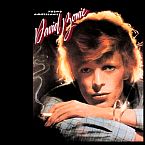
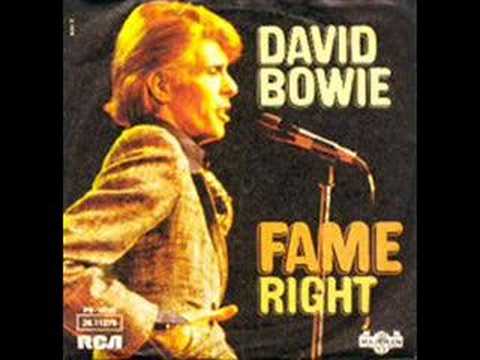
This song is about what it is like to be famous. Bowie gave his thoughts on the subject in a 2003 interview with Performing Songwriter magazine: "Fame itself, of course, doesn't really afford you anything more than a good seat in a restaurant. That must be pretty well known by now. I'm just amazed how fame is being posited as the be all and end all, and how many of these young kids who are being foisted on the public have been talked into this idea that anything necessary to be famous is all right. It's a sad state of affairs. However arrogant and ambitious I think we were in my generation, I think the idea was that if you do something really good, you'll become famous. The emphasis on fame itself is something new. Now it's, to be famous you should do what it takes, which is not the same thing at all. And it will leave many of them with this empty feeling. Then again, I don't know if it will, because I think a lot of them are genuinely quite satisfied. I know a couple of personalities over in England who are famous for being famous, basically. They sort of initially came out of the pop world, but they're quite happy being photographed going everywhere and showing their kids off and this is a career to them. A career of like being there and turning up and saying, 'Yes it's me, the famous girl or guy' (laughs). It's like, 'What do you want?' It's so Warhol. It's as vacuous as that. And that to me, is a big worry. I think it's done dreadful things to the music industry. There's such a lot of rubbish, drivel out there."
John Lennon helped write this song - he came up with the title and also sang the background "Fame" parts in the high voice. They started working on the song when Bowie invited Lennon to the studio, and Lennon played rhythm guitar on a jam session that resulted in this track. Bowie met Lennon less than a year earlier at a party thrown by Elizabeth Taylor. Lennon was one of Bowie's idols, and they became good friends.
Bowie often had conversations with Lennon about how fame took away parts of their lives. In the same interview, Bowie said: "We'd been talking about management, and it kind of came out of that. He was telling me, 'You're being shafted by your present manager' (laughs). That was basically the line. And John was the guy who opened me up to the idea that all management is crap. That there's no such thing as good management in rock 'n' roll, and you should try to do it without it. It was at John's instigation that I really did without managers, and started getting people in to do specific jobs for me, rather than signing myself away to one guy forever and have him take a piece of everything that I earn. Usually, quite a large piece, and have him really not do very much. So, if I needed a certain publishing thing done, I'd bring in a person who specialized in that area, and they would, on a one-job basis, work for me and we'd reach the agreed fee. And I started to realize that if you're bright, you kind of know you're worth, and if you're creative, you know what you want to do and where you want to go in that way. What extra thing is this manager supposed to do for you? I suppose in the old days, it was [in a hokey New York voice] 'Get you breaks!' (laughs). I don't quite know what managers are supposed to do, even. I think if you have even just a modicum of intelligence, you're going to know what it is you are and where you want to go. Once you know that, you just bring in specific people for specialist jobs. You don't have to end up signing your life away to some fool who's just there kind of grabbing hold of the coattails."
Bowie's guitarist Carlos Alomar came up with the guitar riff. It was based on a song called "Foot Stompin'" by The Flares, which Bowie had been performing on tour. "In funk music, what you want to do is put down a lot of holes," Alomar recalled to Mojo magazine of the song's instrumentation, "leaving a little space for someone to be able to dance in. Lennon played acoustic guitar and we reversed it and that's the suction sound you hear at the beginning."
"Then we put up big reverb upon David's riff," he continued. "Like going to a recreation centre when it's empty, taking your amplifier and your guitar – and filling that room."
"Fame" was Bowie's first big hit in America, and also his first to do better in the US than the UK. He had a few UK hits before this, including "Rebel Rebel," "
Life On Mars," and "Diamond Dogs."
A great Bowie quote on the subject: "Fame can take interesting men and thrust mediocrity upon them."
This song was recorded at the Sigma Sound studios in Philadelphia, where many soul classics of the '70s were made. Bowie wanted the album to have a rhythm & blues feel, and he called the sound he created "Plastic Soul."
Bowie whispers something at the end. It is rumored to be either "Brings so much pain" or "Feeling so gay, feeling gay."
Bowie performed "Fame" and "
Golden Years" on
Soul Train in an episode aired November 4, 1975, making him one of the first white artists to appear on the show. Bowie allegedly had a few drinks before he went on to calm his nerves.
The song was remixed as a techno version for the Pretty Woman soundtrack. Re-titled "Fame '90," it was also included on the album Changesbowie when it was re-issued.
The "Fame '90" remix is also used in the 1995 thriller Copycat as the murderer zeroes in on his victim in a gay bar.
At the end of this song, "Fame" is repeated 23 times, each "Fame" being a different note. The repetitions of "Fame" span an amazing four octaves.
>>>
Suggestion credit:
Annabelle - Eugene, OR
In one of Bowie's first US TV appearances, he performed the song on
The Cher Show in 1975.
>>>
Suggestion credit:
Bertrand - Paris, France
At the time this song was written, Bowie was under contract with MainMan Records and Tony DeFries. Money was mismanaged after several tours, leaving Bowie broke from having to pay back expenses owed. Bowie wrote this song in response to the whole financial ordeal. Not too long after, Bowie fired DeFries at John Lennon's suggestion.
>>>
Suggestion credit:
Thomas - Marion, IN
Engineer Eddie Kramer recalled to Uncut: "The story is Carlos Alomar was jamming the riff that became 'Fame' and Bowie walked in and said, 'Oi, I want that,' and that started the process."
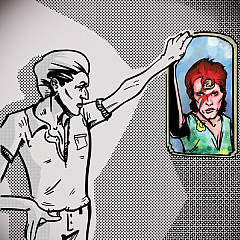
Fame... what you need you have to borrowEven the strikingly original David Bowie often borrowed ideas, which he openly admitted. His Ziggy Stardust character, for instance, was based on a British singer named Vince Taylor. And the lightning bolt streaking across his face on the
Aladdin Sane album cover was cribbed from Elvis Presley's TCB logo.
Bowie, of course, was immensely influential himself, and was typically gracious about it, knowing he did his share of borrowing. Bono of U2 tells a story in his book
Surrender about Bowie listening to a preview of their
Achtung Baby album, which clearly had his mark. "We were unembarrassed to play him an album so obviously influenced by him," Bono wrote. "He told me he thought '
The Fly' needed work but was reassuringly reassuring about some of the other songs... quite generous of him, considering he was being plagiarized."
The end of the song is accented by the rattle of a vibraslap, a percussion instrument consisting of a stiff wire connecting a wooden ball to a hollow box full of metal teeth. Prior to "Fame," it showed up in The Lemon Pipers' "
Green Tambourine" and The Jimi Hendrix Experience's "
All Along The Watchtower."