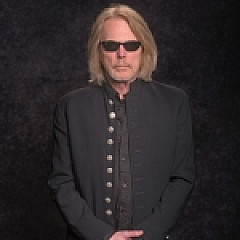
Having not performed live since 2006 and rarely been seen in public since amidst rumors of ill health, Bowie surprised his fans on his 66th birthday when this song's video was uploaded onto his website. The tender ballad was recorded in the singer's now-native New York and produced by his long-time collaborator Tony Visconti. It was released on January 8, 2013 via the iTunes Store in 119 countries.
The song finds Bowie reflecting on his time in Berlin, the German city where Bowie and Visconti produced Low, Heroes and Lodger in the 1970s. Bowie references in his lyrics some of the places that he lived when he was recording those records.
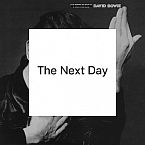
The artwork for
The Next Day is an altered version of the cover to
Heroes, suggesting a further connection to Bowie's Berlin album trilogy. Designer Jonathan Barnbrook explained his unusual artwork on his
VirusFonts website. "The "Heroes" cover obscured by the white square is about the spirit of great pop or rock music which is 'of the moment', forgetting or obliterating the past," Barnbrook said. "However, we all know that this is never quite the case, no matter how much we try, we cannot break free from the past. When you are creative, it manifests itself in every way - it seeps out in every new mark you make (particularly in the case of an artist like Bowie)."
He added: "We wanted the cover to be as minimal and undesigned as possible, we felt the most elegant solution was to use the original one from
Heroes and simply cross out the title of the old album. It has the detachment appropriate for the atmosphere of the new album."
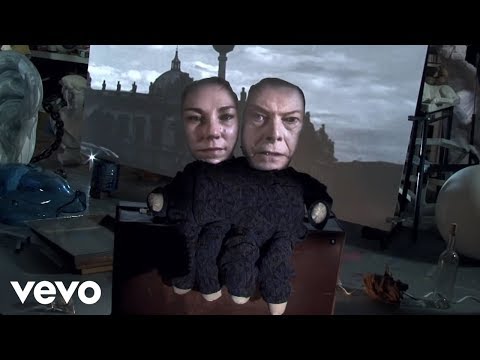
The haunting music video was directed by Tony Oursler and also harks back to Bowie's time in Berlin. He is seen looking in on footage of the auto repair shop beneath the apartment he lived in, along with stark images detailing the bleak landscape of the city at the time.
Speaking to BBC News about the song a couple of days after its release, Visconti said: "I think it's a very reflective track for David. He certainly is looking back on his Berlin period and it evokes this feeling... it's very melancholy, I think. It's the only track on the album that goes this much inward for him. It's quite a rock album, the rest of the songs, so I thought to myself why is David coming out with this very slow, albeit beautiful, ballad why is he doing this? He should come out with a bang. But he is a master of his own life. I think this was a very smart move, linking the past with the future."
Tony Visconti didn't get to hear the lyrics for this song until about five months after the instrumentation was recorded. He recalled to Billboard magazine: "It was just a pretty ballad; it was called something else, but I forget what. He came in one day and said, 'I've written words for that. I wrote a song about Berlin,' and I thought, 'How nice. That's really cool.' And he gave me a copy (of the lyrics) and got on mic and started warming up, and I read the lyrics and it gave me goosebumps because I spent quite awhile in Berlin, too, making the three albums that are called the Berlin Trilogy. I knew what he was talking about, because in those days when we were making those albums he didn't live in a very expensive apartment. He lived in the bad part of town, and he and Iggy Pop and I used to go around to just ordinary beer gardens and sit around and pretend we were German and drink beer. He got that feeling in that song with those lyrics."
The single made it to #1 on the British iTunes chart by 3 p.m. on the day of its release. It also made it to the top of the charts in seven other countries on the day of its release. At the end of the week the song entered the UK Singles Chart at #6, Bowie's highest charting single there since "
Absolute Beginners" reached #2 in 1986. His previous top ten UK single was "
Jump They Say," which reached #9 in March 1993.
Bowie's conjoined female companion in the music video is director Tony Oursler's wife, the artist Jacqueline Humphries. It's been reported that Bowie and Oursler wanted someone who looked like the singer's PA during his time in Berlin, Corrine "Coco" Schwab.
Writing in The Mail On Sunday, Bowie's former wife and stage manager Angie slammed the song, calling it "tired" and adding that it reminds her of an era she'd rather forget. "I can't help but wonder what happened to the musical innovator," she said. "I'm not trying to be unkind, but I can't escape the feeling that the retro-introspective mood of the song has one message: 'I'm not going to be here much longer, let's talk about the past.' There's nothing about the sound that's new either. The subject matter is tired: it's a nostalgic look back to the last time he was at the forefront of pop music."
"And, worst of all, the record romanticises and mythologises a period of David's career I recall with distaste," she continued. "What I remember of Berlin - where David lived for three years in the late '70s - is lots of sitting around nightclubs, with David pretending he was an extra from Cabaret witnessing the rise of the Nazis."
Regarding the lyric, "a man lost in time near KadeWe," KaDeWe is Berlin slang for the department store Kaufhaus des Westerns. According to Q magazine, it became a mecca of capitalist freedom for former East Berliners after the Berlin Wall collapsed.
Was the song title inspired by a line in one of Bowie's director son, Duncan Jones' movies? His 2009 film, Moon opens with: "There was a time when energy was a dirty word. When turning on your lights was a hard choice. Cities in brownout, food shortages, cars burning, fuel to run. Where are we now? How do we make the world so much better."