Deniece Williams started performing when she was a college student. In the early '70s she became a backup singer for Stevie Wonder as part of his Wonderlove backing group, lending her vocals on his albums Talking Book, Fulfillingness' First Finale, and Songs in the Key of Life.
Williams hit upon the idea for "Free" when she was rehearsing with Wonder's bass player Hank Redd and pianist Nathan Watt. "We were in Los Angeles, in a pretty nice rehearsal room," Williams recalled to Uncut magazine, "just practicing and waiting for Stevie to come."
Williams, Redd and Watt developed the verse and chorus, then Susaye Green of The Supremes, who happened to be around, completed the lyric. "It was almost like a samba, soulful but really melodic," recalled Green. "They just started playing; and others would join in. Then Niecy jumped up on the stage and started singing."
"I was just singing off what I heard them play," Williams added. "I was singing this one phrase, 'I want to be free. I want to be free.'"
As the melody flowed, the song came together. "I started writing lyrics, because lyrics are my thing," said Greene "'Whispering in his ear... ' So I'm writing all these lyrics, then I walked up to Niecy and handed her this piece of paper, and I said, 'Sing this!'"
"I looked it over and said, 'Wait a minute, I can't sing that exactly,'" Williams continued. "So we started working on the lyrics and changing things, and that's how the song came about. Susaye came up with this brilliant idea - I mean, my 'I want to be free' was the inspiration behind it, and then she had an idea, and we worked on it. So, what you hear is the collaboration."
Williams left Wonder in 1975 to sign a deal with Kalimba Productions, a company started by Earth, Wind & Fire's Maurice White and producer Charles Stepney. "Free" was the song that earned her the contract.
"Stevie would let us play for 10 minutes before he came out," William recalled. "One night we were playing in Los Angeles, and they said, 'Let's do Denise's song, let's do free.' And I said, 'Oh, OK!' It just happened that Maurice White, Philip Bailey and Freddie white were in the audience that night. Maurice heard the song and heard my voice and decided that this was something he'd like to be a part of. He had just formed his own production company, Kalimba Productions, with Colombia Records. And he was looking for a solo female artist."
"It took me a while to commit to a contract as a solo vocalist, because that was not what I was," she continued. "That wasn't my desire, to be solo. But I'm so glad I did."
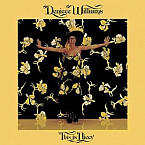
Williams recorded "Free" for her debut album, This Is Niecy, with White and Stepney producing. "The new approach to the song was very different," said the singer. "It took me a while to get used to it, because I'd been singing it's the other way for so long. But I was fascinated by what Maurice and Charles did with the song - I was open to their interpretation of the song. I trusted them, why wouldn't I? This version was slower."
The musicians are:
Woodwinds: Ernie Watts, Plas Johnson, Ray Pizzi and Terry Harrington
Trombone: Randal Aldcroft and George Bohanon
French Horn: Sidney Muldrow and Gale Robinson
Trumpet: Steve Madaio and Oscar Brashear
Piano: Jerry Peters
Electric Piano: Jerrry Peters
Percussion: Freddie White
Drums: Freddie White and Maurice White
Bass: Verdine White
Guitar: Al McKay
Backing Vocals: Maurice White, Sidney Barnes and Deniece Williams
Artists who have covered "Free" include:
Will Downing for his 1988 eponymous debut album
Chanté Moore for her 1994 album A Love Supreme
Debelah Morgan for her 1994 self-titled debut album
Seal for his 2008 album Soul
Two artists sampled "Free" in 2005:
Gospel singer Kirk Franklin used a sample of "Free" in his song "Why?" featuring Stevie Wonder from his album
Hero.
Rihanna's track "
Willing To Wait" shares a chord progression with "Free," earning songwriting credits for Williams, Greene, Redd and Watts.