
Asking for a Friend

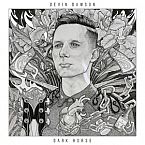
Album: Dark Horse (2018)
Play Video

Songfacts®:

  • Written by Devin Dawson with Connie Harrington ("I Drive Your Truck," "I Got the Boy") and Brett Beavers ("Felt Good On My Lips," " Red Solo Cup"), this song finds the singer trying to make amends after messing up a relationship.

    Yeah what if I told you he hadn't slept in weeks
    He was standing right here in front of you instead of me
    Is there any way you could ever love him again
    Just asking for a friend


    "I'm not the best at communicating, like, to your face, but like I can write a song about it." Dawson told Taste of Country. "Like, I can hide behind a guitar and tell you how I feel, and that's really what 'Asking For a Friend' is."
  • While its not clear whether or not the singer gets back together with the girl, in real life, the guy was unsuccessful.

    "She didn't take him back, in my experience - which, honestly, worked out well for me, as it always does," Dawson admitted. "Blessing in disguise, or things that lead you on to the next thing."
  • Devin Dawson turned up for the songwriting session at Beavers' writing studio in Nashville on March 7, 2016 with the song's hook, "I'm just asking for a friend," stored in his cellphone, "It was one of those songs that was definitely rooted in my story," he told Billboard. "I was going through a relationship where I probably could have used this song, you know, and I needed to say 'sorry' to someone. I think we had already ended things a couple weeks earlier."
  • Though Dawson still had a heavy heart, he didn't admit to his co-writers just how close to home "Asking for a Friend" was. "I sensed that there was some real-life situations that he was drawing this idea from," said Harrington. "And I remember after we finished, he texted me a few days later that the song just broke his heart. So I thought, 'I don't know what his story is, but I think this is autobiographical.'"
  • Devin Dawson expanded on the track's meaning to Billboard:

    "It's a song about a guy who is trying to apologize without having to say sorry. He tries to keep his pride a little bit - which is me. I'm not so good at telling people how I feel in a relationship or in a conversation. But when I hide behind a guitar or a song, I feel like I can say whatever I want. He's trying to make it sound like he's asking for somebody else, but he's asking for himself - 'Do you think you could ever love him again?' That's where it gets to by the end of the song, and it makes you work for it."
  • Dawson considers this to be a quintessential story country song. He explained: "I grew up listening to country music, and I learned how to write songs from listening to the classics like 'The Chair' and 'We Danced' - those songs where you hang on every line and lyric. They tell a story. I wanted this song to be a true story, one that could be relatable to people that have a problem saying I'm sorry. It doesn't ever say what he did or how it ends up. That allows the listener to put their own story into it, which is important."

Comments

Be the first to comment...

Editor's Picks

Album Cover Inspirations

Album Cover InspirationsSong Writing

Some album art was at least "inspired" by others. A look at some very similar covers.

Jim Adkins of Jimmy Eat World

Jim Adkins of Jimmy Eat WorldSongwriter Interviews

Jim talks about the impact of "The Middle" and uses a tree metaphor to describe his songwriting philosophy.

Weezer

WeezerFact or Fiction

Did Rivers Cuomo grow up on a commune? Why did they name their albums after colors? See how well you know your Weezer in this Fact or Fiction.

Wedding Bell Blues

Wedding Bell BluesSong Writing

When a song describes a wedding, it's rarely something to celebrate - with one big exception.

Eric Burdon

Eric BurdonSongwriter Interviews

The renown rock singer talks about "The House of the Rising Sun" and "Don't Let Me Be Misunderstood."

Deconstructing Doors Songs With The Author Of The Doors Examined

Deconstructing Doors Songs With The Author Of The Doors ExaminedSong Writing

Doors expert Jim Cherry, author of The Doors Examined, talks about some of their defining songs and exposes some Jim Morrison myths.