
Mongoloid
by Devo

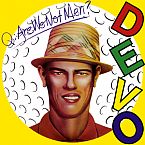
Album: Q: Are We Not Men? A: We Are Devo! (1977)
Play Video

Songfacts®:

  • The word Mongoloid was originally used as a derogatory term for people of Mongolian descent in East Asia, but it was later used as an equally derogatory term for a person with Down syndrome, which is how it's used in this song.

    The song reclaims the word, with the main character a proud mongoloid who is happier than most and has a job. No one even knows he has a condition.

    Mark Mothersbaugh of Devo explained in an interview with Smashing Magazine: "In the bigger sense of things it was questioning man's calling himself superior to all other forms. It was just calling into question the insanity of what our value system was."

    He said that while some radio stations found it objectionable and refused to play the song, the band heard from parents of kids with Down syndrome who said their kids loved the song.

    "They were happy to have a song about them," Mothersbaugh said. "It wasn't making fun of mongoloids. It was kind of questioning why the value system of humans is about going out and getting a job, just mindless toil."
  • "Mongoloid" was Devo's first single, released with "Jocko Homo" as the B-side. The band formed at Kent State University in the wake of the tragic on-campus shootings of 1970. Their music reflected their mantra that humans were evolving backward, thus we were regressing, going through "de-evolution."

    This song is an expression of that tenet, showing how the mongoloid, a person perceived as an outlier with a deformity, is actually the only one who has it figured out.
  • The song was written by Devo co-founder Jerry Casale, who along with Mark Mothersbaugh is a primary songwriter in the group. Casale shares lead vocals on the track with the group's guitarist, Bob Mothersbaugh (Mark's brother).
  • Devo included a new version of the song on their first album, Q: Are We Not Men? A: We Are Devo! in 1978. This version added more instrumentation and has a lot more production value - it was co-produced by Brian Eno of Roxy Music fame. "Mongoloid" was never a hit but became one of Devo's most popular songs, played at most of their concerts.
  • The line, "He was a mongoloid, one chromosome too many," is an accurate description of Down syndrome, which occurs when a person is born with an extra chromosome.
  • The filmmaker Bruce Conner made a short film set to this song that served as its music video. The band isn't in it - Conner's film is comprised of newsreel and movie footage showing science experiments and people engaged in strange behavior, like a guy pulling a bus with his teeth. Conner made the film after seeing Devo in Concert. His exhibit calls it "A documentary film exploring the manner in which a determined young man overcame a basic mental defect and became a useful member of society."
  • During live performances, Mark Mothersbaugh would play the part of the mongoloid, moving to the front of the stage and doing gestures like a cheer routine. He later added pom poms to the act.

Comments: 1

  • Dark Star from OregonThe term "mongoloid", as an ethnonym wasn't pejorative originally, but simply followed what was then the standard terminology of the time, and was derived from the name of the country and the typical upper eyelid structure of Down patients. Parallel terms were used for all of the major ethnicities; "caucasoids" were basically white people, "australoids" were indigenous Australians, and so on.

    In 1965 the World Health Organization stopped using the term Mongolian or mongoloid to refer to the syndrome, following a request by the People's Republic of Mongolia. The terms finally passed out of general acceptability and usage some years later.
see more comments

Editor's Picks

Joe Elliott of Def Leppard

Joe Elliott of Def LeppardSongwriter Interviews

The Def Leppard frontman talks about their "lamentable" hit he never thought of as a single, and why he's juiced by his Mott The Hoople cover band.

Laura Nyro

Laura NyroSongwriting Legends

Laura Nyro talks about her complex, emotionally rich songwriting and how she supports women's culture through her art.

Dwight Twilley

Dwight TwilleySongwriter Interviews

Since his debut single "I'm On Fire" in 1975, Dwight has been providing Spinal-Tap moments and misadventure.

Why Does Everybody Hate Nu-Metal? Your Metal Questions Answered

Why Does Everybody Hate Nu-Metal? Your Metal Questions AnsweredSong Writing

10 Questions for the author of Precious Metal: Decibel Presents the Stories Behind 25 Extreme Metal Masterpieces

Billy Joe Shaver

Billy Joe ShaverSongwriter Interviews

The outlaw country icon talks about the spiritual element of his songwriting and his Bob Dylan mention.

Gene Simmons of Kiss

Gene Simmons of KissSongwriter Interviews

The Kiss rocker covers a lot of ground in this interview, including why there are no Kiss collaborations, and why the Rock Hall has "become a sham."