Dre Day
by Dr. Dre (featuring Snoop Dogg)

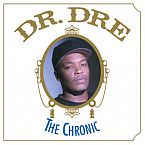
Album: The Chronic (1992)
Charted: 59 8
Play Video

Songfacts®:

  • Dr. Dre and Eazy-E had more beef than a rodeo. As members of the transgressive group N.W.A, they defined gangsta rap in the late '80s, but when the money came in, Dre thought there should be more of it. The group was signed to Ruthless Records, which Eazy-E ran with the businessman Jerry Heller. Ice Cube left the group over royalty diputes in 1989, and Dre followed suit in 1991. His exit wasn't as clean though. He was still contractually obligated to Ruthless, but formed his own label, Death Row Records, with Suge Knight, in early 1992.

    "Dre Day," officially titled "F--k Wit Dre Day (And Everybody's Celebratin')," was the first musical attack launched in his war with Eazy. In the lyrics, Dre upbraids his foe in certain terms:

    Used to be my homie, used to be my ace
    Now I wanna slap the taste out ya mouth


    Eazy fired back with "Real Muthaphuckkin G's," where he makes specific mention of this song: "'Dre Day' only meant Eazy's pay day."

    This is a reference to their legal dispute, which according to Eazy, entitled him to earnings from the song. Death Row records may or may not have negotiated Dre's release from the deal using lead pipes and baseball bats.

    The beef ended when Eazy-E died of AIDS complications on March 26, 1995 at 31.
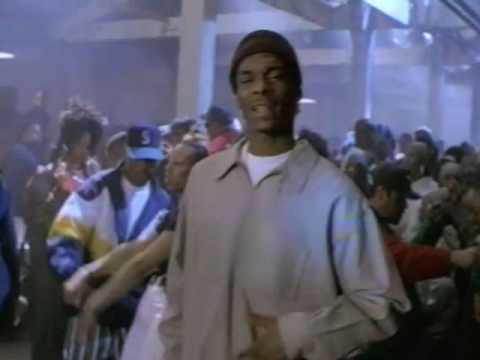
  • The music video stars a character named "Sleazy-E," a hapless, unctuous rapper who ends up by the side of the road holding a sign saying "Will Rap For Food." The video opens with a skit where Sleazy meets with a white manager who sends him to do his bidding. It's very obvious that the rapper represents Eazy-E and the manager is a caricature of Jerry Heller.

    At the end of the video there's a disclaimer stating that all that "any resemblance to any persons, living or dead, is entirely coincidental." Yeah, right.
  • First released on Dr. Dre's landmark album The Chronic in December 1992, "Dre Day" was issued as the second single in May 1993, following "Nuthin' But A G Thang." Both tracks feature Snoop Doggy Dogg, a new rapper with a laid-back flow who first appeared on "Deep Cover," a 1992 collaboration with Dre. Snoop was signed to Death Row and released his first album on the label, Doggystyle, in November 1993. Produced by Dr. Dre, it went straight to #1 in the US.
  • The slinky groove on "Dre Day" comes from a processed sample of Funkadelic's 1979 track "(Not Just) Knee Deep." Dr. Dre and other West Coast rap producers dug a lot of funk records out of their crates to sample for beats, so there's a lot of George Clinton on this type of G-Funk. East Coast producers used a lot of James Brown and disco.
  • Snoop Dogg introduces himself on this track with a reworking of the George Clinton song "Atomic Dog":

    Bow wow wow yippy yo yippy yay
    Doggy Dogg's in the motherf--king house


    This became his musical signature, used again on his solo hit "Who Am I (What's My Name)?"

Comments

Be the first to comment...

Editor's Picks

Joe Elliott of Def Leppard

Joe Elliott of Def LeppardSongwriter Interviews

The Def Leppard frontman talks about their "lamentable" hit he never thought of as a single, and why he's juiced by his Mott The Hoople cover band.

Laura Nyro

Laura NyroSongwriting Legends

Laura Nyro talks about her complex, emotionally rich songwriting and how she supports women's culture through her art.

Dwight Twilley

Dwight TwilleySongwriter Interviews

Since his debut single "I'm On Fire" in 1975, Dwight has been providing Spinal-Tap moments and misadventure.

Why Does Everybody Hate Nu-Metal? Your Metal Questions Answered

Why Does Everybody Hate Nu-Metal? Your Metal Questions AnsweredSong Writing

10 Questions for the author of Precious Metal: Decibel Presents the Stories Behind 25 Extreme Metal Masterpieces

Billy Joe Shaver

Billy Joe ShaverSongwriter Interviews

The outlaw country icon talks about the spiritual element of his songwriting and his Bob Dylan mention.

Gene Simmons of Kiss

Gene Simmons of KissSongwriter Interviews

The Kiss rocker covers a lot of ground in this interview, including why there are no Kiss collaborations, and why the Rock Hall has "become a sham."