Dear Big City

Album: released as a single (2026)
Play Video

Songfacts®:

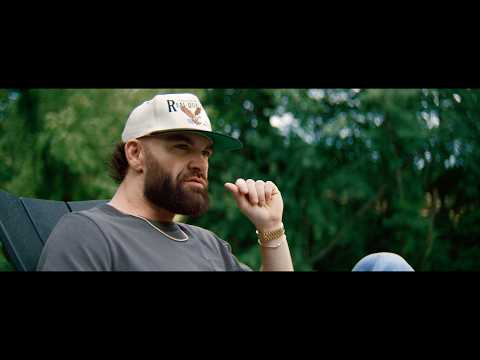
  • "Dear Big City" is written as a letter from a personified small town to a personified big city, asking the city to look after a young person leaving home to chase a dream in Nashville. The song reflects Dylan Scott's real life: leaving his hometown of Bastrop, Louisiana, for Nashville in 2010 to pursue a country music career. "It is my story," Scott told Billboard. "It is what I did, leaving a small town, going to the bigger city of Nashville, chasing a dream. It is what I needed to do."
  • Scott's longtime producer Matt Alderman wrote the song along with Nate Kenyon (The Lacs' "Dirt Road Dollars," Lee Brice's "Country Nowadays") and Jamie Paulin (Justin Moore's "Backwoods," Kenny Chesney's "Happy Does"). Paulin said the idea captures "the last moment of blind faith" someone experiences before relocating.

    The writers avoided turning it into the usual "city bad, small town good" argument. "We came here, we love it here, also we love our hometown," Paulin explained, "but it's really about not being able to do what you do, where you want to do it."
  • The original idea came from Kenyon, who was moving with his wife, Brooke, from downtown Nashville to a smaller town. The move made him think about his own hometown and realize that he had "given my small town way less credit than it deserved." He arrived at a co-writing session with Alderman and Paulin at Anthem's Nashville office with the opening line and the basic concept. Kenyon began fingerpicking a guitar and singing melodic ideas, and the three writers built the song around the idea of a letter being sent from one place to another.
  • Alderman produced an early demo, and the song drew interest from Jelly Roll and amother unnamed artist, but both passed on it. Alderman then sent the song to Scott, who connected with the lyric but felt the original production had a "hip-hoppy, trappy" feel, which wasn't emotionally deep enough and undersold the story.

    "This lyric is so deep and so good, it doesn't need to be quite as fun," Scott said. "It needs to be a little more heartfelt."

    Scott let the song sit for a couple of weeks before using the AI music tool Suno to create a darker, more country-leaning version as a reference.
  • The finished version contains a few details tailored specifically to Scott. A lyric originally mentioning an off-white 2009 Chevy was changed to an off-white Ford F-150, reflecting his association with Ford. The college-football reference was also changed from Georgia to Baton Rouge, home of Louisiana State University. The latter created an extra syllable, but though the writers admitted it was "left footed," they decided to keep it because, as Scott put it, "it's better."
  • Scott gave the Suno-generated reference track to Alderman and co-producer Will Weatherly. They used it as the starting point for a full studio production, building a foundation of guitars and programmed drums. Multi-instrumentalist Seth Michael then expanded the arrangement, giving the main guitar part what Weatherly described as a "borderline alt-rock" edge.

    The challenge was to preserve the emotion without allowing the song to become overly soft or sentimental. "The song is a really sentimental song," Weatherly explained. "So how do we make it not too soft or too sentimental? ... You want the music to sound like the song feels."

Comments

Be the first to comment...

Editor's Picks

Five Rockers Who Rolled With The Devil

Five Rockers Who Rolled With The DevilSong Writing

Just how much did these monsters of rock dabble in the occult?
Dave Edmunds

Dave EdmundsSongwriter Interviews

A renowned guitarist and rock revivalist, Dave took "I Hear You Knocking" to the top of the UK charts and was the first to record Elvis Costello's "Girls Talk."
History Of Rock

History Of RockSong Writing

An interview with Dr. John Covach, music professor at the University of Rochester whose free online courses have become wildly popular.
David Bowie Lyrics Quiz

David Bowie Lyrics QuizMusic Quiz

How well do you know your David Bowie lyrics? Take this quiz to find out.
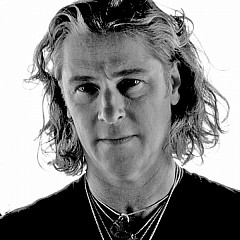
Ed Roland of Collective Soul

Ed Roland of Collective SoulSongwriter Interviews

The stories behind "Shine," "December," "The World I Know" and other Collective Soul hits.
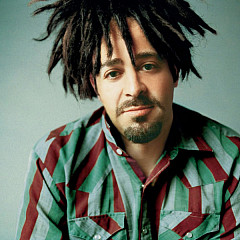
Adam Duritz of Counting Crows

Adam Duritz of Counting CrowsSongwriter Interviews

"Mr. Jones" took on new meaning when the song about a misguided view of fame made Adam famous.