Try And Love Again

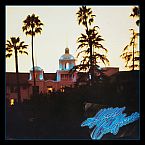
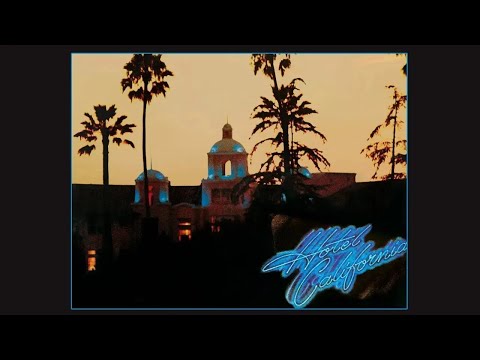
Album: Hotel California (1976)
Play Video

Songfacts®:

  • "Try and Love Again" is a wistful ballad about romantic second chances, written and sung by Eagles bassist Randy Meisner. The lyric finds him wondering whether it is worth risking heartbreak again, but for many fans it doubles as an eerie parallel to Meisner's own dwindling place in the band, since it turned out to be his last song, and his last lead vocal, as an Eagle.
  • Glenn Frey suggested the song might have had a bigger life on the radio if Meisner had stayed in the fold. "'Try and Love Again' was Randy's last track with the Eagles, and had he stayed in the band, we would probably have released that as a fourth single from the album," Frey recalled in 1988. "But he had left in order to do whatever it was that he wanted to do. It's the song that's probably the least like 'Hotel California.' It's just a straightforward love song."

    Don Henley had a more irreverent description for the track's blend of soul and country-rock. "There's one song on the album that we joke about being our Buffalo Chi-Lites track; half the Chi-Lites, half Buffalo Springfield," he told Zigzag in December 1976. "It's a track of Randy's, 'Try and Love Again.'"
  • The track was the starting gun for the Hotel California sessions. The Eagles had rented a rehearsal house in Los Angeles, but when producer Bill Szymczyk arrived expecting a stack of new material, he discovered they only had one song ready to go.

    "I walked in ready to start work and said, 'OK, how many songs have you got?' And they had one, Randy's song, 'Try and Love Again.' That was it," Szymczyk recalled to Mojo magazine. "So that was the beginning of the Eagles writing in the studio. It doesn't work for a lot of bands because they can't afford it. But the Eagles could."
  • Meisner wrote the song in early 1976, before the internal strain that eventually drove him out of the group boiled over. In hindsight, the lyric's hesitation about opening up to love mirrors his own growing discomfort with the relentless pressures of stadium stardom.

    His departure came after the exhausting Hotel California tour. On June 28, 1977, in Knoxville, Tennessee, Meisner declined to sing "Take It To The Limit" during the encore due to exhaustion and a stomach ulcer. A heated backstage argument with Frey followed, and Meisner played his final show as an Eagle that September in Houston before being replaced by Timothy B. Schmit.
  • Unlike "Take It to the Limit," which Meisner co-wrote with Frey and Henley and turned into one of the group's signature hits, "Try and Love Again" was written entirely on his own. That makes it a distinctively personal moment on Hotel California, offering a straightforward, intimate love song right before the album closes with "The Last Resort," Henley and Frey's sprawling epic about environmental loss and American greed.
  • Soul legend Booker T. Jones was clearly a fan of the track: he recorded his own cover of "Try and Love Again" as the title track for his 1978 solo album.

Comments

Be the first to comment...

Editor's Picks

Five Rockers Who Rolled With The Devil

Five Rockers Who Rolled With The DevilSong Writing

Just how much did these monsters of rock dabble in the occult?
Dave Edmunds

Dave EdmundsSongwriter Interviews

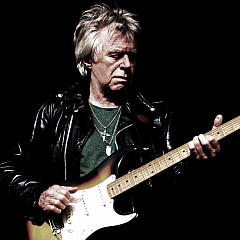
A renowned guitarist and rock revivalist, Dave took "I Hear You Knocking" to the top of the UK charts and was the first to record Elvis Costello's "Girls Talk."
History Of Rock

History Of RockSong Writing

An interview with Dr. John Covach, music professor at the University of Rochester whose free online courses have become wildly popular.
David Bowie Lyrics Quiz

David Bowie Lyrics QuizMusic Quiz

How well do you know your David Bowie lyrics? Take this quiz to find out.
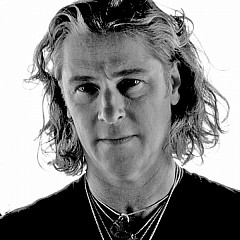
Ed Roland of Collective Soul

Ed Roland of Collective SoulSongwriter Interviews

The stories behind "Shine," "December," "The World I Know" and other Collective Soul hits.
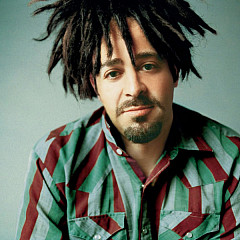
Adam Duritz of Counting Crows

Adam Duritz of Counting CrowsSongwriter Interviews

"Mr. Jones" took on new meaning when the song about a misguided view of fame made Adam famous.