Lilac Wine

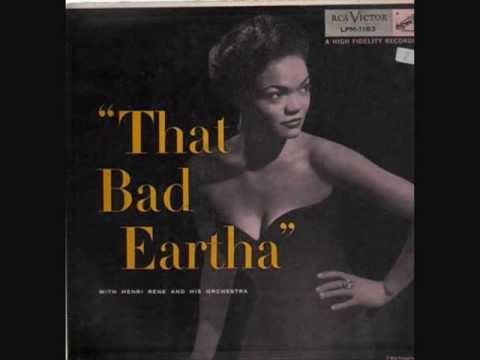
Album: That Bad Eartha (1953)
Play Video

Songfacts®:

  • This intoxicating song tells the story of a woman who is so brokenhearted, she sits under a lilac tree and drinks her homemade lilac wine, which she made from that same tree. After enough wine, she can return in her mind to a time when she and her love are still together.

    The song has a hazy quality that makes it sound like there's something mind-altering about the wine, which wouldn't be too unusual for this kind of home concoction. Our guess is, she eventually passes out under the tree, moving the vision into a dream state.
  • The song was written by a composer of Broadway musicals named James Shelton, whose shows include The Straw Hat Revue (1939) and Almost Crazy (1955). "Lilac Wine" is from the 1950 musical Dance Me a Song, where it was performed by Hope Foye. Eartha Kitt was the first to release the song, putting out her version in 1953 backed by Henri René and His Orchestra. Kitt was a very sultry singer who at this time was mostly singing in nightclubs. Later in 1953 she sang the first version of "Santa Baby," which became a Christmas classic and brought her to a wider audience. She plays it coy on "Lilac Wine," with a little laugh at the end, making it sound like she's authentically drunk.

    Her version of the song brought it out in the open and many have covered it since, including Helen Merrill in 1956 and Nina Simone in 1966. In 1978 former Vinegar Joe vocalist Elkie Brooks had a #16 hit with her version in the UK. In 1994 Jeff Buckley included the song on his debut album, Grace, and in 2003 it was covered by Katie Melua on her album Call Off the Search. Imelda May sang it with Jeff Beck on guitar in 2010. Miley Cyrus sang it in 2012 at her Backyard Sessions, and Dave Gahan of Depeche Mode released his version in 2021.
  • It's possible the song's author, James Shelton, got the idea for a song called "Lilac Wine" from a 1924 book called Sorrow In Sunlight by Ronald Firbank. Here's the passage of the book here the wine shows up:

    "Offering a light, lilac wine, sweet and heady, Miami circled, here and there. She had a cincture of white rose-oleanders, and a bandeau of blue convolvoli. She held a fan."
  • Here's what some of the artists who have covered the song had to say about it:

    Jeff Buckley: "A beautiful song I wish I wrote."

    Dave Gahan: "It's having a dependency. It's having a love - a true love that you feel and you know is there. And maybe that love at that particular time is a substance."

Comments: 2

  • Jb from Highland Lakes, NjA great song. There is also the version on Jeff Beck's album 'Emotion and Commotion' from 2010 featuring Imelda May on vocals which is fantastic.
  • Dave from Dublin, IrelandLove the version by Elkie Brooks..... Shame it is not on here...
see more comments

Editor's Picks

Stephen Christian of Anberlin

Stephen Christian of AnberlinSongwriter Interviews

The lead singer/lyricist for Anberlin breaks down "Impossible" and covers some tracks from their 2012 album Vital.

Emilio Castillo from Tower of Power

Emilio Castillo from Tower of PowerSongwriter Interviews

Emilio talks about what it's like to write and perform with the Tower of Power horns, and why every struggling band should have a friend like Huey Lewis.

Art Alexakis of Everclear

Art Alexakis of EverclearSongwriter Interviews

The lead singer of Everclear, Art is also their primary songwriter.

Graham Bonnet (Alcatrazz, Rainbow)

Graham Bonnet (Alcatrazz, Rainbow)Songwriter Interviews

Yngwie Malmsteen and Steve Vai were two of Graham's co-writers for some '80s rock classics.

They Might Be Giants

They Might Be GiantsSongwriter Interviews

Who writes a song about a name they found in a phone book? That's just one of the everyday things these guys find to sing about. Anything in their field of vision or general scope of knowledge is fair game. If you cross paths with them, so are you.

Who's Johnny, And Why Does He Show Up In So Many Songs

Who's Johnny, And Why Does He Show Up In So Many SongsSong Writing

For songwriters, Johnny represents the American man. He has been angry, cool, magic, a rebel and, of course, marching home.