Bye Bye Blackbird

Album: Bye Bye Blackbird (1926)
Play Video

Songfacts®:

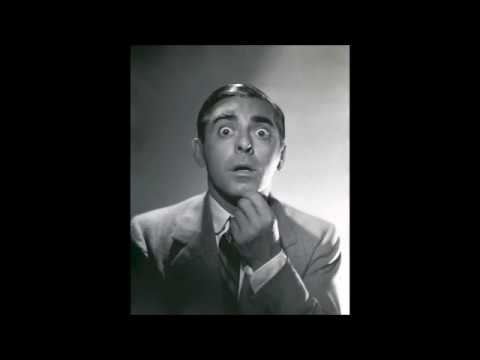
  • "Bye Bye Blackbird" is a feel-good song; it was written in 1926 by composer Ray Henderson and lyricist Mort Dixon. According to Don Tyler in his 2007 book Hit Songs 1900-1955: American Popular Music of the Pre-Rock Era, it was Henderson's third hit of the year. First popularized by Eddie Cantor, this standard has been recorded by numerous artists. A full arrangement (by Jeff Muston) was published in London by Francis, Day & Hunter at 3s6d, copyright 1954; the original was copyright 1926 by Jerome H. Remick & Co and 1948 by Remick Music Corp of New York. Gene Austin's original version was inducted into the Grammy Hall of Fame in 2005; Josephine Baker's version was recorded in 1927.
  • The song retained its popularity through the Great Depression, probably because of its optimism, and has featured in a number of films, including most notably and unsurprisingly the 1953 biopic The Eddie Cantor Story. The following year it reached #1 in the UK, in a manner of speaking. Boogie woogie pianist Winifred Attwell included "Bye Bye Blackbird" in her instrumental medley "Let's Have Another Party," which held the top spot for five weeks. >>
    Suggestion credit:
    Alexander Baron - London, England, for above 2
  • The chart-topping 1993 soundtrack for Sleepless in Seattle, starring Tom Hanks and Meg Ryan, features a version from Joe Cocker.
  • Diana Krall performed this in the 2009 gangster movie Public Enemies, starring Johnny Depp and Christian Bale.
  • Much speculation has been made that this song is about a prostitute. Some suggest the narrator is a young man who is disenchanted by the big city, where he has become mixed up with a prostitute, and ready to return home to his wholesome girlfriend ("sugar sweet so is she"). Or is it about the prostitute leaving the mean streets and going home to mother? No matter what the interpretation, most agree that the blackbird represents a dark period that the narrator is finally willing to move beyond.
  • Ringo Starr and Paul McCartney both covered this in their post-Beatles career. Starr included it on his solo debut, Sentimental Journey, while McCartney recorded it for his 2012 album, Kisses On The Bottom.
  • During the American Civil Rights Movement, segregationists adopted this as an anti-black anthem - spinning the title into hate speech against African Americans - blasting it from loudspeakers during the Selma to Montgomery marches. Many African American artists, however, have covered the song before and since, including Ella Fitzgerald, Nina Simone, Josephine Baker, Miles Davis, and Sammy Davis Jr. John Coltrane also performed a near 18-minute jazz rendition on his album Bye Bye Blackbird, which earned him a posthumous Grammy Award in 1982 for Best Jazz Solo Performance.
  • Peggy Lee's version is featured in Peter Jackson's 2005 remake of King Kong.
  • Paula Cole recorded a simple acoustic rendition for her 2021 album, American Quilt.

Comments: 4

  • Mavis from Upper Great LakesThis song seemed to be everywhere on television in the 50s. Today in early 2025, it was in my head for some reason. I love that a variety of interpretations have been offered.
  • Bill from West GeorgiaPeter Falk in the back of an ambulance with 3 prostitutes sang this one in the film Anzio in 1968. I always thought it was "singin' low", but "winging" makes more sense.
  • Geoff from Adelaide, AustraliaThe Bluebird of Happiness was written in 1934 when the Great Depression was fading.
    This song, written in 1924 during the seemingly carefree Roaring Twenties, seems to be about the blackbird of unhappiness.
    It was played at every trad jazz performance I ever heard, along with When the Saints Go Marching In.
    It seems to be about someone leaving a bad situation to return to a familiar, happy place and a woman. Maybe the blackbird is mental dissatisfaction, similar to the "black dog" of depression. Maybe the blackbird is a woman, perhaps with dark hair or skin.
  • .jennifer GrozelleI heard this song on tv two days ago on a 1970 episode of THE PARTRIDGE FAMILY.
see more comments

Editor's Picks

Muhammad Ali: His Musical Legacy and the Songs he Inspired

Muhammad Ali: His Musical Legacy and the Songs he InspiredSong Writing

Before he was the champ, Ali released an album called I Am The Greatest!, but his musical influence is best heard in the songs he inspired.

Michael Sweet of Stryper

Michael Sweet of StryperSongwriter Interviews

Find out how God and glam metal go together from the Stryper frontman.

Devo

DevoSongwriter Interviews

Devo founders Mark Mothersbaugh and Jerry Casale take us into their world of subversive performance art. They may be right about the De-Evoloution thing.

Dennis DeYoung

Dennis DeYoungSongwriter Interviews

Dennis DeYoung explains why "Mr. Roboto" is the defining Styx song, and what the "gathering of angels" represents in "Come Sail Away."

Tom Bailey of Thompson Twins

Tom Bailey of Thompson TwinsSongwriter Interviews

Tom stopped performing Thompson Twins songs in 1987, in part because of their personal nature: "Hold Me Now" came after an argument with his bandmate/girlfriend Alannah Currie.

Evolution Of The Prince Symbol

Evolution Of The Prince SymbolSong Writing

The evolution of the symbol that was Prince's name from 1993-2000.