"Praise You" by Fatboy Slim is built around a sample from "Take Yo' Praise," a 1975 track by American civil rights activist Camille Yarbrough. The original song, which was the fourth track on her album The Iron Pot Cooker, might have remained obscure if not for Norman Cook, aka Fatboy Slim, who discovered it on a compilation CD during a difficult period in his life after a breakup. The sample resonated deeply with him, inspiring the creation of "Praise You."
Reflecting on the sample, Fatboy Slim noted to >Sound on Sound in 2017: "Basically, any time I heard a bit of a cappella, I was like, 'Okay, I can use that.' Her vocal just had a beautiful quality to it. The sentiment fits so many different occasions. The beauty of the lyrics is that they work at football matches, they work at gigs where we've all had a great night, or it's been raining all day at a festival but we're here. Just the phrase, 'We've come a long, long way together, through the hard times and the good.' It's kind of a universal, communal thing. It's affirmative and uplifting, and those things do tend to stand the test of time."
Camille Yarbrough is not only a civil rights activist but also an artist whose music captures both personal and collective struggles. Her original song is a love letter to a particular man, but it also serves as a broader tribute to the countless, often unnamed, civil rights activists. As Yarbrough said in Scandinavian documentary Moderne Klassikere: "It had two levels of understanding, yes it was very personal, but yes it was about our family. And I was thanking the people in the movement, especially the men, because most of them were out front getting beat down. We had the big names, we had the Martin Luther King Jr., we had the Malcolm X, but they were all ordinary men who got on those buses. We don't know their names."
Fatboy Slim later transformed this powerful song into a dance anthem, focusing on the uplifting line, "I have to praise you." Reflecting on this adaptation, Yarbrough remarked: "He took the heart of my song, and he spread it around the world."
Alongside Yarbrough's vocal, Fatboy Slim intricately wove in five other samples to create the iconic "Praise You":
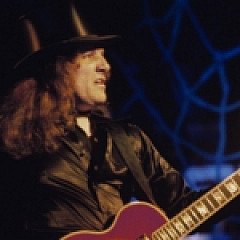
1. The prominent piano riff was sampled from a 1973 JBL test album titled
Sessions, which features American singer Hoyt Axton. This track, "Balance and Rehearsal," includes the raw sound of the band preparing for a recording session. As Fatboy Slim described it to
Sound on Sound: "It was the rehearsal of the band before they recorded a tune. And that's why it's so badly recorded. That's why there's scratches all over it, and that's why if you listen to the loop you can actually hear someone talking. But I just really loved that piano riff, and as soon as I put the vocal over it, the sum total of the parts became a third song."
2. A sample of the theme tune from US cartoon series
Fat Albert and the Cosby Kids.
3. The electric keyboard riff from "Lucky Man" by the Steve Miller Band.
4. The drums from the song "Running Back to Me" by Tom Fogerty.
5. Finally, the funky guitar riff was borrowed from the disco track "
It's a Small World" featured on the 1979 Disneyland Records album
Mickey Mouse Disco.
When the song became a hit, Yarbrough was working as a professor in the Black Studies Department at the City College of New York and struggling financially. The unexpected success of "Praise You" not only lifted her out of poverty but also renewed interest in her artistic work, leading to the release of her album Ancestor House in 2003. Yarbrough is said to express her gratitude for the life-changing impact of "Praise You" by sending Cook a Christmas card every year.
Al Gore used this song while campaigning for president in 2000. Slim's response: "Thank God it wasn't the Republicans. I would have had to sue."
"Praise You" gained widespread popularity after being featured in several high-profile television ads. It first appeared in a 1997 Nike Air Jordan commercial, which went down so well with US viewers that the track was subsequently added to radio playlists nationwide. The song's influence endured, as it was featured again in a 2024 Nike Air Max ad starring Norwegian footballer Erling Haaland and American sprinter Sha'Carri Richardson, alongside Drake and Billie Eilish.
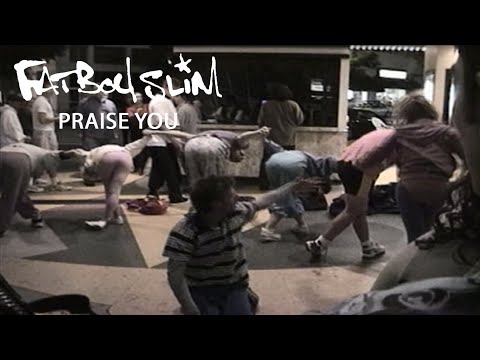
The video, which makes bad dancers look good, was shot after Fatboy Slim's performance at the Mayan Theatre in LA. It was shot on the lam outside the Fox Bruin Theater in Westwood in one take in under 10 minutes. The dancers are from the fictional "Torrance Community Dance Group," the theater managers and bouncers appearances were unscheduled, as was a break dancing Michael Jackson impersonator (who was cut from the video).
The video is an expanded version of the Spike Jonze (video guru behind Weezer's "
Buddy Holly," Beastie Boys' "
Sabotage," and The Chemical Brothers' "Elektrobank") video treatment for "
The Rockafeller Skank." The treatment was a joke... a video tape of Spike dancing it up on Hollywood Boulevard.
Look for Norman Cook in the video. He's bald, and pops his head in behind choreographer Richard Carfay (aka Spike Jonze) when he's talking about b-boys and posses. Total cost of the video was $800.
This song was notably featured in the 1999 teen cult film Cruel Intentions during a memorable scene where Annette (played by Reese Witherspoon) makes Sebastian (played by Ryan Phillippe) laugh by pulling funny faces in the car. It was also used in the 1999 season finale episode of the NBC sitcom Suddenly Susan in a poignant tribute to cast member David Strickland, who died by suicide a few months prior.
When British Prime Minister Tony Blair borrowed the song in 1999, pundits took exception to the line, "I have to praise you like I should," accusing the New Labour leader of rampant egotism. Slim was unimpressed; "Somehow it's become the anthem of the soft left," he shrugged.
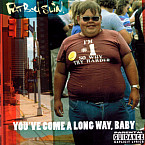
Released on January 4, 1999, as the third single from You've Come a Long Way, Baby, "Praise You" became Fatboy Slim's first solo UK #1 hit. In the US, it peaked at #36 and sold over 150,000 copies.
MTV initially refused to air the official music video, assuming it was a joke, but reversed their decision after it gained popularity on VH1. The video went on to win three major awards at the 1999 MTV Video Music Awards: Breakthrough Video, Best Direction (credited to the Torrance Community Dance Group), and Best Choreography (awarded to Richard Koufey and Michael Rooney). Fatboy Slim and the Torrance Community Dance Group also performed live at the awards ceremony.
In 2001, "Praise You" was voted the best music video of all time in a poll commemorating MTV's 20th anniversary.
Over the years, "Praise You" has inspired numerous covers and remixes. In 2017, Welsh singer Hannah Grace recorded a version with the London Contemporary Voices choir for a Lloyds Bank ad campaign, incorporating additional lyrics from Yarbrough's original song. In 2018, German house producer Purple Disco Machine released a remix that peaked at #1 on the Billboard Dance Club Songs chart.
English pop star Rita Ora released a reworked version of "Praise You" titled "
Praising You," featuring Fatboy Slim, in 2023. The track reached #1 on the Billboard Dance/Mix Show Airplay chart. The official music video, directed by Ora's Hollywood filmmaker husband, Taika Waititi, pays homage to Jonze's original clip, featuring Ora auditioning onstage while Fatboy Slim observes from the audience.
A
second video, directed by Joseph Kahn, showcases Ora dancing in the desert, albeit this time surrounded by mannequins.