Sunset (Bird of Prey)

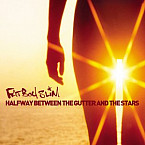
Album: Halfway Between The Gutter And The Stars (2000)
Charted: 9
Play Video

Songfacts®:

  • Fatboy Slim revealed in a 2000 interview with CMJ New Music Monthly that he created "Sunset (Bird of Prey)" while he and his friends "were doing lots of acid." The track was released as the lead single from Fatboy Slim's third album, Halfway Between the Gutter and the Stars, on October 16, 2000. It achieved chart success, peaking at #9 in the UK.

    An earlier version of the track, simply titled "Bird of Prey," was released by Fatboy Slim under the name Yum Yum Head Food in 1995.
  • Norman Cook, better known as Fatboy Slim, stumbled upon The Doors' "Bird of Prey" at a record fair and was immediately captivated by its evocative power. The a cappella track is part of the reissued edition of An American Prayer, The Doors' final album, where the surviving members added music to Jim Morrison's poetry recordings.

    Cook prominently samples Morrison's vocals from the song in "Sunset (Bird of Prey)," which didn't go over well with some Doors fans. Cook responded in a 2000 interview with Billboard: "Personally, I don't see how the sample could be perceived as blasphemous on any level. But judging from the many anatomically incorrect words they flung at me, I guess they did."

    In addition to Morrison's vocals, "Sunset (Bird of Prey)" incorporates samples from James Brown's "Soul Pride" and Dr. John's "Jet Set."
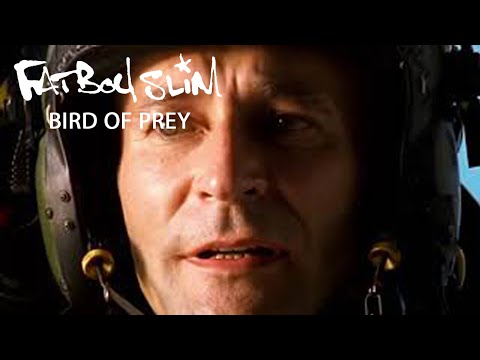
  • The official music video for "Sunset (Bird of Prey)" opens with a US Air Force pilot watching the famous "Daisy" advertisement from Lyndon B. Johnson's 1964 presidential campaign, considered one of the most impactful political commercials in history. The advertisement depicts a little girl counting petals from a daisy while a man's voice suddenly counts down from 10, like a missile launch. The camera zooms in on her eye, which is then replaced by a nuclear explosion. President Johnson's voice follows, delivering a stark warning: "These are the stakes: to make a world in which all of God's children can live, or to go into the dark. We must either love each other, or we must die."

    In the video, the pilot watches this iconic advertisement before consuming a mysterious substance, triggering a hallucinatory sequence. He envisions approaching a plane with the words "BOMB EVERYTHING" written on its nose. As he flies the jet, he witnesses nuclear explosions reversing outside the windows. Throughout the sequence, brief flashes appear of an identification form featuring Fatboy Slim's real name, Norman Cook, as well as one for Al Hubbard, an early advocate of LSD. The word "MKULTRA" also flickers, referencing the CIA's notorious mind-control experiments.

    The video, directed by Rob Leggatt and Leigh Marling of Blue Source, was filmed at Duxford Aerodrome in England. Initially, they intended to feature a Lockheed F-104 Starfighter as an homage to the famous scene in The Right Stuff where Chuck Yeager loses control of the jet before ejecting. Ultimately they opted for a Hawker Hunter.

Comments

Be the first to comment...

Editor's Picks

Little Big Town

Little Big TownSongwriter Interviews

"When seeds that you sow grow by the wicked moon/Be sure your sins will find you out/Your past will hunt you down and turn to tell on you."

Millie Jackson

Millie JacksonSongwriter Interviews

Outrageously gifted and just plain outrageous, Millie is an R&B and Rap innovator.

Don Dokken

Don DokkenSongwriter Interviews

Dokken frontman Don Dokken explains what broke up the band at the height of their success in the late '80s, and talks about the botched surgery that paralyzed his right arm.

Martyn Ware of Heaven 17

Martyn Ware of Heaven 17Songwriter Interviews

Martyn talks about producing Tina Turner, some Heaven 17 hits, and his work with the British Electric Foundation.

Sending Out An SOS - Distress Signals In Songs

Sending Out An SOS - Distress Signals In SongsSong Writing

Songs where something goes horribly wrong (literally or metaphorically), and help is needed right away.

John Lee Hooker

John Lee HookerSongwriter Interviews

Into the vaults for Bruce Pollock's 1984 conversation with the esteemed bluesman. Hooker talks about transforming a Tony Bennett classic and why you don't have to be sad and lonely to write the blues.