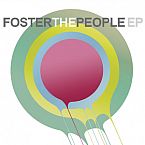
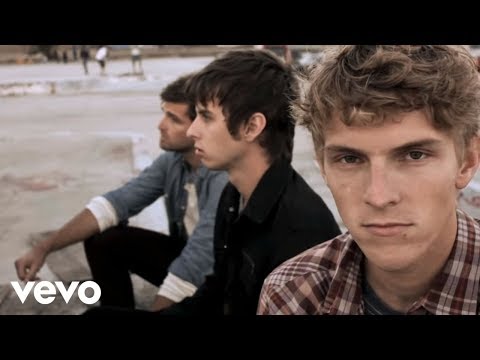
Foster the People is a Los Angeles indie rock band that started off as a solo project for vocalist, guitarist and keyboardist Mark Foster, who had been working as a jingle composer for commercials. As his songs became more grandiose, Foster enlisted bassist Cubbie Fink and drummer Mark Pontius. This is the band's debut single, which debuted on the Hot 100 chart dated May 7, 2011.
Mark Foster explained the song's meaning to Spinner UK: "'Pumped Up Kicks' is about a kid that basically is losing his mind and is plotting revenge. He's an outcast. I feel like the youth in our culture are becoming more and more isolated. It's kind of an epidemic. Instead of writing about victims and some tragedy, I wanted to get into the killer's mind, like Truman Capote did in In Cold Blood. I love to write about characters. That's my style. I really like to get inside the heads of other people and try to walk in their shoes."
Foster says he considered writing the song from the perspective of the victim, but felt that would be a cop out. He also points out that there is no actual violence in the song, as the threats are all the kid's internal monologue.
About those "Pumped Up Kicks" the other kids in this song are wearing: In the late '80s and early '90s, the
Reebok Pump basketball shoe enjoyed modest popularity. The sneaker had a pump shaped like a basketball on the tongue, and the idea was that if you needed a little extra lift, you could just give it a few pumps - keep in mind that Nike had Michael Jordan selling its kicks, so Reebok was pretty desperate. The greatest moment in Pumps history came when Dee Brown of the Boston Celtics won the 1991 Slam Dunk contest wearing the shoes. Just before his winning dunk, he reached down and inflated his Pumps, a moment that Reebok used in commercials for the shoes.
The shoes were very expensive, and kids with that kind of money to spend on basketball sneakers who didn't opt for Air Jordans tended to be the privileged poseurs who annoyed the hell out of anyone wearing Converse or Keds. In this song, the kids with the pumped up kicks, or at least these type of kids, are threatened with grave violence.
Foster discussed the broad appeal of the song in an interview with Billboard magazine: "'Pumped Up Kicks' is one of those songs that blends something really familiar with something that's very modern," he said. "It's a song where you could lay on the couch and listen to it or you can get up and dance around the room to it."
Talking about writing this song in Rolling Stone, Foster said: "I was trying to get inside the head of an isolated, psychotic kid. It's a f--k you song to hipsters, in a way - but it's a song the hipsters are going to want to dance to."
The "gun" in this song is quite literal, but it didn't start out that way. Mark Foster wrote the chorus of the song first, and considered it a song about confidence, with "gun" being a metaphor. That changed when he came up with the first verse, which he freestyled during a recording session. This verse was clearly about a kid who finds his dad's gun, and it changed the complexion of the song, giving the "gun" a literal meaning.
The song manages to hide a dark message beneath its cheery tune. "I tend to do that with a lot of songs," Mark Foster told MTV News. "I like to tell a different type of story, lyrically, than what the music is expressing, because it brings another layer to the story itself. I wrote it a block away from the beach, and I was working at a music house - Mophonics, a place where I composed for ads and stuff - and I think that had some influence on the sound."
MTVU censored this song when they played the video, dropping the audio any time Foster sang "gun" or "bullets." The frontman told Rolling Stone: "I think MTV is scared of an alternative band that has a sound like this. I think the sound is deceiving. You've got reality shows which are all about teenagers getting pregnant and you've got Jersey Shore, where a girl gets punched in the face and they show the clip over and over and over as a teaser to watch the show. It's like, oh, OK, domestic violence is fine but, like, talking about something like family values and teen isolation and bullying is not."
The song's success is partly due to its multi-format appeal, and it was the first song to top both Billboard's Alternative Songs and Dance Airplay charts. (The latter has only been running since October 17, 2003).
The chorus shows up eight times in this song, including four times at the end of the song. Chorus repetition is a hallmark of hit songwriting, but this is a little much, and Mark Foster knows it. "If I had known that the song was going to be played everywhere, I would have taken those damn choruses out of the song and made it move faster," he told NME. "By the end of it, it's just chorus, chorus, chorus, chorus... it's driving me crazy to hear this stupid chorus again."
The song was never officially released. Foster the People bassist Cubbie Fink explained to Stuff New Zealand: "We were a brand-new band and that was the only song we had completed, and so we put it up on our website to download, and from that it had a life on its own. It was tossed around on the internet, and people would blog about and it ended up on [music blog aggregator] Hype Machine, and radio just naturally picked it up. First independent radio stations started playing it, and then mainstream radio stations started playing it, and it was just gradually growing."
Foster the People's debut album, Torches, was released on May 23, 2011 through Columbia Records and Startime. Mark Foster told CMU: "This album was really cathartic for me. A lot of the songs are about isolation and being the underdog. It was nice to get them out and take ownership over the things that I wanted to run away from."
This was the most streamed song on the US Spotify music service between when it launched on July 14, 2011 and the end of the year. Another Foster The People track, "
Helena Beat," was the fifth most streamed song over the same period.
The song was yanked from the airwaves after the shooting of 20 children and six staff members at Sandy Hook Elementary School in Newtown, Connecticut, in December 2012. Mark Foster agreed with the decision to pull the track out of respect for the victims, adding that he wrote the song about the growing trend of mental illness among teenagers in a bid to create a conversation about the need for change. He said in a statement to CNN.com, "I wrote 'Pumped Up Kicks' when I began to read about the growing trend in teenage mental illness. I wanted to understand the psychology behind it because it was foreign to me. It was terrifying how mental illness among youth had skyrocketed in the last decade. I was scared to see where the pattern was headed if we didn't start changing the way we were bringing up the next generation... This song was written as a way to create ongoing dialogue for an issue that was being talked about, but when it came to government intervention, was largely being ignored...
"Now, this topic is finally at the forefront of major discussion and will hopefully lead to some big changes in policy that will prevent these acts of violence from happening in the future. That being said, I respect people's decision to press pause. And if that becomes a catalyst for a bigger conversation that could lead to positive change moving forward, then I absolutely support it."
Looking back on this song in 2014, Mark Foster told NME that he was proud of its cultural significance. "It forced the public to have a conversation," he said. "Not just about guns and gun regulations, but also about art itself - where the line is, and what should be edited. I feel that in terms of pushing the envelope in terms of culture and forcing people to have those conversations, it was a really healthy thing for the country."