Double Dutch Bus

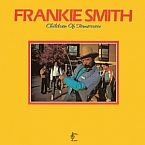
Album: Children Of Tomorrow (1980)
Charted: 30
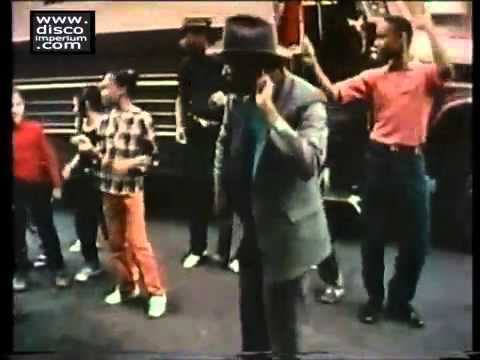
Play Video

Songfacts®:

  • Hip-hop was born in New York City, but by 1981 its influence extended to Philadelphia, where Frankie Smith used elements of the form to create "Double Dutch Bus," one of the most unusual songs ever recorded.

    Smith was a staff writer at Philadelphia International Records in the '70s, but he had little impact and was let go. He got back on his feet by recording his first single, "Double Dutch Bus," where he rapped about a funky bus where everybody's getting down. Like "Rapper's Delight" and many other rap songs that were gaining traction, the song tells a clever and self-deprecating story: He misses his bus and has to walk 15 blocks to get to work. But "Double Dutch Bus" has a secret weapon: a hook filled with a kind of pig Latin variation sung by Smith and a group of kids along the lines of:

    Mizzo izzay wizzat nizzo yizzou izzay

    This was a precursor to Jay-Z's improvised language in his 2001 hit "Izzo (H.O.V.A.)," where he spells out HOVA in izzle-speak:

    H to the Izz-o, V to the Izz-A

    Snoop Dogg, an old-school aficionado, put his own spin on it, using it as part of his regular speech. Fo shizzle.
  • Double Dutch is a game typically played by young girls with two jump ropes swinging at the same time. They have to jump over the ropes in rhythm to keep it going.
  • This is really a kids' song. When Frankie Smith performed it on American Bandstand, he told Dick Clark: "'Double Dutch' is a tribute to all the girls in the world, especially the girls on my block. I've been watching them for 25 years. They use their mothers' clotheslines to play the game - it's an art. It's a tribute to them - they're really good at it."
  • Released as a 12-inch single running 5:20 on the WMOT label, "Double Dutch Bus" was certified Gold in June 1981 for sales of over 500,000, making it just the second 12-inch single to earn the certification, following "No More Tears (Enough Is Enough)" by Barbra Streisand and Donna Summer. When it was issued as a 7-inch single (running 3:29), this version was also certified Gold, earning that status in September 1981. This 7-inch version was the one typically heard on the radio; it reached its peak position of #30 on the Hot 100 in August 1981.
  • Smith wrote and produced this song with William Bloom, whom he worked with at Philadelphia International.
  • A rough translation of the izzle section:

    Smith: Hilzi, gilzirls! Yilzall hilzave t' milzove ilzout the wilzay silzo the gilzuys can plilzay bilzasket-bilzall
    Hi girls, you have to move out the way so the guys can play basketball.

    Girls: Say wizzat? Nizzo-izzo wizzay
    Say what? No way!

    Smith: Yizzall bizzetter mizzove
    You all better move.

    Girls: Say wizzat? Willzy illzain't millzovin'
    Say what? We ain't moving.

    Smith: Shillzu gillzar bilzaby
    Sugar baby!

    Girls: Willze illzare plizzayin' dizzouble dizzutch
    We're playing double dutch.

    Smith: Millze cillzan sillzome plilzay dilzzouble dilzutch!
    I see someone plays double dutch!)

    Girl: Hilzzoo?
    Who?

    Smith: My gizzirl
    My girl.

    Girl: Brillzing her izzin
    Bring her in.

    Smith: Izzo kizzay
    OK

    Girl: Izzall rizzight
    All right.

    Smith: Izzo kizzay
    OK

    Girl: Izzall rizzight nizzow. Wizzee wilzzo-izzo-zee
    All right now. We will see.
  • This song has been sampled a number of times, including on two Hot 100 hits from 2003: "Gossip Folks" by Missy Elliott (#8) and "Step Daddy" by Hitman Sammy Sam (#90). Many others have borrowed elements from it, typically the vocal delivery. Among them: "What's My Name Pt. 2" by Snoop Dogg and "Hollaback Girl" by Gwen Stefani.
  • Raven-Symoné covered this song in 2008 for the movie College Road Trip, in which she starred. Other movies to use the song include The Specials (2000), The Master of Disguise (2002) and Hollywood Homicide (2003).
  • When this song took off, Smith made a whole album of kids' songs called Children Of Tomorrow with tracks like "Teeny-Bopper Lady" and "Slang Thang (Slizang Thizang)." He never issued another album, but did put out a few more singles, including "Yo-Yo Champ (From Mississippi)" and "Double Dutch II," both in 1982. In 1993, he got back on board with "The New Double Dutch Bus."

Comments: 1

  • Barry from Sauquoit, NyOn this day in 1981 {August 29th} Frankie Smith performed "Double Dutch Bus" on the ABC-TV Saturday afternoon program, 'American Bandstand'...
    At the time "Double Dutch Bus" was at position #47 on Billboard's Hot Top 100 chart, two weeks earlier it had peaked at #30 {for 1 week} and it spent nineteen weeks on the Top 100...
    "Double Dutch Bus" was his only Top 100 record...
    Franklyn Leon Smith passed away at the age of 66 on March 8th, 2019...
    May he R.I.P.
see more comments

Editor's Picks

Songs in Famous Movie Scenes: '80s Edition

Songs in Famous Movie Scenes: '80s EditionMusic Quiz

You know the scenes - Tom Cruise in his own pants-off dance off, Molly Ringwald celebrating her birthday - but do you remember what song is playing?

History Of Rock

History Of RockSong Writing

An interview with Dr. John Covach, music professor at the University of Rochester whose free online courses have become wildly popular.

Don Brewer of Grand Funk

Don Brewer of Grand FunkSongwriter Interviews

The drummer and one of the primary songwriters in Grand Funk talks rock stardom and Todd Rundgren.

Tim Butler of The Psychedelic Furs

Tim Butler of The Psychedelic FursSongwriter Interviews

Tim and his brother Richard are the Furs' foundation; Tim explains how they write and tells the story of "Pretty In Pink."

Paul Williams

Paul WilliamsSongwriter Interviews

He's a singer and an actor, but as a songwriter Paul helped make Kermit a cultured frog, turned a bank commercial into a huge hit and made love both "exciting and new" and "soft as an easy chair."

Experience Nirvana with Sub Pop Founder Bruce Pavitt

Experience Nirvana with Sub Pop Founder Bruce PavittSong Writing

The man who ran Nirvana's first label gets beyond the sensationalism (drugs, Courtney) to discuss their musical and cultural triumphs in the years before Nevermind.