Fascinating Rhythm

Album: Lady, Be Good! (1924)
Play Video

Songfacts®:

  • Fascinating Rhythm is the title of a biography of the Gershwin brothers. In this book, composer George is quoted from a contemporary interview: "I like to get the most effect out of the fewest notes" referring to the song of the same name, which is also sometimes called "Fascinatin' Rhythm."

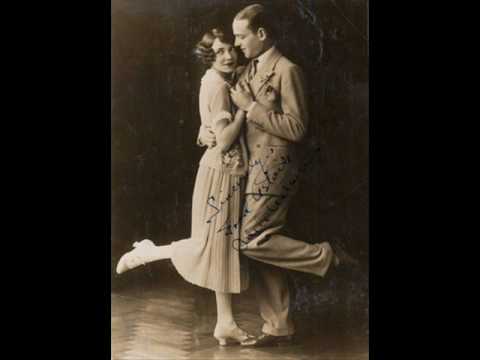
    Author Deena Rosenberg says the song, which is based largely on a six note repetition, with variations, sounds breathless. Ira provided the lyrics of this 1924 standard, which was introduced by Cliff Edwards and the brother/sister team of Fred and Adele Astaire in the Broadway musical Lady, Be Good! It was recorded by the Astaires in London on April 19, 1926 with George on piano and released on the Columbia label.
  • There have of course been numerous recordings, including by Tony Bennett (under the name Joe Bari) in 1949 on Leslie Records, and half a century and more later by jazz pianist Jamie Cullum.
    Somewhat surprisingly it also inspired a heavy metal track, the 1974 Deep Purple song "Burn." >>>
    Suggestion credit:
    Alexander Baron - London, England, for above 2
  • An early version of "Fascinating Rhythm" was one of many previously lost scores discovered in a Warner Brothers Music Warehouse in New Jersey in the '80s. Michael Feinstein, a pianist and singer who worked as an archivist for Ira Gershwin at the time, was sent to collect the material. He explained in an NPR Fresh Air interview: "One of the things I learned was that it had another title, which was 'Syncopated City,' which was the dummy or working title that George had appended to that tune. So it told me that he wrote the song absolutely as something that was inspired by the city of New York, by the energy of Manhattan, and it also contained a little passage that George plays on that 1926 recording that we just listened to - (humming)...

    It's a little interlude that he plays on that recording that no one knew what it was, and there it is in his hand, written out. So it must have been part of the dance music that Fred and Adele danced to in 1924."
  • George Gershwin demanded that certain lines in the song had to end with two-syllable words. Feinstein explained: "Whenever George would come up with a tune, there was a certain way that the words would have to fall on the tune. Ira preferred to write to a melody, but that meant that the words had to be fitted like a suit with a tailor so there was not an accent, as [songwriter] Frank Loesser would say, on the wrong syllable.

    And so - we put the accent upon the wrong syllable, and we sing a tropical song. So George wanted to make sure that (humming) there had to be a word that made sense that was accented at the end of those phrases. So Ira came up with fascinating rhythm, you got me on the go, fascinating rhythm, I'm all aquiver.

    And those words that came at the end of the phrase were the ones that had to be the more important part of what the statement would be lyrically. And so it's really the opposite of the way something is usually expressed musically."
  • When Tony Bennett re-recorded this with Diana Krall in 2018, he made the Guinness World Record for "longest time between the release of an original recording and a re-recording of the same single by the same artist," having first recorded it 68 years and 342 days earlier.

Comments: 1

  • Daevid from Glendale, CaLove Gershwin! especially the original recordings from the piano rolls.
    "Prelude #3" has to be my fave.
see more comments

Editor's Picks

Michael W. Smith

Michael W. SmithSongwriter Interviews

Smith breaks down some of his worship tracks as well as his mainstream hits, including "I Will Be Here For You" and "A Place In This World."

Verdine White of Earth, Wind & Fire

Verdine White of Earth, Wind & FireSongwriter Interviews

The longtime bassist of Earth, Wind & Fire discusses how his band came to do a holiday album, and offers insight into some of the greatest dance/soul tunes of all-time.

Concert Disasters

Concert DisastersFact or Fiction

Ozzy biting a dove? Alice Cooper causing mayhem with a chicken? Creed so bad they were sued? See if you can spot the real concert mishaps.

Oliver Leiber

Oliver LeiberSongwriter Interviews

Oliver Leiber talks about writing and producing hits for Paula Abdul, and explains his complicated relationship with his father, the songwriter Jerry Leiber.

The Real Nick Drake

The Real Nick DrakeSong Writing

The head of Drake's estate shares his insights on the late folk singer's life and music.

Francesca Battistelli

Francesca BattistelliSongwriter Interviews

The 2011 Artist of the Year at the Dove Awards isn't your typical gospel diva, and she thinks that's a good thing.