Nitrous Gas

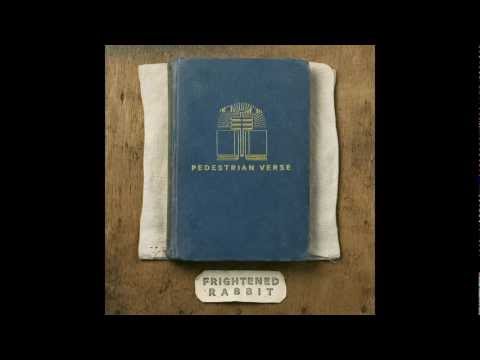
Album: Pedestrian Verse (2012)
Play Video

Songfacts®:

  • This song is one dark joke about being boxed-in as a miserablist writer. "Yeah, it's a one-liner extrapolated into a song," frontman Scott Hutchison told The Guardian. "With us, there's always that Scottish thing: everything is fu--ed but, hey, it's not that bad."
  • Hutchison told The Skinny magazine: "To me it's an exercise in writing the most miserable song possible, but then whacking the listener with a punchline at the end. I think it's a really important song to the record as a whole, as a lot of the other material is rather 'full-pelt.' This feels like a breathing space after an onslaught."
  • The song title refers to Nitrous oxide, which is also known as "laughing gas" due to the euphoric effects of inhaling it. The gas is used in surgery and dentistry for its anesthetic and analgesic effects. The only happiness that the song's narrator wants to be able to feel is an artificial one by means of the laughing gas. He needs to be miserable so he can "spit out the blue minor misery."
  • Here's some history: Nitrous gas was first synthesized by English natural philosopher and chemist Joseph Priestley in 1772, but it was another British scientist, Humphry Davy, who investigated its analgesic effect. A large-scale machine producing the gases was built in the late 18th century under the supervision of Davy, who demonstrated its use by inhaling it himself to ease the pain from a tooth abscess. Whilst Davy noted its potential to be used for surgical operations he never followed up his findings and used it more as a feel-good recreational drug for himself and his friends. The first time nitrous oxide was used as an anesthetic drug in the treatment of a patient was when dentist Horace Wells demonstrated insensitivity to pain from a dental extraction on 11 December 1844.
  • Pedestrian Verse was produced by English musician Leo Abrahams who has also worked with Brian Eno Imogen Heap, Jarvis Cocker and Paul Simon. Frightened Rabbit had to wait three months for Abrahams to become available. Hutchinson admitted to Spin magazine that the band were originally "kind of pissed off to begin with," because they thought they were ready to record the album. He added: "After the initial period of disappointment, we went back to rework the songs, and it actually turned out to be a crucial period. 'Nitrous Gas' started out with a completely different feel. A lot of the album gallops along full tilt, and that song developed into something quite a bit sadder, quite a bit more morose. It turned out to be one of my favorite songs on the record."

Comments

Be the first to comment...

Editor's Picks

Edie Brickell

Edie BrickellSongwriter Interviews

Edie Brickell on her collaborations with Paul Simon, Steve Martin and Willie Nelson, and her 2021 album with the New Bohemians.

Hawksley Workman

Hawksley WorkmanSongwriter Interviews

One of Canada's most popular and eclectic performers, Hawksley tells stories about his oldest songs, his plentiful side projects, and the ways that he keeps his songwriting fresh.

Into The Great Wide Open: Made-up Musicians

Into The Great Wide Open: Made-up MusiciansSong Writing

Eddie (played by Johnny Depp in the video) found fame fleeting, but Chuck Berry's made-up musician fared better.

Best Band Logos

Best Band LogosSong Writing

Queen, Phish and The Stones are among our picks for the best band logos. Here are their histories and a design analysis from an expert.

Charlie Daniels

Charlie DanielsSongwriter Interviews

Charlie discusses the songs that made him a Southern Rock icon, and settles the Devil vs. Johnny argument once and for all.

Supertramp founder Roger Hodgson

Supertramp founder Roger HodgsonSongwriter Interviews

Roger tells the stories behind some of his biggest hits, including "Give a Little Bit," "Take the Long Way Home" and "The Logical Song."