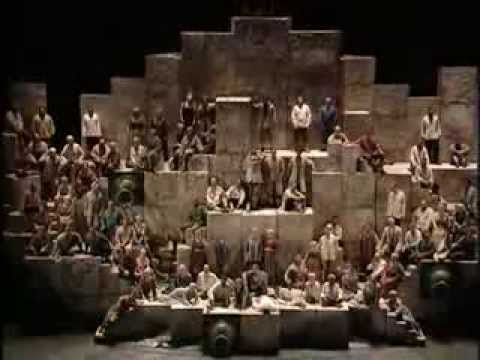
The Chorus of the Hebrew Slaves

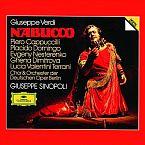
Album: Verdi: Nabucco (1842)
Play Video

Songfacts®:

  • This piece is from of Nabucco, an opera in four acts by Italian composer Giuseppe Verdi (1818-1901) to an Italian libretto by Temistocle Solera. It is also known by its Italian title "Va, Pensiro," (Fly, My Thoughts).
  • Nabucco was based on the Biblical story of the plight of the Jews as they are exiled from their homeland by the Babylonian King Nebuchadnezzar. The historical events are used as background for a romantic and political plot. It was also based on the 1836 play by Auguste Anicet-Bourgeois and Francis Cornue, which recounted the story. The work was Verdi's third opera and the one, which is considered to have established him as a major composer in 19th century Italy.
  • "The Chorus of the Hebrew Slaves" is a chorus from the third act of the opera and was inspired by Psalm 137. The popular song "Rivers of Babylon" uses some of the words from the same Psalm.
  • Verdi's first opera, Oberto, which was produced by Milan's La Scala in November 1839 achieved a degree of success, after which Bartolomeo Merelli, La Scala's impresario, offered the young composer a contract for two more works. Sadly, whilst working on his second opera, Un giorno di regno, Verdi's wife, Margherita, died a tragedy made worse for the devastated composer as he had lost his two small children a couple of years previously. The opera was a flop and Verdi fell into despair and declared he was giving up musical composition forever. Merelli forced the libretto for Oberto on Verdi and on returning home, he tossed the text on a table, determining to have nothing to do with it. It happened to open at the words "Va, pensiero" and seeing the phrase, he decided to read the rest of the libretto. At his next meeting with Merelli, the impresario was able to persuade him to write the musical setting for Solera's words. The opera proved to be Verdi's breakthrough and this piece went on to become the unofficial hymn of Italian national liberation and reunification. It has been suggested that on several occasions that it replace the "Inno di Mameli" as the Italian National Anthem.
  • Giuseppe Verdi's state funeral in 1901 remains the largest public assembly of any event in the history of Italy. During it Arturo Toscanini conducted a performance of this piece accompanied by a huge orchestra and choir composed of musicians from throughout the country.
  • This piece features on the soundtrack of the Tom Cruise film, The Color of Money.

Comments

Be the first to comment...

Editor's Picks

Marc Campbell - "88 Lines About 44 Women"

Marc Campbell - "88 Lines About 44 Women"They're Playing My Song

The Nails lead singer Marc Campbell talks about those 44 women he sings about over a stock Casio keyboard track. He's married to one of them now - you might be surprised which.

Mick Jones of Foreigner

Mick Jones of ForeignerSongwriter Interviews

Foreigner's songwriter/guitarist tells the stories behind the songs "Juke Box Hero," "I Want To Know What Love Is," and many more.

He Hit Me (And It Felt Like A Kiss): A History Of Abuse Pop

He Hit Me (And It Felt Like A Kiss): A History Of Abuse PopSong Writing

Songs that seem to glorify violence against women are often misinterpreted - but not always.

Tony Iommi of Black Sabbath, Heaven And Hell

Tony Iommi of Black Sabbath, Heaven And HellSongwriter Interviews

Guitarist Tony Iommi on the "Iron Man" riff, the definitive Black Sabbath song, and how Ozzy and Dio compared as songwriters.

Daryl Hall

Daryl HallSongwriter Interviews

Daryl Hall's TV show is a hit, and he's been inducted into the Rock and Roll Hall of Fame - only one of these developments excites him.

Angelo Moore of Fishbone

Angelo Moore of FishboneSongwriter Interviews

Fishbone has always enjoyed much more acclaim than popularity - Angelo might know why.