
A Tear In Space (Airlock)

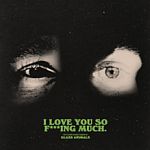
Album: I Love You So F---ing Much (2024)
Play Video

Songfacts®:

  • "A Tear In Space (Airlock)" finds Glass Animals weaving their signature retro-futuristic soundscapes with a lyrical exploration that's equal parts intoxicating and unsettling.
  • The lyrics delve into the dark side of love's gravitational pull. Frontman Dave Bayley, who wrote and produced the song, describes it as a meditation on the blurred lines between pleasure and pain in a suffocatingly intense relationship.

    "A 'Tear in Space (Airlock)' explores a love that is all consuming, forcing you to bend and stretch yourself around the other person to the point where you lose yourself," explained Bayley. "Stretched so thin, squashed so small, you are almost invisible."
  • The song's title hints at this sense of isolation. The "airlock" becomes a metaphor for a one-way journey into a love that's as vast and unknowable as space itself. The album itself plays with themes of scale, contrasting the smallness of a single teardrop with the immensity of the cosmos.

    "The universe may make us feel overwhelmingly small, but we have this human connection that is far vaster and more mysterious," said Bayley.
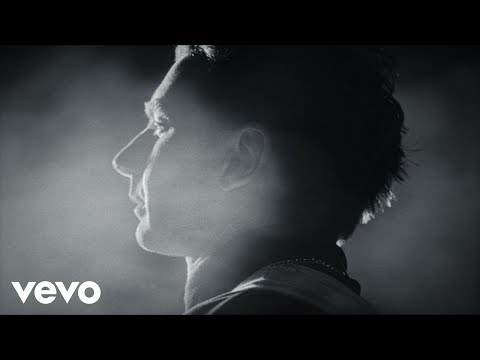
  • The music video for "A Tear In Space (Airlock)" mirrors the song's intense exploration of love. Directed by the duo of Taylor Fauntleroy and Drew Kirsch, the video uses contrasting elements – roses, a set dinner table, flickering candles, and a sharp suit – to represent the allure and tenderness of love. However, these symbols are juxtaposed with a "big cold scientific machine made of blades" that embodies the crushing and isolating nature of this suffocating relationship.

    "The blades get faster as you get closer. It peels the layers off you until there are none left, and then it stretches you and pulls you apart until you're obliterated," said Bayley.

    The video uses this imagery to depict the loss of self that can occur in such an all-consuming dynamic.

    Fauntleroy and Kirsch elaborated on the video's concept: "This concept really began with Dave's idea to get himself in a wind tunnel and throw things at him, which sounded great until we realized we might kill him and/or get sued. That led to us to really work to visualize the emotional experience of A Tear in Space."

    They achieved this through the use of "abstract techniques" that capture the feeling of being pulled and pushed away, losing your sense of self in the process. Despite the shift in approach, they did manage to fulfill a bit of the original idea: "We did also get to throw some things at Dave," they added with a laugh, "which was a highlight."

    Taylor Fauntleroy's other video credits include Surfaces' "Sunday Best" and Carly Rae Jepsen's "Beach House." Drew Kirsch has directed several of Taylor Swift's videos, including those for "You Need To Calm Down" and "Lover."

Comments

Be the first to comment...

Editor's Picks

Queen

QueenFact or Fiction

Scaramouch, a hoople and a superhero soundtrack - see if you can spot the real Queen stories.

Grunge Bands Quiz

Grunge Bands QuizMusic Quiz

If the name Citizen Dick means anything to you, there's a chance you'll get some of these right.

Tom Johnston from The Doobie Brothers

Tom Johnston from The Doobie BrothersSongwriter Interviews

The Doobies guitarist and lead singer, Tom wrote the classics "Listen To The Music," "Long Train Runnin'" and "China Grove."

Deconstructing Doors Songs With The Author Of The Doors Examined

Deconstructing Doors Songs With The Author Of The Doors ExaminedSong Writing

Doors expert Jim Cherry, author of The Doors Examined, talks about some of their defining songs and exposes some Jim Morrison myths.

Bass Player Scott Edwards

Bass Player Scott EdwardsSong Writing

Scott was Stevie Wonder's bass player before becoming a top session player. Hits he played on include "I Will Survive," "Being With You" and "Sara Smile."

Who Did It First?

Who Did It First?Music Quiz

Do you know who recorded the original versions of these ten hit songs?