Dreams of the Everyday Housewife

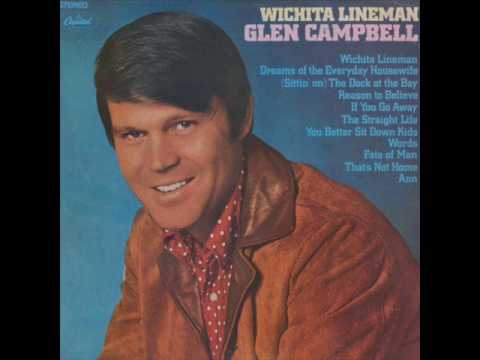
Album: Wichita Lineman (1968)
Charted: 32
Play Video

Songfacts®:

  • In this song, Campbell sings about a woman who was a beauty in her youth, when lots of men vied for her attention. Now she is older, and staring at the wrinkles on her face, she thinks about those days and wonders how her life could have turned out differently. When we get to the chorus, we learn that the singer is her husband - the man for whom she "gave up the good time." She is but an everyday housewife, wearing a housedress and living a mundane life. The days when she turned heads are long behind her.

    Many American woman could relate to the song, as the image of the happy housewife portrayed on TV shows and in magazines didn't always mesh with reality.
  • This was written by Chris Gantry, one of the first Nashville songwriters in what would later be known as the "Outlaw Country" genre (Gantry gets a mention in the intro to the Kris Kristofferson song "The Pilgrim: Chapter 33," when Kristofferson says, "Started writing this song about Chris Gantry...").

    "Dreams of the Everyday Housewife" was the only Hot 100 hit Gantry wrote; like many of his songs, it deals with the emotional turmoil that many people face when they question their choices in life.
  • Three different artists released this song in 1968: Campbell, Gary Puckett & The Union Gap, and Wayne Newton. In August that year, the Campbell and Newton versions battled on the Hot 100, with Newton's peaking at #60 and Campbell's reaching #32.

    Campbell's rendition also went to #3 on the Country chart; it was released as the follow-up to his first country #1 hit: "I Wanna Live" (written by John D. Loudermilk).
  • Al DeLory produced this track. Like Campbell, DeLory was part of the elite group of session musicians that played on many of the hit songs recorded in Los Angeles. When Campbell established his solo career, DeLory became his go-to producer.

Comments: 2

  • Thathatlady from Grayslake, IlI was only 9 years old when this song came out in 1968. I am 65 now. My view of this song has changed over my lifetime, and I think readers will enjoy it. As a kid, I was sad and haunted by the song. I feared growing old and wondered if I would be unhappy like the lady in the song. By 1976, the women's liberation movement was in full swing, and I was a teenager who knew it all. I thought the song was uncool, dated, and patronizing. I was embarrassed for the lady. I said: "Doesn't she have ambitions beyond being a housewife? She could have chosen a career, no husband, no kids, travel, wear fine clothes, have her hair and face done, and date as many guys as she wants!" Then the 1980s arrived, I got a job and got married. That decade passed into the 1990s. I finished my undergraduate degree, and we bought our first home, I transitioned into professional sales and had our first child. I was in my 30s when I heard the song on the radio one day, but this time I was in tears. I understood the fear of aging. I remembered the tall, dark, handsome guy I'd turned down for marriage in the 1980s because he was firm about not wanting kids. I looked him up online and found he was a married police officer in my state, but no kids listed to their address. I thought of my daughter and was thankful I did not marry him. I looked in the mirror and thought I looked pretty good for my age, since I was a good weight and exercising regularly. I drove through his city many times on field sales calls over the years, but I never saw him. The millennium arrived, and I finished my master's degree. More decades passed. Now we are 25 years post-millennium and retirement age but still working. Our daughter is married and living out of state. I heard this song in my head today. I looked up my ex-boyfriend and found he and his wife retired years before us and moved to Arizona. Still no kids listed to their address and no social media pages. They aren't connected to his relatives on Facebook. They must be a private couple. As I thought of this song's lyrics, I felt glad to be alive, surviving illnesses and surgeries. Wrinkles are not a concern. It's not important what my ex-boyfriend would think of me today, only what I would think of him! I want us to live to see our grandchildren. I enjoy reminiscing but remain hopeful for our future. I miss my youthful figure, but I don't miss dating. If I could give advice to the lady in the song, I'd say: "Please dream of a happy future and not dwell on the past so much."
  • Paul from Melbourne, FloridaI was 5 years old when Glen Campbell released this song. I, of course, didn't understand the song then. What 5-year-old does?!? At that age, we decide what songs we like by how they sound!

    I'm sure I probably asked my mom what the song meant; and I'm sure she gave me the standard "mom" answer from the "Book of Mom, Chapter 7" -- "When you get older, son, you'll understand."

    Moms. Gotta love 'em!
see more comments

Editor's Picks

Gary Brooker of Procol Harum

Gary Brooker of Procol HarumSongwriter Interviews

The lead singer and pianist for Procol Harum, Gary talks about finding the musical ideas to match the words.

Andy McClusky of OMD

Andy McClusky of OMDSongwriter Interviews

Known in America for the hit "If You Leave," OMD is a huge influence on modern electronic music.

Waiting For The Break of Day: Three Classic Songs About All-Nighters

Waiting For The Break of Day: Three Classic Songs About All-NightersSong Writing

These Three famous songs actually describe how they were written - late into the evening.

Donald Fagen

Donald FagenSongwriter Interviews

Fagen talks about how the Steely Dan songwriting strategy has changed over the years, and explains why you don't hear many covers of their songs.

Graham Nash

Graham NashSongwriter Interviews

Graham Nash tells the stories behind some of his famous songs and photos, and is asked about "yacht rock" for the first time.

Michael Sweet of Stryper

Michael Sweet of StryperSongwriter Interviews

Find out how God and glam metal go together from the Stryper frontman.