Black Day In July

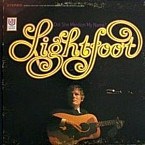
Album: Did She Mention My Name? (1968)
Play Video

Songfacts®:

  • The 1967 Detroit Riot, also known as the 12th Street Riot or Detroit Rebellion, began on July 23, 1967 when police officers raided an after-hours club on 12th Street in the predominantly African American neighborhood of Virginia Park. The raid was part of a crackdown on illegal drinking establishments, but it quickly escalated into a violent confrontation between police officers and the club's patrons.

    Over the course of the next five days, the riot spread to other parts of Detroit, resulting in looting, arson, and violent clashes between police and protesters. The riot was the deadliest civil disturbance in American history, with 43 deaths, 7,200 injuries, and $50 million in property damage.

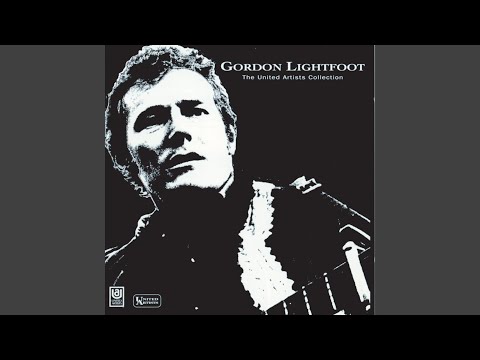
    Gordon Lightfoot wrote and recorded "Black Day in July" in response to the 1967 Detroit Riot. The song appears on his 1968 album, Did She Mention My Name?
  • "Black Day in July" is a powerful and poignant recounting of the events of the riot. Over seven verses, Lightfoot captures the violence and destruction of the unrest, as well the sense of shock and despair that many people felt in the aftermath of the violence. He also sings about the hope for a better future, and the need for understanding and compassion between people of all races.
  • Lightfoot begins and ends the song with its title. "Black Day in Detroit" takes on a double meaning, referring to both the Black people in Detroit who were rebelling against police brutality, but also that the events that transpired from July 23-28 were some of the darkest days in the history of the city.
  • John Simon produced the song along with the rest of Did She Mention My Name? Simon's production credits read like a who's who of classic late 1960s and early 1970s rock and folk albums that have stood the test of time. They include The Band's Music from Big Pink, The Band, and The Last Waltz, Big Brother & the Holding Company featuring Janis Joplin's Cheap Thrills, Leonard Cohen's Songs of Leonard Cohen, and Blood, Sweat & Tears' Child Is Father to the Man.
  • Despite its powerful message, censorship of "Black Day in July" led to it being banned by radio stations in 30 American states. The ban was largely because of the song's explicit references to police brutality and racial injustice, which some radio stations felt were too controversial for their audiences.
  • The Tragically Hip covered "Black Day in July" on the 2003 anthology Beautiful: A Tribute to Gordon Lightfoot.

Comments: 10

  • Hans from CzechiaStill good to see artists are able and willing to use their talents to send out a message.
  • Richard Cameron from Murrieta, CaEarly this morning I was listening to Gordon's "Did She Mention My Name" LP and heard this song. I guess I had not gotten to Side B before. But I found this song very arresting and I assumed it had to have been documenting what was a contemporary event, but I only vaguely remembered the episode.

    Being able to discover what Gordon was musically documenting is one of the many reasons I love Songfacts and it's a familiar place I come back to again and again. Thank you for that, Songfacts.

    Re: the song - I think it not only makes a statement and perfectly tells a story, but it illustrates why one, if they are being honest, cannot place Gordon in a tier of songsmiths any lower than Dylan and Paul Simon or Neil Diamond. He's right there with them beyond argument.
  • Eve from Windsor. OnI was in Windsor that summer. I had lots of friends from Detroit who called me during that time. "I don't think we can leave our house" and "There is a guy across the street with a gun" It was horrifying to me. I could not help my friends. Detroit used to be a great city. Way to kill it people!
  • Wayne Columbus from Waterford, OnI was in a hay loft with Gordon playing his new song Black Day In July before he recorded it. In my young years Gordon, Tommy Hunter, Gordie Tap all used to jam in Port Dover at Aunt Jean's. Moment of sitting on that bale of Hay listening has always been a huge highlight of my life. RIP Gordon
  • Now 62 from Northwest OhioI was 9, we lived in NW Ohio, and Mom and Dad packed all of us kids into the station wagon, and went on our way to the Detroit zoo. We got part way through Toledo, and I heard the news on the radio.
    Dad turned us around and we went home. I didn't return to the Detroit Zoo until I was in my thirties.
  • Greg from Bc CanadaJuly 1 how relevant is this song now ? We need to learn from history
  • Mark from San Pedro, CaI grew up in Detroit and experienced the riots, which happened when I was 8 years old. I remember seeing Gordon Lightfoot perform the song on Canadian tv, Channel 9, soon after the riots. He was sitting alone on a stool on a bare stage, coolly switching from major to minor chord, singing his heart out about an injustice that was the fault of everyone yet no one. That impression of one person, with a guitar and a song, affected me deeply because he was singing about something relevant to me that I knew of and had experienced. It remains to this day my strongest paradigm of a folk singer. God bless Lightfoot and all the whiskey he drank and all the songs he wrote and sang. One man, one guitar.
  • P from Chicago, IlNathan, I don't know about this song being banned...I grew up in Detroit and I heard it on the radio, US station not CKLW.
  • Nathan from From The Country Of, CanadaThis song was actually banned in America for some time
  • Dave from Scottsdale, AzThe summers of the late 60s often were times of great racial unrest. The media referred to it as a "long, hot summer" in anticipation of race riots (Black day?). Hence, the line "it wasn't just the temperature and it wasn't just the season".
see more comments

Editor's Picks

Marvin Gaye

Marvin GayeFact or Fiction

Did Marvin try out with the Detroit Lions? Did he fake crazy to get out of military service? And what about the cross-dressing?

Shawn Mullins

Shawn MullinsSongwriter Interviews

"Lullaby" singer Shawn Mullins on "Beautiful Wreck," beating the Devil, and his writing credit on the Zac Brown Band song "Toes."

Scott Gorham of Thin Lizzy and Black Star Riders

Scott Gorham of Thin Lizzy and Black Star RidersSongwriter Interviews

Writing with Phil Lynott, Scott saw their ill-fated frontman move to a darker place in his life and lyrics.

Intentionally Atrocious

Intentionally AtrociousSong Writing

A selection of songs made to be terrible - some clearly achieved that goal.

Ralph Casale  - Session Pro

Ralph Casale - Session ProSongwriter Interviews

A top New York studio musician, Ralph played guitar on many '60s hits, including "Lightnin' Strikes," "A Lover's Concerto" and "I Am A Rock."

Victoria Williams

Victoria WilliamsSongwriter Interviews

Despite appearances on Carson, Leno and a Pennebaker film, Williams remains a hidden treasure.