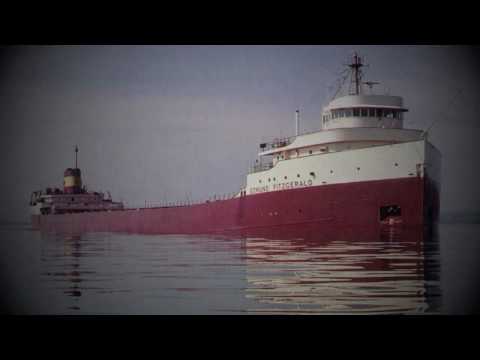
This is a factual retelling of a shipwreck on Lake Superior in November 1975 that claimed the lives of 29 crew members. On November 10, 1975, the S.S. Edmund Fitzgerald broke in half and sank in Lake Superior. The storm she was caught in reported winds from 35 to 52 knots, and waves anywhere from 10 to 35 feet high.
She was loaded with 26,116 tons of taconite pellets at the Burlington Northern Railroad, Dock #1. Her destination was Zug Island on the Detroit River. There were 29 crew members who perished in the sinking.
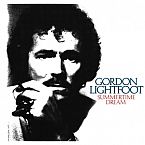
In a 2015 interview with NPR's Scott Simon, Gordon Lightfoot explained that he was motivated to write the song after seeing an article in
Newsweek about the tragedy that gave "short shrift for such a monumental event." Lightfoot says the song came about when he discovered the newspaper writers kept misspelling the name of the ship, rendering it as "Edmond Fitzgerald" rather than "Edmund Fitzgerald." Though he didn't say whether or not the misspelling was deliberate, he was quoted as telling Scott, "That's it! If they're gonna spell the name wrong, I've got to get to the bottom of this!"
>>>
Suggestion credit:
Annabelle - Eugene, OR
Historical folk songs rarely place on the pop charts, but "Wreck Of The Edmund Fitzgerald" went all the way to #2 in the US, held out of the #1 spot by Rod Stewart's "
Tonight's The Night (Gonna Be Alright)." The only Lightfoot song that charted higher was "
Sundown," which went to #1 in 1974.
Lightfoot recalled the story of the song during a Reddit AMA: "The Edmund Fitzgerald really seemed to go unnoticed at that time, anything I'd seen in the newspapers or magazines were very short, brief articles, and I felt I would like to expand upon the story of the sinking of the ship itself," he said. "And it was quite an undertaking to do that, I went and bought all of the old newspapers, got everything in chronological order, and went ahead and did it because I already had a melody in my mind and it was from an old Irish dirge that I heard when I was about three and a half years old."
"I think it was one of the first pieces of music that registered to me as being a piece of music," he continued. "That's where the melody comes from, from an old Irish folk song."
This was nominated for the Song Of The Year Grammy, but it was beaten by Barry Manilow's "
I Write The Songs."
>>>
Suggestion credit:
Frank - Pembroke Pines, FL
An initial investigation suggested that the crew was partly to blame for the disaster by not securing the ship's hatches. Lightfoot's song reflected the original findings in the verse, "At 7 p.m. a main hatchway gave in."
In 2010 a Canadian documentary claimed to have proven the crew of the ship was not responsible for the tragedy, concluding that there is little evidence that failure to secure the ship's hatches caused the sinking.
Lightfoot said he intended to change it to reflect the new findings. "I'm sincerely grateful to yap films and their program The Dive Detectives for putting together compelling evidence that the tragedy was not a result of crew error," he said in a release. "This finally vindicates, and honors, not only all of the crew who lost their lives, but also the family members who survived them."
The song helped keep the memory of the shipwreck alive, but it's not the only reference to the disaster in pop culture: the Ohio-based Great Lakes Brewery produces a beer called Edmund Fitzgerald Porter as a tribute to the crew.
>>>
Suggestion credit:
Douglas - Waterloo, England
In 1970, Bud Selig's co-founding partner in the Milwaukee Brewers was fellow businessman Edmund B. Fitzgerald, a patron of Milwaukee arts and civic projects, and the son of a family that owned Great Lakes shipyards. In 1958, the freighter SS Edmund Fitzgerald was named for Edmund B.'s father. Edmund B. Fitzgerald later became a professor at Vanderbilt University; Selig became commissioner of Major League Baseball.
The song runs 6:30 on the album, and only cut down to 5:57 for release as a single, making it the longest hit song of 1976 save for Peter Frampton's live version of "
Do You Feel Like We Do."
Lightfoot wrote the lyrics after coming up with the melody and chords. He recalled: "When the story came on television, that the Edmund had foundered in Lake Superior three hours earlier, it was right on the CBC here in Canada, I came into the kitchen for a cup of coffee and saw the news and I said, 'That's my story to go with the melody and the chords.'"
This wasn't Lightfoot's first shipwreck song. "Marie Christine," from his 1968 album Back Here On Earth, tells the story of a doomed vessel, but that one in fictional.
The song is referenced in the 1996 Seinfeld episode "The Andrea Doria," when Elaine mistakenly believes Gordon Lightfoot was the name of the ship and Edmund Fitzgerald was the name of the singer. Jerry quips: "Yeah, and it was rammed by the Cat Stevens."
The song appears in the 2021 movie The Addams Family 2 and in the 2020 Family Guy episode "CutawayLand."
Paul Gross hoped to use this tune for his episode of the TV show
Due South, "Mountie on the Bounty" (1998). He discreetly tried to secure the rights to use the song, but out of respect for the families who wished not to be reminded of the tragedy he didn't pursue the option aggressively. He instead wrote the similarly themed song "32 down On The Robert MacKenzie."
>>>
Suggestion credit:
Billy - Plymouth, NH