Alligator

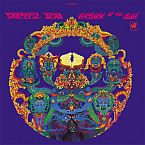
Album: Anthem Of The Sun (1968)
Play Video

Songfacts®:

  • "Alligator" was Robert Hunter's first credit with the Grateful Dead. Hunter would go on to become the band's lyricist and a longtime collaborator with Jerry Garcia. The partnership may never have happened the way it did if not for an extended trip (the physical, not psychedelic, kind) the band took in May of 1967.

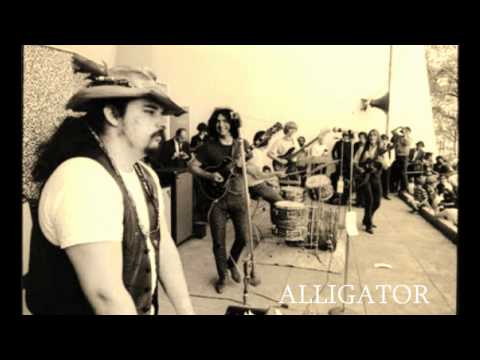
    John Warnecke, friend of Dead drummer Bill Kreutzmann, had invited the crew out to the Russian River in northern California. The band accepted and stayed there for a couple of weeks.

    Warnecke's father was a world-famous architect who'd built a vacation home surrounded by smaller cabins in the picaresque setting. The Dead stayed in the cabins and set up their equipment on a platform beside the river. For the duration of their stay, they ingested large amounts of acid and tried to freak out vacationers that were using the river. They turned the speakers towards the water and blasted out animal sounds and strange vocal noises. "I don't know if any kayaker actually fell over from the shock of what sounded like a giant 80-foot bullfrog or anything," Kreutzmann recalls in Deal: My Three Decades of Drumming, Dreams, and Drugs with the Grateful Dead, "but we sure tried."

    During the trip, the band started tinkering with "Dark Star." Kreuztmann also believes that the idea for what would become "The Other One" started gestating there.

    But this trip was also where Garcia remembered some lyrics that his friend Robert Hunter had sent him. The band decided to incorporate the words into their song "Alligator." It's a seemingly little thing, perhaps, until one considers the impact that Hunter had on the Dead. Many, including Dead members themselves, credit Hunter's lyrics with turning their catchy tunes into something deeper. For much of his time with the Dead, Hunter was on a Rimbaud-inspired "vision quest." However one feels about such metaphysics, there's no doubt that that quest pushed him to reach for something beyond mere entertainment. In that quest, he was trying to write songs for the ages, not just for the day's radio charts. It was largely this spiritual, artistic ambition that helped create songs that resonated meaningfully with people's lives and led to the creation of a fervent subculture that would become known as "Deadheads."

    Maybe it all would have happened even without the Russian River trip. Maybe not. Either way, some of the Dead's most cherished songs stemmed from a collaborative relationship started by a chance memory that came to Garcia during an acid-fueled camping trip spent jamming and freaking out squares.

    It couldn't have been a more fitting start, really, and it's hard to imagine destiny having it any other way.
  • The word "alligator" may have a double meaning. In addition to the obvious, animal interpretation, "alligator" is a term sometimes used to describe white musicians that steal the music and art of black musicians. The term is also sometimes used by New Orleans jazz players to describe "white jazzmen and white jazz fans, jive black people, or jitterbugs." (This piece provided in The Complete Annotated Grateful Dead Lyrics as a takeaway from Clarence Major's Juba to Jive: A Dictionary of African Amiercan Slang, published by Penguin, 1994.)
  • The Complete Annotated Grateful Dead Lyrics finds connection between the nursery rhyme "Old King Cole" and these "Alligator" lines:

    Call for his whiskey
    He can call for his tea
    Call all he wanta but he can't call me


    The "Old King Cole" lines go:

    He called for his pipe
    And he called for his bowl
    And he called for his fiddlers three
  • The song was recorded on July 18, 1968.
  • The Complete Annotated Grateful Dead Lyrics reports that the song was played 60 times from its first performance, which "possibly" occurred on January 27, 1967, to April 29, 1971.
  • The line "Hung up waitin' for a windy day" is also used in "Cosmic Charlie" on the 1969 Grateful Dead album Aoxomoxoa.
  • The lines "Tear down the Fillmore, gas the Avalon" reference two San Francisco performance venues that competed with the Carousel, which was owned and operated by the Dead, Jefferson Airplane, and some San Francisco bands. In 1968, the Carousel's name was changed to the Fillmore West.
  • Along with "Green Tambourine" by The Lemon Pipers and "All Along The Watchtower" by The Jimi Hendrix Experience, this was among one of the first songs to use the vibraslap, a rattling percussion instrument that was invented in 1967 as a modern-day jawbone.

Comments

Be the first to comment...

Editor's Picks

James Bond Theme Songs

James Bond Theme SongsMusic Quiz

How well do you know the 007 theme songs?

Dexys (Kevin Rowland and Jim Paterson)

Dexys (Kevin Rowland and Jim Paterson)Songwriter Interviews

"Come On Eileen" was a colossal '80s hit, but the band - far more appreciated in their native UK than stateside - released just three albums before their split. Now, Dexys is back.

Director Wes Edwards ("Drunk on a Plane")

Director Wes Edwards ("Drunk on a Plane")Song Writing

Wes Edwards takes us behind the scenes of videos he shot for Jason Aldean, Dierks Bentley and Chase Bryant. The train was real - the airplane was not.

Metallica

MetallicaFact or Fiction

Beef with Bon Jovi? An unfortunate Spandex period? See if you can spot the true stories in this Metallica version of Fact or Fiction.

Director Paul Rachman on "Hunger Strike," "Man in the Box," Kiss

Director Paul Rachman on "Hunger Strike," "Man in the Box," KissSong Writing

After cutting his teeth on hardcore punk videos, Paul defined the grunge look with his work on "Hunger Strike" and "Man in the Box."

Spooner Oldham

Spooner OldhamSongwriter Interviews

His keyboard work helped define the Muscle Shoals sound and make him an integral part of many Neil Young recordings. Spooner is also an accomplished songwriter, whose hits include "I'm Your Puppet" and "Cry Like A Baby."