Bertha

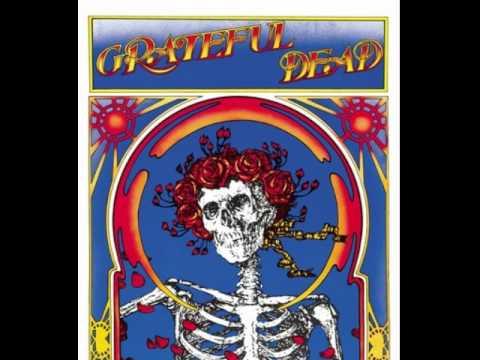
Album: Skull & Roses (1971)
Play Video

Songfacts®:

  • Grateful Dead lyricist Robert Hunter wrote the words for this song, as he did for most Dead songs. Jerry Garcia wrote the music.

    For years the legend was that "Bertha" was named after an old fan (an actual mechanical fan, not a fan of the music) that would jump around the Grateful Dead's office when turned on. David Dodd at the official Grateful Dead site clarified that old myth by citing an interview in which Hunter revealed that the Dead named the rambunctious fan after the song, rather than vice versa.

    What "Bertha" is actually about, Hunter believed (he claimed he couldn't remember for certain), is "some vaguer connotation of birth, death and reincarnation. Cycle of existences, some kind of nonsense like that."

    That origin story could make "Bertha" a pun for "birth." It definitely opens up fascinating new possibilities for the song.
  • The simple surface interpretation of "Bertha" is that some unnamed character runs from a window, into a tree, and then into a bar, where he takes shelter from the rain. The song is fun and upbeat, so the silliness of the lyrics seems fitting. Going by Hunter's statement, though, the song is far more interesting that that.

    The song is then about a fellow going through the cycle of birth, death, and reincarnation. A simplified view on the Buddhist belief is that we have to keep cycling through lives until we achieve enlightenment, at which point we can get out of the run around and escape the game.

    So, in "Bertha," Garcia's saying (with Hunter's words) that he's tired of running through the birth-death-reincarnation cycle over and over again. If we look at "Bertha" as "birth," then the chorus:

    That why, if you please, I'm on my bendin' knees
    Bertha don't you come around here, anymore


    is a plea for escape from that cycle.

    Where things get really interesting is with the line "ducked back into a bar door," which could be play on the word "bardo." In Buddhism, bardo is the place or state-of-existence between two lives. You die, spend time in the bardo, and then are born again (unless you've achieved enlightenment).

    That interpretation clarifies why Garcia begs to be arrested.

    Ran into a rainstorm, I ducked back into a bardo
    It's all night pourin', but not a drop on me
    Test me, test me, test me, test me
    Why don't you arrest me? Throw me in to the jail house
    Lord, until the sun goes down, 'til it goes down


    What's really being asked for here is to be kept in the plane of the enlightened rather than spit back out on Earth to live life again.
  • "Bertha" is the opening track on what's become known as the Skull & Roses album (it doesn't actually have an official name, after the record label refused the band's desire to title it Skull F--k), which is all live music. The version of "Bertha" on there was recorded on April 27, 1971, at the Fillmore East in New York City.
  • In addition to the regular Dead band members, Merl Saunders played organ on this one. His friendship with Garcia and his appearance on this song and two others from the album ("Playing In The Band" and "Wharf Rat") helped launch a long, successful career in the music industry. He passed away in 2008.

Comments: 3

  • Mitch Medina from Batangas, Philippines.I never really liked this song. But the official post on the lyrics make it more attractive, because it gives the listener what the song might be about.
  • August West from MassachusettsThe version from Buffalo 5/9/77 is indeed a great version, but if you want to hear what I'd consider the greatest Bertha of all time, listen to the version from 8/27/72. From Keith's perfect descending intro on the piano, to Garcia's brilliant "between the lines" guitar fills, all the way to Jerry's dramatic solo near the end of the song, it's all there. It builds and builds in intensity until it's screaming along like a runaway train near the end. Primal '72 Dead!
  • Bryan P from Buffalo NyListen to Bertha from Buffalo NY 05-09-77 if you want to hear a top 5 version.
see more comments

Editor's Picks

Dino Cazares of Fear Factory

Dino Cazares of Fear FactorySongwriter Interviews

The guitarist/songwriter explains how he came up with his signature sound, and deconstructs some classic Fear Factory songs.

Michael W. Smith

Michael W. SmithSongwriter Interviews

Smith breaks down some of his worship tracks as well as his mainstream hits, including "I Will Be Here For You" and "A Place In This World."

Allen Toussaint - "Southern Nights"

Allen Toussaint - "Southern Nights"They're Playing My Song

A song he wrote and recorded from "sheer spiritual inspiration," Allen's didn't think "Southern Nights" had hit potential until Glen Campbell took it to #1 two years later.

Best Band Logos

Best Band LogosSong Writing

Queen, Phish and The Stones are among our picks for the best band logos. Here are their histories and a design analysis from an expert.

TV Theme Songs

TV Theme SongsFact or Fiction

Was a Beatles song a TV theme? And who came up with those Fresh Prince and Sopranos songs?

Elton John

Elton JohnFact or Fiction

Does he have beef with Gaga? Is he Sean Lennon's godfather? See if you can tell fact from fiction in the Elton John edition.