Cassidy

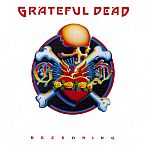
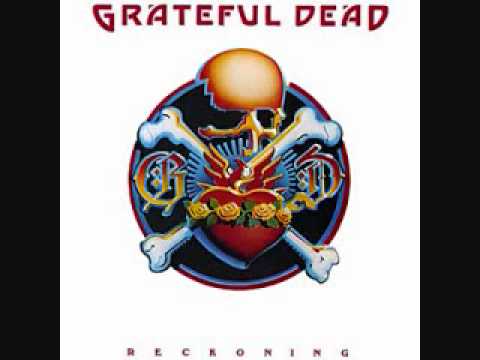
Album: Reckoning (1972)
Play Video

Songfacts®:

  • Cassidy Law was born in 1970. Her father, Rex Jackson, was a Dead crew member. Her mother, Eileen Law, was the band's office manager and archivist.

    Neal Cassady, meanwhile, passed away in February, 1968. His name is not as well-known as Beat Generation writers Jack Kerouac or Allen Ginsberg, but he was possibly the most influential of the bunch. Cassady, an ex-con and notorious wild man, wrote letters that inspired Kerouac to develop the "spontaneous prose" that made him one of the most influential novelists in the history of American literature (with his most important work generally being considered On the Road from 1957).

    Cassady was a central figure in the '60s counterculture, bridging the influence of the Beats and the Hippies.

    "Cassidy" uses both characters to tell a story about the arc of life, as one soul comes into the word and another leaves it.

    The death of Barlow's father inspired some of the lyrics, as well. That death led to Barlow taking over his father's ranch for years afterwards.

    Named the Bar Cross Ranch, it became a famously eccentric place, combining ranch hands both from the mainstream and from the counterculture. It was nearly the subject of a documentary by John Byrne Cooke, but Cooke died in 2017 with the project incomplete.
  • The song first appeared on Grateful Dead cofounder Bob Weir's Ace solo album, but that's somewhat misleading. The Dead were all directly involved on Weir's project, and for all intents and purposes, this is a Dead song.

    The one way in which it deviates from the usual canonical Dead is that it didn't incorporate Robert Hunter as lyricist but instead used John Barlow, who also co-wrote Ace songs "Black-Throated Wind," "Walk in the Sunshine," "Playing in the Band," and "Looks like Rain."

    Back in June 1967, Barlow had introduced the Dead to LSD guru Timothy Leary. He'd been an associate of the band's since even before that.

    Barlow eventually got hooked up as Dead lyricist after Hunter got frustrated with Weir improvising his lyrics. It had been a long-running issue that erupted in February 1971 at the Capitol Theatre in Port Chester, New York. Hunter became so angry that he said Weir would be working with Barlow from that point on.
  • "Cassidy" was released as the B-side to "One More Saturday Night."
  • The Dead first performed the song live on March 23, 1974, at the Cow Palace in Daly City, California.
  • The line, "Let your life proceed by its own design" is a credo for some Deadheads, including Oteil Burbridge, the bass player in Bob Weir and Mickey Hart's group Dead & Company. "That lyric is something that just comes up over and over again," Oteil said on the Songfacts Podcast. "You have to let life play out the way it wants to."

Comments: 1

  • William Palmer from WiThis is probably the Dead's finest song. Strange here that the commentary is minimal. There are many good versions out there I'm sure, but the on from Red Rocks in 1983 was my favorite.
see more comments

Editor's Picks

Donnie Iris (Ah! Leah!, The Rapper)

Donnie Iris (Ah! Leah!, The Rapper)Songwriter Interviews

Before "Rap" was a form of music, it was something guys did to pick up girls in nightclubs. Donnie talks about "The Rapper" and reveals the identity of Leah.

Timothy B. Schmit

Timothy B. SchmitSongwriter Interviews

The longtime Eagle talks about soaring back to his solo career, and what he learned about songwriting in the group.

Boz Scaggs

Boz ScaggsSongwriter Interviews

The "Lowdown" and "Lido Shuffle" singer makes a habit of playing with the best in the business.

Best Band Logos

Best Band LogosSong Writing

Queen, Phish and The Stones are among our picks for the best band logos. Here are their histories and a design analysis from an expert.

Philip Cody

Philip CodySongwriter Interviews

A talented lyricist, Philip helped revive Neil Sedaka's career with the words to "Laughter In The Rain" and "Bad Blood."

Billy Steinberg - "Like A Virgin"

Billy Steinberg - "Like A Virgin"They're Playing My Song

The first of Billy's five #1 hits was the song that propelled Madonna to stardom. You'd think that would get you a backstage pass, wouldn't you?