

Easy Wind

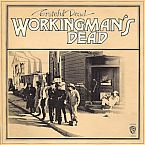
Album: Workingman's Dead (1970)
Play Video

Songfacts®:

  • "Easy Wind" is about a workingman building highways, getting drunk, and looking for love and prostitution in early America. It's a song with bad attitude, very unlike the rest of the melodic, mellow Workingman's Dead album.

    On the rest of the album, as is the trademark of the Dead, even the songs about rough and painful topics are performed with a kind of sing-along sweetness, but "Easy Wind" is the swampy snarl of a hard-living man who makes no apologies.

    Buried beneath all the gravelly music is a bit of softness, though. Ron "Pigpen" McKernan sings about "a whole lotta women, mama, out in red on the streets today," with women in red suggesting prostitution, but more subtly he also longs for love.

    Gotta find a woman be good to me,
    Won't hide my liquor try to serve me tea


    Yes, he wants a woman that will facilitate (or at least permit) his alcoholism, but still he wants a committed relationship.

    Cruising for prostitutes while looking for love is about as contradictory as chipping rocks in San Francisco while watching easy wind blow over the bayou, but this song isn't a master's thesis. It's capturing a feeling, a place, and a human being - all prone to complexity and contradiction.
  • This is the only Workingman's Dead song with Ron "Pigpen" McKernan singing lead. Dead lyricist Robert Hunter wrote it one with Pigpen in mind. Pigpen was a heavy drinker (that's essentially what killed him three years after the release of this album) with a rawer approach to music than the rest of the Dead. He was the man to growl out this song of hard living.
  • There's a confusion of place in "Easy Wind."

    Been choppin' up rocks for the great highway

    The Great Highway is a 3.5-mile-long run along the western side of San Francisco. It was built in 1929.

    Easy wind cross the bayou today

    The term "bayou" is used in the southern United States, especially Louisiana, where it denotes areas of low ground covered in shallow, brackish water.

    So, in this song, we've got a guy simultaneously on the West Coast of America and at its southern central point. A possible explanation of the contradiction comes from the fact that Hunter doesn't capitalize Great Highway in A Box Of Rain, his book of collected lyrics, so maybe he's not referring to the Great Highway of San Francisco. That seems highly unlikely, though, because the Dead's home base was San Francisco, and he would have been intimately aware of the Great Highway.

    A more likely explanation is that Hunter wasn't trying to be precise or literal at all and was instead capturing the general imagery of an American workingman fantasy in order to create a rough ambiance in the song.
  • Robert Frost uses the term "easy wind" in his poem Stopping By Woods On A Snowy Evening, one of his most popular and widely studied works.

    Of easy wind and downy flake

    Hunter never gave anything away to tie the song to the poem, but he was a serious student of poetry and Americana, so it's possible that consciously or unconsciously he found the term there.
  • In 2001, a remaster of Workingman's Dead was released on The Golden Road (1865-1973) box set. It included a live "Easy Wind" recorded at Springer's Ballroom in Gresham, Oregon, on January 16, 1970.
  • The Dead first played this song live at the Aqua Theater in Seattle on August 20, 1969. They last played it at Manhattan Center in New York on April 4, 1971. In total they performed it 45 times.

Comments: 1

  • Capt. Benny from WyomingWho sings easy wind on the album workingman's dead
see more comments

Editor's Picks

Mike Campbell

Mike CampbellSongwriter Interviews

Mike is lead guitarist with Tom Petty & the Heartbreakers, and co-writer of classic songs like "Boys Of Summer," "Refugee" and "The Heart Of The Matter."

Michael Franti

Michael FrantiSongwriter Interviews

Franti tells the story behind his hit "Say Hey (I Love You)" and explains why yoga is an integral part of his lifestyle and his Soulshine tour.

Kerry Livgren of Kansas

Kerry Livgren of KansasSongwriter Interviews

In this talk from the '80s, the Kansas frontman talks turning to God and writing "Dust In The Wind."

Charlie Benante of Anthrax

Charlie Benante of AnthraxSongwriter Interviews

The drummer for Anthrax is also a key songwriter. He explains how the group puts their songs together and tells the stories behind some of their classics.

Jonathan Edwards - "Sunshine"

Jonathan Edwards - "Sunshine"They're Playing My Song

"How much does it cost? I'll buy it?" Another songwriter told Jonathan to change these lyrics. Good thing he ignored this advice.

Ramones

RamonesFact or Fiction

A band so baffling, even their names were contrived. Check your score in the Ramones version of Fact or Fiction.