Jack-A-Roe

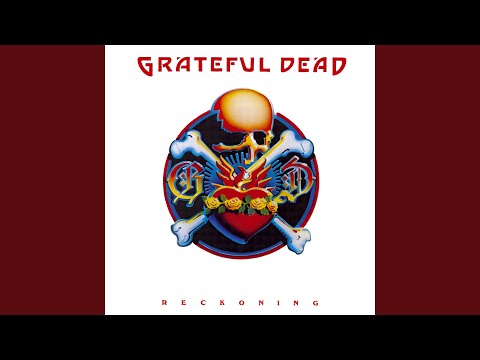
Album: Reckoning (1981)
Play Video

Songfacts®:

  • "Jack-A-Roe" (originally "Jack Munro") may be the world's oldest song about a cross-dresser. If not, it's certainly in the running. It could also be called a song of woman's empowerment, perhaps even one of feminism (if a listener were so inclined).

    The song is best known today for being a staple of the Grateful Dead's live set, but it can be traced back definitively to early 1800s England. The oldest broadside version, held by the Bodleian Libraries of Oxford University, is dated between 1812 and 1825. At that time, the song was titled "Jack Munro."

    The song is about a young woman who dresses as a sailor in order to find her lover, Jack. She's the daughter of a wealthy merchant, yet elects to put herself in grave danger in order to get her sweetheart back. The naval men notice her slight build and question if she can succeed in battle, but she proves her mettle, finds her wounded Jack, gets him to a doctor, and marries him.

    The Dead's version leaves out a bit of the traditional song's lyrics but keeps the gist of things. Nothing substantive is lost, but in some traditional variations there are more details about the central character's relationship with her father.
  • Over its evolution as an English and then American folk song, "Jack-A-Roe" has been known by many names, including "Jackie Frazier," "The Love of Polly and Jack Monroe," "The Maid of Chatham," and others. We'll call it "Jack-A-Roe" because that's the title the Dead used, and the Dead version is the most commonly known today.

    Cecil Sharp's English Folk Songs from the Southern Appalachians (volume 1) has a version of the song titled "Jack Went A-Sailing."
  • The Dead first performed the song on May 13, 1977, at the Auditorium Theatre in Chicago. Over the course of their career, they played it at least 110 times.

    The version on Reckoning was recorded October 10, 1980, at the Warfield Theatre in San Francisco.

    Dead frontman Jerry Garcia often played the song solo and with other non-Dead bands.
  • As memorialized on the ill-fated cover photograph of Go To Heaven (the Dead's 11th studio album, released in 1980), there was no '60s band more ill-suited for the glitz-and-glam culture of the '80s than the Grateful Dead.

    Reckoning notably harked back to the band's earliest days, before they were even called the Grateful Dead, when they frequently performed acoustic renditions of bluegrass, country, and folk standards. Going by names like the Warlocks, Mother McCree's Uptown Jug Champions, and some other Garcia-led incarnations, they started out specializing in psychedelicizing (or otherwise just modernizing) traditional songs. So "Jack-A-Roe" refers back to the Dead's essential beginnings, though it came out in those calamitous '80s.

Comments

Be the first to comment...

Editor's Picks

Tommy James

Tommy JamesSongwriter Interviews

"Mony Mony," "Crimson and Clover," "Draggin' The Line"... the hits kept coming for Tommy James, and in a plot line fit for a movie, his record company was controlled by the mafia.

Steely Dan

Steely DanFact or Fiction

Did they really trade their guitarist to The Doobie Brothers? Are they named after something naughty? And what's up with the band name?

David Gray

David GraySongwriter Interviews

David Gray explains the significance of the word "Babylon," and talks about how songs are a form of active imagination, with lyrics that reveal what's inside us.

JJ Burnel of The Stranglers

JJ Burnel of The StranglersSongwriter Interviews

JJ talks about The Stranglers' signature sound - keyboard and bass - which isn't your typical strain of punk rock.

Tim McIlrath of Rise Against

Tim McIlrath of Rise AgainstSongwriter Interviews

Rise Against frontman Tim McIlrath explains the meanings behind some of their biggest songs and names the sci-fi books that have influenced him.

George Clinton

George ClintonSongwriter Interviews

When you free your mind, your ass may follow, but you have to make sure someone else doesn't program it while it's wide open.