U.S. Blues

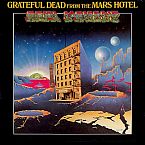
Album: From the Mars Hotel (1974)
Play Video

Songfacts®:

  • "U.S. Blues" grew out of the 1972 Grateful Dead song "One More Saturday Night." Dead lyricist Robert Hunter wrote the words and Jerry Garcia wrote the music. The song changed a lot through Hunter's many rewrites. At some points it was a forceful anti-military (some may say anti-American) song, but the final result isn't so serious. It's a fun song that the Dead frequently played live.
  • Dead co-founder Bob Weir told Dupree's Diamond News in their 18th issue (May 1991) that the song wasn't meant to be favorable of Uncle Sam and American culture. "We have our pantheon, and one of the figures in the pantheon is Uncle Sam. He's sort of like the godfather figure of American culture. So we actually have a fair bit of respect for him. And he comes around in different guises, you know - in our little region, he comes around as a skeleton, but he's still wearing the same hat."

    "Uncle Sam," who appears in the line, "I'm Uncle Sam, how do you do?" refers to a mythological character representing the United States government. The character first arose during the war of 1812. Uncle Sam appears in many contexts of varying seriousness, but one of the most consistent is as a military recruiter. During World War II it was common to see posters with Uncle Sam's visage and the words "I Want You for U.S. Army."
  • The lyric "blue suede shoes" in the first line refers to the song of the same name.
  • The song was released as a single with "Loose Lucy" as the B-side.
  • P.T. Barnum and Charlie Chan are mentioned in the lyric.

    Barnum (full name Phineas Taylor Barnum) was an 1800s entertainer also known as a bit of a con artist. He's associated with the famed line "there's a sucker born every minute" (though there is no hard evidence he actually said it).

    Charlie Chan is a fictional character - a Chinese-American police detective working in Honolulu - popular in American novels and films from the 1920s to 1940s. Created by Earl Derr Biggers, Chan was still around as late as 1981 but only showed up sporadically after 1955. By the time of his last appearance, he was considered an offensive representation of a racial stereotype, though Biggers initially created him in an attempt to counter the negative stereotypes of Chinese that abounded in the 1920s.

Comments: 4

  • Myze from ScI always thought this song was referencing the CIA experiments that Hunter participated in at Stanford.

    Monitoring his pulse at 72 BPM that didn’t change, while tripping. Once the experiments were done it was brought back to a rock and roll band through the Acid Test shows.

    Anyone else see this connection?
  • Freewheelin' Franklin from Blue Ridge Mountains I wish the author would have explained the "grew out of One More Saturday Night" comment. Earlier versions of this song were "Wave That Flag."
  • James C from TexasI always thought they went a little bit light on Uncle Sam and the song, almost so that they would appeal to a wider audience. Still a really fun song.
  • Marblehead from Not At Work Classic good natured Counter Culture reflection on the American experience
see more comments

Editor's Picks

Philip Cody

Philip CodySongwriter Interviews

A talented lyricist, Philip helped revive Neil Sedaka's career with the words to "Laughter In The Rain" and "Bad Blood."

Michael Franti

Michael FrantiSongwriter Interviews

Franti tells the story behind his hit "Say Hey (I Love You)" and explains why yoga is an integral part of his lifestyle and his Soulshine tour.

Graham Parker

Graham ParkerSongwriter Interviews

When Judd Apatow needed under-appreciated rockers for his Knocked Up sequel, he immediately thought of Parker, who just happened to be getting his band The Rumour back together.

Dennis DeYoung

Dennis DeYoungSongwriter Interviews

Dennis DeYoung explains why "Mr. Roboto" is the defining Styx song, and what the "gathering of angels" represents in "Come Sail Away."

Chris Frantz of Talking Heads

Chris Frantz of Talking HeadsSongwriter Interviews

Talking Heads drummer Chris Frantz on where the term "new wave" originated, the story of "Naive Melody," and why they never recorded another cover song after "Take Me To The River."

Dar Williams

Dar WilliamsSongwriter Interviews

A popular contemporary folk singer, Williams still remembers the sticky note that changed her life in college.