Halsey's fears surrounding pregnancy and motherhood influenced the dark tone of their rock album If I Can't Have Love, I Want Power. Although earlier miscarriages were devastating and she longed to be a mother, the process of becoming one wasn't easy. "The reason that the album has sort of this horror theme is because this experience, in a way, has its horrors," Halsey, who gave birth to a baby boy a month before the album's release, told Apple Music. "I think everyone who has heard me yearn for motherhood for so long would have expected me to write an album that was full of gratitude. Instead, I was like, 'No, this s--t is so scary and so horrifying. My body's changing and I have no control over anything.' Pregnancy for some women is a dream - and for some people it's a f--king nightmare. That's the thing that nobody else talks about."
As the album title suggests, Halsey craves power but not the kind you're thinking of. Speaking to Zane Lowe on Apple Music 1 about the lead single, "I Am Not A Woman, I'm A God," the singer explained: "It's not a girl power album. From the jump, I'm like, 'I'm not a woman.' I'm not saying any of that. There's no girl power in this album. Being pregnant, writing this album, people are expecting girlishness, you know what I mean? And any time where I ever talk about womanhood, motherhood, femininity, I'm usually talking about it with a taste in my mouth. Like, go be a big girl, a girl is a gun, all I can taste is the blood in my mouth."
But she can't deny there's an element of girl power to the record, even if that wasn't the intention. "I think it probably can be experienced in that way, for some people, because the fact that I made it at all and the way that I made it is kind of like a girl power statement," she admitted. "But the record itself, I guess, it's not that. And so using those sweeter vocal performances were kind of essential."
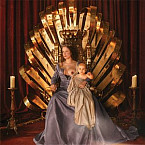
The album's cover artwork was inspired by artistic depictions of Mary, mother of Jesus, and challenges the notion that a woman loses her identity as a sexual being once she becomes a mother. Halsey wrote on Instagram: "It was very important to me that the cover art conveyed the sentiment of my journey over the past few months. The dichotomy of the Madonna and the Whore. The idea that me as a sexual being and my body as a vessel and gift to my child are two concepts that can co-exist peacefully and powerfully. My body has belonged to the world in many different ways the past few years, and this image is my means of reclaiming my autonomy and establishing my pride and strength as a life force for my human being."
Halsey tapped into a darker, industrial-influenced sound by bringing Trent Reznor and Atticus Ross on board as producers. Known for their work in Nine Inch Nails and as film/television composers, If I Can't Have Love, I Want Power is the first album the pair has produced for another artist.
Rather than going with the traditional method of rolling out singles to promote an upcoming album, an hour-long companion film was released first. It was directed by Colin Tilley, who also helmed the music videos for Halsey's "
Without Me" and "
You Should Be Sad," and screened in select IMAX cinemas. According to its trailer, the movie is about "the lifelong social labyrinth of sexuality and birth" and "the greatest horror stories never told were buried with the bodies of those who died in that labyrinth."
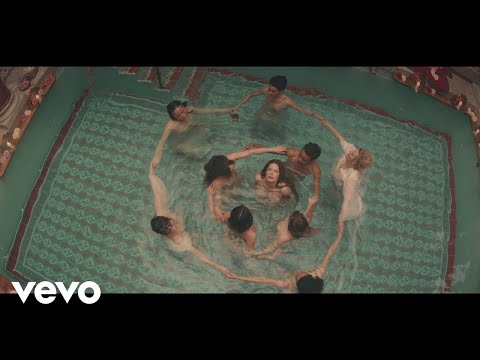
The visual for this ominous track depicts Halsey in different forms and captures the singer's conflicted feelings about her real-life pregnancy. Throughout the clip, she's a cold and powerful ruler who sits on a dark throne, a pregnant goddess surrounded by a swirl of devotees in a bathing pool, and a terrified expectant mother fleeing for her life.
Most of Halsey's young fanbase hasn't experienced pregnancy, so she was initially concerned the album wouldn't be relatable to them, but decided authenticity will always connect with people. After it was released, she was gratified by her fans' positive reactions to the songs. She explained in a Capitol Records interview: "I'm glad I chose to write about my pregnancy instead of being afraid of it and being afraid people weren't going to relate to it, and trying to pretend that I'm experiencing something that I'm not. Or trying to draw inspiration from old experiences that… that's not me anymore."
In March 2021, Halsey announced on social media that she goes by she/they pronouns: "The inclusion of 'they' in addition to 'she' feels most authentic to me. If you know me at all, you know what it means to me to express this outwardly. Thanks for being the best."