The Big Rock Candy Mountain

Album: Hallelujah I'm a Bum (1928)
Play Video

Songfacts®:

  • Sometimes alluded to as "The Big Rock Candy Mountains" - from the lyrics - this is a well known and original American folk song about a hobo who discovers a paradise on Earth. It would probably be fair to call it a nonsense song, and it would definitely be fair to call it a song that was originally unsuitable for children.

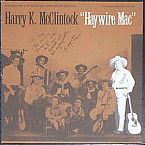
    The first recording appears to be as recent as 1928, by Harry McClintock (1882-1957). If the song is fanciful, it is nowhere near as imaginative as Haywire Mac's career, which began when he ran away from home to join the circus. Later, he worked in Africa and the Philippines, and was in China at the time of the Boxer Rebellion.

    This is said to be the first song McClintock ever penned; he claimed to have written it in 1895, which is possible but unlikely in view of both his youth and its clearly "adult" theme and language.
  • Like Honaloochie and Sukarita, the Big Rock Candy Mountain is - or rather was - a mythical place, but as often happens, life imitated art, in this case the name has been given to some hills near Marysvale, Utah, and a couple of other places. It has been suggested that whatever McClintock's contribution to the song, the idea is not a new one. The principal suggestion appears to be that it is based loosely on "An Invitation To Lubberland," which was first printed in 1685. Of course, the idea of Paradise in one form or another whether on Earth or in some nebulous other world has been around a lot longer than that.
  • As with many traditional and similar songs, there are different lyrics or versions of the same lyrics; McClintock himself edited or censored the song, certainly his original recording did not contain the lines:

    I've hiked and hiked till my feet are sore
    And I'll be damned if I hike any more
    To be buggered sore like a hobo's whore
  • The first recording was issued on the Victor label on September 6, 1928; McClintock sings with guitar accompaniment, and it is probably fair to say that it is as good as any later recording.

    It was not until 1939 that the song really took off, reaching number one on the Billboard magazine country music chart. Later (sanitised) versions have been recorded by Burl Ives; Tom Waits (in the 1987 film Ironweed); and Lisa Loeb (for the children's album Catch The Moon). The name was also used in 1943 by Wallace Stegner (1909-93) for a novel. >>
    Suggestion credit:
    Alexander Baron - London, England, for all above
  • In 2021, "The Big Rock Candy Mountain" was used in a commercial for the Chevrolet Silverado where a guy has a cat that acts like a dog.

Comments: 3

  • Joanna Panzera from SpaceJoanna Panzera said “I ain’t never seen no candy in space.”
  • Joe from 49417"In the Big Rock Candy Mountains, you'll never change your socks..."
    This is a selling point?
  • Paul “ Mick “ Kirby from Maryland We hope it’s there in our time of despair The Big Rock Candy Mountain !
see more comments

Editor's Picks

Does Jimmy Page Worship The Devil? A Look at Satanism in Rock

Does Jimmy Page Worship The Devil? A Look at Satanism in RockSong Writing

We ring the Hell's Bells to see what songs and rockers are sincere in their Satanism, and how much of it is an act.

Bryan Adams

Bryan AdamsSongwriter Interviews

What's the deal with "Summer of '69"? Bryan explains what the song is really about, and shares more of his songwriting insights.

Rush: Album by Album - A Conversation With Martin Popoff

Rush: Album by Album - A Conversation With Martin PopoffSong Writing

A talk with Martin Popoff about his latest book on Rush and how he assessed the thousands of albums he reviewed.

Spooner Oldham

Spooner OldhamSongwriter Interviews

His keyboard work helped define the Muscle Shoals sound and make him an integral part of many Neil Young recordings. Spooner is also an accomplished songwriter, whose hits include "I'm Your Puppet" and "Cry Like A Baby."

Gary Brooker of Procol Harum

Gary Brooker of Procol HarumSongwriter Interviews

The lead singer and pianist for Procol Harum, Gary talks about finding the musical ideas to match the words.

Who's Johnny, And Why Does He Show Up In So Many Songs

Who's Johnny, And Why Does He Show Up In So Many SongsSong Writing

For songwriters, Johnny represents the American man. He has been angry, cool, magic, a rebel and, of course, marching home.