Dance No More

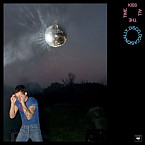
Album: Kiss All the Time. Disco, Occasionally (2026)
Charted: 26
Play Video

Songfacts®:

  • On "Dance No More," Harry Styles is in love with the world and the people around him, elevated to a higher plane. The song was born from a specific, transformative moment he experienced on a dancefloor in Berlin during the recording of his Kiss All the Time. Disco, Occasionally album at Berlin's Hana studio. "I remember going out kind of the first time in Berlin and like standing in the middle of the dance floor and feeling so unbelievably free and like safe that I kind of just had my hands in the air and my eyes closed," he told Apple Music's Zane Lowe, "and I just felt these tears like streaming down my face and it was this moment of like, 'Oh, I feel so alive right now.'"

    The resulting track captures that sensation of dancefloor transcendence.
  • Styles sings about music feeling "heaven-sent," while the bodies moving around him blur into a communal blur of emotion. "I think anyone who's been in the middle of a dancefloor like that and felt that release that you get from feeling that free, when you're really feeling your body and moving that way, and having experiences with music that can feel really emotional, I think knows that feeling of, 'I'm just covered in tears and sweat and it's all the same,'" he told BBC Radio 1's Jack Saunders.
  • Styles consciously set out to echo the emotional idea behind Joni Mitchell's "People's Parties" from her 1974 album Court and Spark, where she sings:

    Laughing and crying, you know it's the same release

    "I think it's probably less about my experience, and more about life," he told Jack Saunders. "Laughing and crying, it's the same release."
  • One of the song's most memorable lines came from a moment of casual dancefloor sociology.

    DJs don't dance no more, they said

    The lyric originated with a friend named Chloe, a DJ who had wandered off the decks to join the crowd. When Styles told her it was nice to see her actually dancing, she replied with the sort of throwaway remark that songwriters immediately write down: "DJs don't dance anymore."

    When Styles later played the song for his father, he misheard the lyric as "DJs don't dance, dance no more, they sit," a mishearing Styles described as "insane."
  • The track also tips its hat to the unaccompanied bass break on Paul Simon's "You Can Call Me Al." Styles had heard the story that Simon gave his bass player free rein over that section as a birthday gift. Inspired by the anecdote, Styles offered the same freedom to his keyboardist Yaffra, who delivers a freewheeling instrumental passage midway through the track.
  • Buried in the track, just before the Yaffra keys section, Styles calls out the name "Fox," the name of his producer Kid Harpoon's (Thomas Hull's) son. "Tom's son Fox has always been jealous that I put his mom, Jenny, in 'Canyon Moon,'" Styles told Zane Lowe. "And he was like, he was playing football, we were FaceTiming him, and he was like, 'If I hit the crossbar, will you put my name in a song?' And I was like, 'I'll give you three tries.' And he hit the crossbar."

    Jenny is Kid Harpoon's wife, Jenny Myles, whom he married in 2015. She appears in "Canyon Moon" from Fine Line (2019) in the lyric:

    I heard Jenny saying, 'Go get the kids from school'

    Fox's crossbar challenge secured him his own moment of immortality on the record, continuing a family tradition.
  • "Dance No More" arrives as the 10th track on Kiss All the Time. Disco, Occasionally, following the funk-driven swagger of "Pop" and doubling down on its hedonism. But where "Pop" is tight, knowing, and slightly self-aware, "Dance No More" is looser, more euphoric, and genuinely transported. Together, the two tracks form the album's most unguarded dancefloor sequence before the record moves toward its close with the reflective, graceful conclusion of "Carla's Song."
  • In the studio, the track became something of an emergency joy button. Whenever recording sessions threatened to become too serious, the band played "Dance No More." Across the board with 'Dance No More,' it's like the freest and most fun I think we've had in the studio," Styles told Zane Lowe. "It was like anytime it was getting a bit heavy, it was like, 'Let's listen to that.'"

    Which is fitting. After all, a song inspired by a night when someone stood in the middle of a Berlin dancefloor crying happily probably shouldn't sound overly organized.
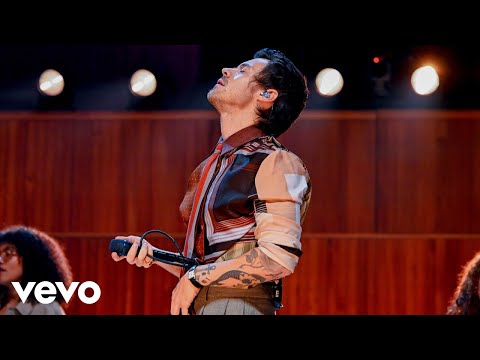
  • Harry Styles performed "Dance No More" on Saturday Night Live on March 14, 2026, pulling double duty as both host and musical guest for the episode; only the second time he has taken on both roles. The performance had an added surprise: Ryan Gosling appeared on stage to introduce the song, returning the favor after Styles had crashed Gosling's own SNL monologue the previous week.

Comments

Be the first to comment...

Editor's Picks

Julian Lennon

Julian LennonSongwriter Interviews

Julian tells the stories behind his hits "Valotte" and "Too Late for Goodbyes," and fills us in on his many non-musical pursuits. Also: what MTV meant to his career.

Barney Hoskyns Explores The Forgotten History Of Woodstock, New York

Barney Hoskyns Explores The Forgotten History Of Woodstock, New YorkSong Writing

Our chat with Barney Hoskyns, who covers the wild years of Woodstock - the town, not the festival - in his book Small Town Talk.

Timothy B. Schmit of the Eagles

Timothy B. Schmit of the EaglesSongwriter Interviews

Did this Eagle come up with the term "Parrothead"? And what is it like playing "Hotel California" for the gazillionth time?

Jack Tempchin - "Peaceful Easy Feeling"

Jack Tempchin - "Peaceful Easy Feeling"They're Playing My Song

When a waitress wouldn't take him home, Jack wrote what would become one of the Eagles most enduring hits.

Howard Jones

Howard JonesSongwriter Interviews

Howard explains his positive songwriting method and how uplifting songs can carry a deeper message.

Harold Brown of War

Harold Brown of WarSongwriter Interviews

A founding member of the band War, Harold gives a first-person account of one of the most important periods in music history.