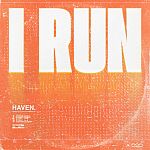
"I Run" by Haven is a UK garage track released on October 29, 2025. It showed up on TikTok a short time later, and on the strength of its TikTok views and streaming plays, landed on various charts. Haven, though, came out of nowhere and didn't have a human face attached to it, a pretty clear sign it was AI. The writing credit goes to Harrison Walker, a British producer. He claimed the voice on the track was his, just twisted, filtered, and stretched so it sounds like a girl.
Sometime around November 19, streaming services started pulling the song and Billboard deemed it ineligible for their charts because it was determined to be AI generated. Walker admitted he used "AI-assisted vocal processing" through the application Suno, but said the track was made in ProTools. To get around the AI bans, he found a human vocalist (Kaitlin Aragon), had her record the vocals, and re-released the track credited to "HAVEN. & Kaitlin Aragon." This version, scrubbed clean of AI, was welcomed on streamers.
At the time of its release, Haven was little more than a name and a whisper on social media. While that's a sure sign of AI, in modern electronic and garage music, anonymity is practically an aesthetic, so this wasn't unusual. The less you know about the artist, the more you're forced to focus solely on the music and production style.
Produced by another newcomer, Jacob Donaghue, "I Run" plants itself firmly in the UK garage tradition: quick-tempoed, syncopated, and made for motion. Lyrically, though, it's more internal panic than dancefloor euphoria, brimming with images of suffocation and escape. When Walker repeats "I run, I run, I run," it's a cry for release, a musical embodiment of trying to outrun your own thoughts.
The vocals on the original version sound a lot like the English singer Jorja Smith; many of her fans asked her about it on social media, and she confirmed she had no involvement. Suno doesn't let users request vocals that sound like specific singers, but you can get pretty close with prompts like "warm, smoky young mezzo-soprano from West Midlands, England."
The track's viral rise on TikTok came soon after its release. Users choreographed sharp, high-energy routines that mirrored the song's restless rhythm, while others found it a perfect companion for fitness videos, literally running to "I Run." Then there were those who used the song to soundtrack posts about anxiety, burnout, and the claustrophobia of modern life.
After debuting at #56 on the UK Singles Chart dated November 7, 2025, "I Run" was poised to be a hit. It surged into the Top 10 in the following week's midweek update but was removed from the final chart because of allegations of AI deepfaking. The Official Charts Company explained the decision this way:
"It is against Official Charts Company policy to include within our charts any repertoire which is believed to potentially be infringing. We have received notification that a series of takedown notices have been issued to DSPs in relation to the track 'I Run' by Haven. Our understanding is that these takedown notices have been or are in the process of being implemented. As a consequence, this track is suspended today from the Official Singles Charts."
The plot thickened on November 28, 2025 when Jorja Smith's record label, FAMM, posted a
screed on Instagram accusing Haven of using AI trained on Smith's work to write the lyrics and impersonate her voice.
"Haven's team reached out once 'I Run' had gone viral to ask whether Jorja would jump on a remix," they posted. "They did so as they needed to legitimize the track as the public had been led to believe that they were listening to Jorja Smith's vocals. At no point did they mention to us that AI had been used to manipulate the existing vocals but we already had a suspicion that this was the case."
The label saw it as a moment of reckoning for AI in music, adding, "AI is all around us and already impacting the way we consume music. We need to talk about what that means for creatives."