Motorhead

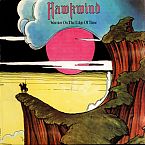
Album: Warrior On The Edge Of Time (1975)
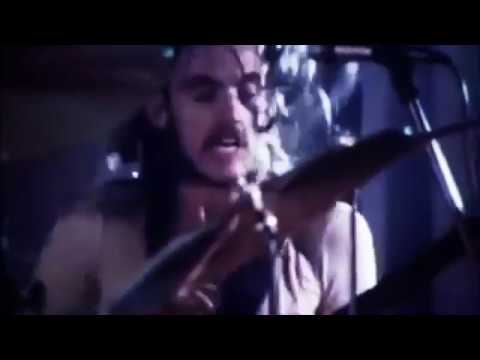
Play Video

Songfacts®:

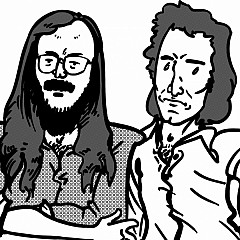
  • Back in 1974, somewhere between cosmic jams and pharmaceutical excess, Ian "Lemmy" Kilmister, then the gravel-voiced bassist for Hawkwind, found himself on the balcony of the Continental Hyatt House in Los Angeles. This storied hotel, better known to rock history as the "Riot House," was a preferred nesting place for touring rock bands, where room service rarely involved food and the television sets often took impromptu flying lessons.

    It was here that Lemmy reportedly borrowed Roy Wood's acoustic guitar (Wood of Wizzard and ELO fame) and dashed off the song "Motorhead" in a speed-fueled burst of energy. Stories describe him singing and howling into the night as cars slowed down to listen before driving away.
  • The word "motorhead" is British slang for someone heavily into amphetamines, which, let's just say, was not a metaphor in Lemmy's case. The lyrics are a love letter to speed (in every sense), and the song throbbed with that energy.
  • The track was released in March 1975 as the B-side to Hawkwind's "Kings of Speed." It was Lemmy's final original contribution to the band - two months later he was unceremoniously booted out after a drug bust at the Canadian border.
  • When Lemmy was kicked out of Hawkwind he took the song with him and built an entire legacy around it. He named his new band Motörhead, adding the umlaut not for pronunciation (nobody German says "Möh-tor-head") but simply because it looked cool, and also to sidestep the awkward fact that Hawkwind still technically owned the publishing rights to the song.
  • Motörhead re-recorded "Motorhead" with a rawer, leaner, more metallic edge, and it quickly became their signature anthem: part punk, part heavy metal, and all Lemmy. The track opens their debut album and never left their setlists throughout the band's career.
  • Hawkwind, for their part, reclaimed the song in 1981, recording their own version with frontman Dave Brock handling vocals and synths. It shows up now and then on compilations, but in the grand arc of rock history, "Motorhead" will always belong to the man who wrote it shirtless, sleep-deprived, and high above the Sunset Strip.

Comments

Be the first to comment...

Editor's Picks

Steely Dan

Steely DanFact or Fiction

Did they really trade their guitarist to The Doobie Brothers? Are they named after something naughty? And what's up with the band name?
Dean Pitchford

Dean PitchfordSongwriter Interviews

Dean wrote the screenplay and lyrics to all the songs in Footloose. His other hits include "Fame" and "All The Man That I Need."
Donald Fagen

Donald FagenSongwriter Interviews

Fagen talks about how the Steely Dan songwriting strategy has changed over the years, and explains why you don't hear many covers of their songs.
Peter Lord

Peter LordSongwriter Interviews

You may not recognize his name, but you will certainly recognize Peter Lord's songs. He wrote the bevy of hits from Paula Abdul's second album, Spellbound.
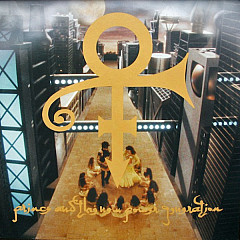
Evolution Of The Prince Symbol

Evolution Of The Prince SymbolSong Writing

The evolution of the symbol that was Prince's name from 1993-2000.
Five Rockers Who Rolled With The Devil

Five Rockers Who Rolled With The DevilSong Writing

Just how much did these monsters of rock dabble in the occult?