
John Wayne Is Big Leggy

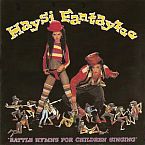
Album: Battle Hymns for Children Singing (1982)
Charted: 11
Play Video

Songfacts®:

  • "John Wayne Is Big Leggy" was released in July 1982; backed by "The Sabres Of Paradise," it was the short-lived Haysi Fantayzee's debut single. If this is a tribute song, it remains to be seen what "The Duke" himself would have made of it, as he died in 1979. Probably more than any other actor, Wayne came to symbolise not just the American cowboy but everything that was fundamentally decent about America. He made over two hundred films, most of them Westerns or connected in some way with the Old West. His two greatest films were made towards the end of his career, True Grit (1969) and - arguably his greatest performance - the low key 1976 film The Shootist in which he played a world weary retired gunfighter who was dying of cancer. Although J.B. Books elected to go out in a blaze of glory, Wayne himself died of cancer - of the stomach - having already beaten lung cancer in 1964, albeit by the drastic measure of the total removal of his left lung. (Wayne was a chain smoker). In 1981, the John Wayne Cancer Institute was established by Wayne's family in his memory, and was presided over by his eldest son until his own death in 2003.

    Wayne won an Oscar for True Grit; although he probably deserved it for his portrayal of the fiery, no-nonsense Marshal Rooster Cogburn, it was really a lifetime achievement award. Glen Campbell, who would later record "Rhinestone Cowboy" played a major supporting role.

    Rooster Cogburn and most of the characters Wayne played were indeed "big leggy"; as he stood six foot four, that was hardly surprising. The reference to him being "big as a ranch" obviously does not concern his gait.

    It has been suggested that this song refers to or portrays Wayne as a racial bigot, a tiresome allegation easily and too often made, even in the 1980s, but a white man who married three Latin American women shouldn't really have to answer that charge. This song is tongue in cheek if nothing else.
  • "John Wayne Is Big Leggy" was also released as an extended version running to 6 minutes 53 seconds, and as a "Groovy Long Version & Wrong Speed Edit" which runs to some 9 minutes 20 seconds. >>
    Suggestion credit:
    Alexander Baron - London, England, for above 2

Comments: 8

  • Lecheffre from Wherever You Aren’t@Common Sense is Dead. Jeremy Healy had read Bury My Heart at Wounded Knee by Dee Brown (suggest you do as well), and was inspired to write the song.

    Quote: It was an allegory for treatment of which the white settlers used, but on the Native American Indians. However, I wrote it like John Wayne having anal sex with a squaw. I thought this was hilarious!

    Wayne is a stand-in for white settlers, colonizers. Speckled Hen is an avatar for Native Americans.

    It very much is about the things Anon from the US wrote. Most New Wave 80’s pop had leftist leanings. Folks seem to forget that because they made dance music.
  • Glyn Davies from UkChrist the pampered brigade are out in force, it's a f--king Pop song get over it. I swear to god these people wake up trying to find ways to be offended, it must give the sad little muffins a purpose in life.
  • Ava from Monroe"I believe in white supremacy until the blacks are educated to a point of responsibility." - John Wayne. Whoever wrote this incredibly silly rejoinder (a person who's married Latina women can't be racist? Latinas can be white, that makes no sense) sounds like they probably hold similar views. Sorry, the Confederacy lost and it's never coming back.

    No comment on the song itself, but the defensive language is extremely telling.
  • Common Sense Is Dead. from Uk Anon from USA, please shut your mouth and give your arse a go, it's sh*t probably makes more sense than the pile you spewed here. It's a tongue in cheek song about sh*gging with a hint of the attitude towards native Americans but none of the sh*te you dropped about disrespecting her in her own home. He 's a cowboy, so wouldn't be parted from his gun, and so when she said it was in the way, he moved it behind him so he could take her from behind. People read way too much into things. Not every f'ing thing is racist!!!
  • Mo Johnny Yen Riaz from Manchester UkAlways thought it was “and he knows that god is with him cos he’s white” and I guess that’s what they really meant anyway.
  • Anon from UsaThe song isn’t an homage to John Wayne; the John Wayne they mention is an exemplar, a stereotype. The song absolutely is about racism and the ‘cowboy’ image of not just the United States, but of any person or group that uses themselves as the yardstick by which to measure and place some kind of meritorious value on other peoples, cultures, and countries. For example, Speckled Hen is good enough to have sex with, but she doesn’t merit respect, even when she puts her foot down and asserted her rights to her own preferences in her own teepee. She doesn’t even merit an explanation for why it is okay to invalidate her wishes, as shown in the line, ‘turn right over, you’ll know why’. What gives this stereotype called John Wayne the right to do all this? Because he’s White/right.

    This is 100% a song about racism, and all of the baggage that comes with it, like manifest destiny.
  • Anne from LondonI thought it was 'he knows that God is with him cos he's white. John Wayne was known to hold racist views.
  • Daniel from Uk, United KingdomThis song is about sexual intercourse - specifically the 'doggy' position as a solution to a troublesome gunbelt!
see more comments

Editor's Picks

Christopher Cross

Christopher CrossSongwriter Interviews

The man who created Yacht Rock with "Sailing" wrote one of his biggest hits while on acid.

Rufus Wainwright

Rufus WainwrightSongwriter Interviews

Rufus Wainwright on "Hallelujah," his album Unfollow The Rules, and getting into his "lyric trance" on 12-hour walks.

Jon Anderson of Yes

Jon Anderson of YesSongwriter Interviews

From the lake in "Roundabout" to Sister Bluebird in "Starship Trooper," Jon Anderson talks about how nature and spirituality play into his lyrics for Yes.

When Rock Belonged To Michelob

When Rock Belonged To MichelobSong Writing

Michelob commercials generated hits for Eric Clapton, Genesis and Steve Winwood in the '80s, even as some of these rockers were fighting alcoholism.

Charles Fox

Charles FoxSongwriter Interviews

After studying in Paris with a famous composition teacher, Charles became the most successful writer of TV theme songs.

Wolfgang Van Halen

Wolfgang Van HalenSongwriter Interviews

Wolfgang Van Halen breaks down the songs on his debut album, Mammoth WVH, and names the definitive Van Halen songs from the Sammy and Dave eras.