(We Don't Need This) Fascist Groove Thang

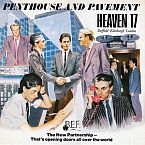
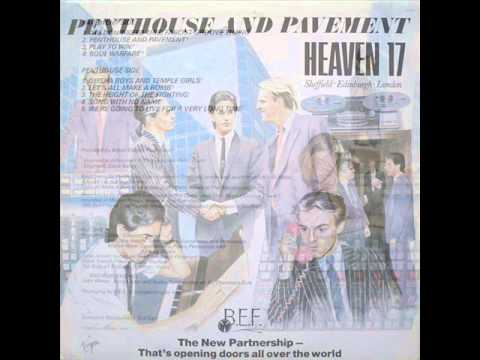
Album: Penthouse and Pavement (1981)
Charted: 45
Play Video

Songfacts®:

  • This was the first single released by Heaven 17, a British synth-pop band comprising former Human League members Martyn Ware and Ian Craig Marsh on keyboards plus vocalist Glenn Gregory. It was a minor hit in their home country, peaking at #45 on the singles chart and also reaching #29 on the Billboard Dance Music/Club Play Singles listing.
  • The song's electro-funk sound was inspired by American dance music bands like Cameo, Parliament and Funkadelic, which Heaven 17 were listening to at the time. Martyn Ware told us: "We wanted to do something that was funky because we loved the funk, so we started off with that as an idea: let's do this really fast. Nobody's really got anything out there that's, like, 160 BPM. We used the Burroughs cut up method for making lyrics, as an inspirational start anyway. There was a magazine called Record Mirror in the UK that had a dance chart, or a disco chart as they called it in those days. We were all big fans of disco music, even though it was out of fashion then. But we didn't care. So we looked at all the titles. It wasn't all disco, there was some credible stuff. It ranged from stuff like, 'Let's All Chant,' to deep, more like Sly & the Family Stone-type stuff. We looked at all these titles because we loved the terminology. It was all very mysterious to us with words like hip talk, slang. That's why we came up with 'thang' as a part of the title. We were so excited to have 'thang' in there because it was a really cool word."
  • The lyrics of the song reference Prime Minister Margaret Thatcher and President Ronald Reagan and include a wry joke about cruise missiles. Ware recalled to us how the track evolved into denunciations of the UK and US political leaders: "We started out jamming together loads of these cut up titles and coming up with ridiculous lines for the song, like, 'Heart USA. I feel your power.' What the hell does that mean? I mean, really, what does it mean? We just thought it was a comedy song. I know people will read meaning into it."

    Ware continued: "Then, as we got more into writing the lyrics, we thought, 'Wouldn't it be great to have some real world people in there?' We were obsessed with Reagan coming into power and the specter of Margaret Thatcher coming into power and those were some very genuine concerns. The whole world was going to be blown to smithereens. It seems a little melodramatic now, but it was a genuine thing at the time if you remember. So we thought, 'It's time for action here. We're all political people. It's time to walk the walk.' So as it evolved, the songwriting – it only took two days to write – it turned into this really bizarre hybrid of politics and dancing and comedy and black American soul influence."
  • The song was banned by the BBC due to concerns by Radio 1's legal department that it libeled Reagan.
  • A surprise star of the song was teenage bassist and guitarist John Wilson, whose buzzes and thrums and eight bar bass solo earned many accolades. Ware told us the story behind the young axeman's contribution: "We wanted a bass solo in the middle eight. We thought it would be really cool to go with the electronics, but we didn't know any real musicians at all because we were basically just kids messing around with the tape recorder and synths. At the time Glenn was working at the local theater in town in his spare time to make ends meet - because we weren't paying ourselves very much - at a place called The Crucible where the world snooker tournament was going on as well. He went into the greenroom. He said, 'Oh, I'll ask around because it's theatrical people, there's bound to be a musician in there somewhere.' He walked into the greenroom of the theater and said, 'Does anybody play bass?' Literally. This is not some apocryphal story. This is literally what happened. And one of the stage hands [John Wilson] was this young guy who had just started, 17 years old. Black guy. Very shy, quiet was reading the newspaper. He put his hand up without looking up: 'I play a little bit of bass.' We asked him to come down because we just wanted to see if the idea would work. He said, 'Oh, I'll go and get my bass. I just bought one last week. I bought it for 20 quid, so it's not a very good bass.' It really doesn't matter. It's just the idea. We want to see if it will work. So he came down and the first thing he played was the solo in the middle of 'Fascist Groove Thang' and we all went, excuse my language, 'Fu--ing hell!' Literally, in my entire life my jaw's never hit the floor. All of us, we were going, 'This is phenomenal!' And so I said, 'Would you like to see if you can play some bass on the rest of the tune?' And he went, 'Sure.'"

    Ware continued: "After he finished the bass on the track, he said, 'Is that alright?' I said, 'I think it was alright.' 'Because,' he said, 'It's not really my main instrument.' I said, 'What's your main instrument?' 'Oh,' he said, 'I'm a rhythm guitarist.' And I said, 'Do you think you might want to go home and bring your guitar in, like, right now?' So he came back in and he sat down and plugged it in. And I said, 'I think we'd like something that sounds a little bit like Chic.' I knew it would be good because this kid's got the funk, but it was on another level. I've since talked to Nile Rodgers about this and he says, 'Wow, that kid is just awesome.'"

  • As he did on the Human League album Dare, Martyn Ware used a LM-1 drum machine on this track. Introduced in 1980, only about 500 of the units were made, but many of them went to producers who used them to craft the backing tracks of hit songs. Prince put his to good use, using it throughout the '80s.

Comments: 2

  • Clare M. from Toronto, Can.Loved the song and I've had the album since '82. Amazing to hear the story of the bass player. Whenever I share the song and I've shared it often over the years I always highlight the bass solo as being quite incredible. And to now know he was 18 at the time... my god.
  • L from UkThis song does not use a linn drum or any sample playback type drum machine at all, the linn is real drum sounds all sampled from a ludwig drum kit by art wood an LA session drummer, also a digital device very precise, with quantize shuffle features etc, and the linn featured all this in 1979 actually and as such was a first.

    linn drum lm1 is a very Very distinctive (i own one) punchy sampled drum sound. you know it when you hear it, it does not make synthetic clashy analogue type sounds like the type that feature on this track, the lm1 does not sound in any way like these sounds.

    It sounds like, don't you want me by the human league, or the lion sleeps tonight by tight fit, or videotheque by dollar or prince recordings louis clarke even used it on hooked on classics, the linn drum by early 81 then featured a new distinctive handclap sample that sounds like a face being severly slapped lol, its instantly recognizable, the first clap sample wasnt that successful and was very very short crunchy and clicky although michael jadkson did use that one qnc it was good just not as good as the better sample that came in revised lm1's 36 machines later,, of course the sounds were removable by way of taking out the large eprom chip the sound is stored on,, with a ziff socket remover.
    Although american made,,, at first it was Mostly being used by many uk artists mid 81 onwards, session music artists or bruton kpm themes international library music makers.
    But donna summer and herbie hancock and john lennon (the unmistakable tambourine sample on just like starting over) were really the three first commercial artists to have used the linn drum in 1980 on album or singles tracks, grand illusion by donna summer, and a track by herbie hancock from 1980 that also featured a fairlight sampler that escapes me right now.
    Analogue tape loop synthetic sounds feature here on this song by h17, h17 did not yet have access to a linn drum at the point this song was recorded in feb 81, as martin rushent didnt aquire the linn drum at genetic until mid april 1981 which is after this recording, and why the human leagues sound of the crowd single recorded before this aquisition also used tape looped synth sounds as drums with a clashy vibe just before linn, then pete shelley and the human league accessed it from may time 81 onwards in their recording sessions, but no linn on this track, h17 Did use it on 3 tracks recorded later in 81 just before the release of ph&p and the difference on those 3 tracks is of course night and day.
    The synth percussion on groove thang is good indeed! but not in any way linn drummed.
see more comments

Editor's Picks

Second Wind Songs

Second Wind SongsSong Writing

Some songs get a second life when they find a new audience through a movie, commercial, TV show, or even the Internet.

The Fratellis

The FratellisSongwriter Interviews

Jon Fratelli talks about the band's third album, and the five-year break leading up to it.

Eagles Lyrics Quiz

Eagles Lyrics QuizMusic Quiz

Lots of life lessons in these Eagles lyrics - can you match them to the correct song?

Charlie Benante of Anthrax

Charlie Benante of AnthraxSongwriter Interviews

The drummer for Anthrax is also a key songwriter. He explains how the group puts their songs together and tells the stories behind some of their classics.

Rock Revenge Songs

Rock Revenge SongsMusic Quiz

John Lennon, Paul Simon and Lynyrd Skynyrd are some of the artists who have written revenge songs. Do you know who they wrote them about?

Adam Young of Owl City

Adam Young of Owl CitySongwriter Interviews

Is Owl City on a quest for another hit like "Fireflies?" Adam answers that question and explains the influences behind many others.