Herb Alpert's 1965 version of "A Taste Of Honey" is the most popular, but the song dates back to 1960, when it was written as instrumental theme music to a Broadway play called A Taste Of Honey, adapted from a 1958 stage production written by the British author Shelagh Delaney. The play was turned into a 1961 movie that used different music.
The song was written by the composers Bobby Scott and Ric Marlow; Scott played piano on the track and released the original version on the soundtrack to the Broadway production.
In 1961, Billy Dee Williams, who starred in the production, was the first to record a vocal version of the song. The lyrics were written by Ric Marlow and are very sad, with a man going on a journey and promising to return, and his lady dying when he doesn't.
Over the next few years various covers of the song appeared, both instrumental and vocal, with Barbra Streisand and Peggy Lee both releasing versions in 1963 and Tony Bennett in 1964. Bennett's was the only vocal rendition to chart, reaching #94. An instrumental by Martin Denny made #50 and another by Victor Feldman Quartet made #88, both in 1962, but Alpert's version is the one that most of us know.
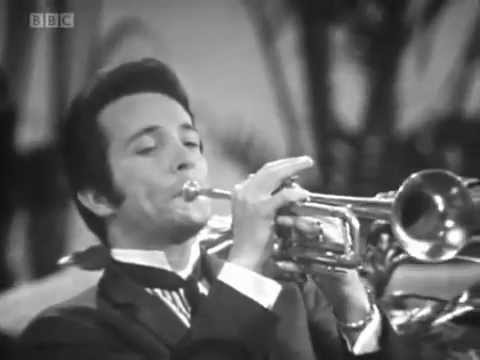
There's a stylistic gulf between the Herb Alpert take on this song and the earlier versions. The play A Taste of Honey is about a young white woman who gets pregnant after a one-night stand with a Black sailor. Her best friend, who is a gay man, agrees to help raise the child (heady stuff for 1960!). The music is suitably gloomy and reflective, as were the cover versions of the song... until Alpert's. He was a trumpet player who put a Mariachi spin on his songs that proved extremely popular in the mid-'60s. He played it a lot more lively, turning it into something you'd bop to instead of something you'd cry along with.
The song wasn't a huge hit, topping out at #7 in the US, but older Americans had a taste for Alpert's music and bought lots of his albums. "A Taste Of Honey" is part of the album Whipped Cream & Other Delights, which was the #1 album in the US from November 27, 1965 to January 7, 1966. It then returned to the top on February 19, spending another two weeks at the summit. Alpert had two more #1 albums in 1966 and logged a total of 18 weeks at the top spot, more than any other artist, including The Beatles.
So while teenagers were buying up 45 RPM singles by The Beatles, The Rolling Stones and The Supremes, sending those songs up the charts, their parents were buying Herb Alpert albums and enjoying a more mature listening experience.
The instrumental version won the Grammy Award for Best Instrumental Theme in 1963. In 1966, Alpert received Grammys with his version of the song in three different categories: Best Instrumental Arrangement; Best Instrumental Performance, Non-Jazz; and Record of the Year. In addition, Larry Levine (the engineer for this song) received a Grammy with Alpert's version for Best Engineered Recording - Non-Classical.
Paul McCartney is a big fan of this song, and his group The Beatles included it as one of six cover songs on their first UK album, Please Please Me, in 1963. It was part of their concert repertoire in 1962 and 1963.
Herb Alpert's version was the last to chart, but other artists to record it include Lionel Hampton, Bobby Darin, The Hollies, The Temptations and The Ventures.
In 1967 Smokey Robinson & the Miracles had a hit with "
I Second That Emotion," which quotes the title in the lyric, "A taste of honey is worse that none at all."
In 1962 Herb Alpert had his first hit with "
The Lonely Bull (El Solo Toro)." The song, and all of his subsequent releases, were issued on A&M Records, a label he formed with Jerry Moss that became the most successful artist-owned label in history (A&M stand for "Alpert & Moss"). The label was sold to PolyGram for $500 million in 1989.
Honey was used in many ancient Egyptian households as a sweetening agent. It was valued highly and was used to feed sacred animals and as a tribute or payment. Confectioners used honey as a sweetener and mixed it with various fruits, herbs, nuts and spices. The candy was then used as an offering to the Egyptian gods. (From the book
Food for Thought: Extraordinary Little Chronicles of the World by Ed Pearce)
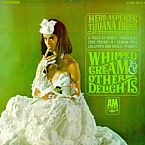
Whipped Cream & Other Delights has one of the
most recognizable covers ever printed, showing the pregnant model Dolores Erickson lathered in shaving foam.
"My first reaction was holy s--t, man. Too racy,"
Alpert remembered to Billboard in 2016. "I didn't know quite frankly, whether it reflected the album... but we decided to go with it. Obviously that was fortuitous."
The album was re-released in 2005 with re-mastered sound and extensive liner notes from Alpert.
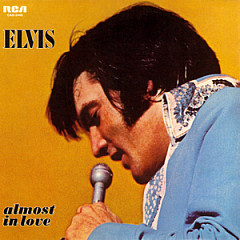
Excluding soundtracks, the only artists to have #1 albums in 1965 in the US were Elvis, The Beatles, The Rolling Stones and Herb Alpert. These albums were mostly instrumental, but in 1968 Alpert released a song with his vocal called "
This Guy's In Love With You" that went to #1.
The disco group A Taste Of Honey, which won the 1978 Grammy Award for Best New Artist and had a #1 hit that year with "
Boogie Oogie Oogie," is named after this song.
The song is credited to Herb Alpert & the Tijuana Brass, but at this point there was no real "Tijuana Brass" - just session musicians Alpert enlisted.