Violet
by Hole

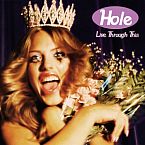
Album: Live Through This (1994)
Charted: 17
Play Video

Songfacts®:

  • "This is a song about a jerk. I hexed him, now he's losing his hair."

    That's how Hole frontwoman Courtney Love introduced "Violet" when Hole played it on Later... with Jools Holland in 1995. This is a pretty clear indication that the song is about Billy Corgan of Smashing Pumpkins, whom love dated in 1991 before taking up with Kurt Cobain. Corgan had a rich head of hair when he and Love were together, but was losing it in 1995 and shaved it all off by the end of the year. (Love seems to dig guys with good hair. And rock stars. And especially rock stars with good hair.)
  • Courtney Love plays the masochist in the song, screaming out, "Take everything, I want you to." This kind of self-flagellation is typical of her lyrics. Elsewhere in the song, she proclaims herself "the one with no soul."

    Love was an admired indie-rock upstart when Hole released their first two singles in 1990 and early 1991, but following the death of Kurt Cobain, she became one of the most heavily criticized women in rock, accused of contributing to his demise. Love responded by leaning into her reputation, admitting she loved drugs and sex, and was willing to put up with a certain amount of abuse in order to achieve fame. At this time, many rockers were putting their self-destructive tendencies into their songs (like Trent Reznor), but love did it in the press as well, amplifying her pathos.
  • The relationship between Courtney Love and Billy Corgan did not end with this song. He worked on Hole's next two albums, Celebrity Skin (1998) and Nobody's Daughter (2010). They seem to have a love-hate relationship, often trading barbs but acknowledging that they understand each other on a level no one else can.
  • Rarely mentioned in the Kurt Cobain timeline is how Hole was set to release their album Live Through This when he died by suicide. Nirvana and Hole were on equal footing when Nirvana released their Nevermind album in 1991, taking them stratospheric. Hole, though, was also building an audience and getting lots of positive press. They signed with David Geffen's label DGC, which was ready to give Live Through This a big push. The first single, "Miss World," was issued in March 1994, but Cobain's suicide came soon after, putting any Hole promotion on hold. Still, DGC released the album on schedule April 12, exactly a week after Cobain's death.

    Love was still reeling when Hole's bass player, Kristen Pfaff, died of a heroin overdose in June. It looked like the album would be forgotten, but Hole hit the road in August and the next single, "Doll Parts," made a big impact, landing Hole their first chart hit and getting them significant airplay on radio and MTV. "Violet" was the next single, and kept the momentum going. The album ended up selling well over a million copies. Love remained a lightning rod, but even her critics could admit that she made some very impressive music.
  • Love wrote "Violet" with Hole guitarist Eric Erlandson, her primary collaborator in the group (and the only guy). They had it finished by late 1991 and recorded it in a session for John Peel's BBC radio show along with "Doll Parts." Hole played it live but didn't release the song until the Live Through This album in 1994. The John Peel version, from when Hole had a different drummer and bass player, appears on the 1995 EP Ask For It.
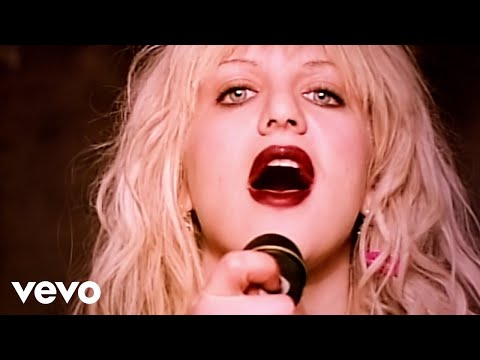
  • The music video was directed by Mark Seliger and Fred Woodward, who often worked together at Rolling Stone (Seliger as a photographer, Woodward as art director). It shows old-timey burlesque dancers being ogled by men in the audience - a nod to Courtney Love time as a stripper. Love shows up in a wedding dress, and there are also shots of children, ballet dancers, and rats. The pastiche of disjointed images syncs with Love's frantic and discomfiting delivery.
  • While many have long assumed "Violet" was a scathing takedown of Smashing Pumpkins frontman Billy Corgan, in 2024 Courtney Love offered a more nuanced picture of her inspiration in quotes provided to NME by Love's team.

    Love acknowledged Corgan's role in the song's genesis, but clarified it goes beyond a simple ex-boyfriend rant. She described the scene: sitting on a fire escape, cheap wine in hand, watching a Chicago sunset paint the sky "bejeweled amethyst," all while under the influence of Vicodin (a sentiment laced with nostalgia for youthful indiscretion).

    Love emphasized her creative process: sometimes inspiration strikes, taking unexpected turns. While she admitted to her past comment on Jools Holland about "Violet" being a hex on Corgan's hair, she called it a "bitchy" moment and feels the need to uphold "good faith beef" (a playful jab at the often-heated world of rock and roll feuds).

    The song's depth extends beyond personal drama. Love revealed influences from literary giants like Alexander Pope ("The Dunciad") and Emily Brontë. While acknowledging Brontë's impact, she ultimately scrapped some inspiration, fearing it felt like imitation.

    "Violet" also explores internal conflict. Love mentions a line about "Danny's new number," which could be a reference to either musician Danny Goldberg or a drug dealer named "Bobby Bones" (familiar to Red Hot Chili Peppers bassist Flea). This hints at a struggle between different paths or influences in her life.

    "Ultimately, nothing matters more than animals, including humans," Love concluded.

Comments: 1

  • Luna Loud from Royal Woods, MichiganIt is said that when the sky turns violet, or purple, it is a spiritual sign that means you are about to embark on a journey of self-discovery or receive some spiritual guidance. It can relate to a lot of things but one of the things is creativity. Note that a LOT of artists, but musicians, especially like to use the color purple or violet in their songs, i.e. "Purple Haze" (Jimi Hendrix) or "Purple Rain" (Prince) to name two.

    I also like to wear purple a lot, and my favorite guitar that I play is purple, too!
see more comments

Editor's Picks

Ian Astbury of The Cult

Ian Astbury of The CultSongwriter Interviews

The Cult frontman tells who the "Fire Woman" is, and talks about performing with the new version of The Doors.

JJ Burnel of The Stranglers

JJ Burnel of The StranglersSongwriter Interviews

JJ talks about The Stranglers' signature sound - keyboard and bass - which isn't your typical strain of punk rock.

Bible Lyrics

Bible LyricsMusic Quiz

Rockers, rappers and pop stars have been known to quote the Bible in their songs. See if you match the artist to the biblical lyric.

Protest Songs

Protest SongsMusic Quiz

How well do you know your protest songs (including the one that went to #1)?

Adele

AdeleFact or Fiction

Despite her reticent personality, Adele's life and music are filled with intrigue. See if you can spot the true tales.

Wedding Bell Blues

Wedding Bell BluesSong Writing

When a song describes a wedding, it's rarely something to celebrate - with one big exception.