
Nutbush City Limits

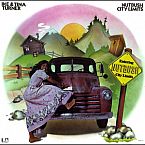
Album: Nutbush City Limits (1973)
Charted: 4 22
Play Video

Songfacts®:

  • Anna Mae Bullock was born November 26, 1939 in a hospital in Brownsville, a short drive from Nutbush, Tennessee, where she grew up. When she was 16, she left to live with her mom in St. Louis, which is where she met Ike Turner. When they started performing together in 1960, he insisted she take the name "Tina Turner," even though they didn't get married until two years later. In November 1973 the duo released "Nutbush City Limits." Far from being a city, Nutbush is a hamlet on Highway 19 in Tennessee. >>
    Suggestion credit:
    Alexander Baron - London, England
  • In this song, Turner recalls her memories of Nutbush, painting a picture of a friendly little town with a strong community. She once said that she didn't turn any heads in Nutbush, as she was too skinny, and many women there had the goods.
  • Tina Turner didn't write many songs, but she is the sole composer on this one, which is her biggest hit as a songwriter. It's also the first song she ever wrote. Following the advice of "write what you know," she put the song together in an attempt to get Ike & Tina Turner back on track; after landing a hit with their cover of "Proud Mary" in 1971, they struggled. "Nutbush City Limits" did the job, giving them another hit in 1973.
  • Marc Bolan of the '70s British glam rock band T-Rex played guitar on this track. Bolan was a fan of Ike's guitar playing and in his teenage years he had had a crush on Tina Turner.
  • Like the 1966 Ike & Tina Turner song "River Deep - Mountain High," this was a lot more popular in the UK (where it charted at #4) than in their home country of America (where it peaked at #22). This despite the song being about a place in America.
  • This song came at a pivotal time for Tina Turner, who was regularly being abused by Ike. By this time, they had been a musical couple for 13 years and a married couple for 11. Turner found her strength through chanting, repeating the Sanskrit mantra "Nam-myoho-renge-kyo" over and over. She finally left Ike in 1976, but their divorce wasn't finalized until 1978, as there were so many business entanglements. Eager to move on with her life, Tina gave in to Ike's demands, getting just her name (which, in a way, Ike owned), out of the deal.

    After a rough patch where she lived with friends, she emerged as a solo artist and became far more popular than she had been with Ike. As her career progressed, Tina did less songwriting, putting her energies into vocal arrangements and performance. As a solo artist, she surrounded herself with top talent and developed a reputation for her strong work ethic, always getting it right in the studio. She certainly could have written more songs had she chosen to.
  • Tina Turner re-recorded the song as a house number in 1991 for her compilation album Simply The Best. A single release peaked at #23 in the UK. Two years later she re-worked it again for the What's Love Got to Do with It? soundtrack album.
  • The 1991 remix was accompanied by a music video showing early footage of Turner and shot of the Nutbush landmarks she mentions in the song. It was directed by Chris Cowey and Michael Bay (yes, the guy who later brought us the Transformers movies).
  • Bob Seger released a live version on his 1976 album Live Bullet. Released as a single, it went to #69 in the US.

Comments: 4

  • Dlaurel from BerlinThis song was composed by Ike, not by Tina, even though she got sole credit. This can be found in many reliable sources.
  • Beth from Brooksville, KyBob Seger also covered this song.
  • Edwin from Vancouver, Bcthe original is one of her better tunes... despite of her popularity, for the most part tuner's incredible vocal abilities are under-used on formula dreck. could there be a blues album in the works?
  • Robert from San Francisco, CaKristi Yamaguchi and Mark Ballas used this song for their week nine jive.
see more comments

Editor's Picks

Does Jimmy Page Worship The Devil? A Look at Satanism in Rock

Does Jimmy Page Worship The Devil? A Look at Satanism in RockSong Writing

We ring the Hell's Bells to see what songs and rockers are sincere in their Satanism, and how much of it is an act.

Bryan Adams

Bryan AdamsSongwriter Interviews

What's the deal with "Summer of '69"? Bryan explains what the song is really about, and shares more of his songwriting insights.

Rush: Album by Album - A Conversation With Martin Popoff

Rush: Album by Album - A Conversation With Martin PopoffSong Writing

A talk with Martin Popoff about his latest book on Rush and how he assessed the thousands of albums he reviewed.

Spooner Oldham

Spooner OldhamSongwriter Interviews

His keyboard work helped define the Muscle Shoals sound and make him an integral part of many Neil Young recordings. Spooner is also an accomplished songwriter, whose hits include "I'm Your Puppet" and "Cry Like A Baby."

Gary Brooker of Procol Harum

Gary Brooker of Procol HarumSongwriter Interviews

The lead singer and pianist for Procol Harum, Gary talks about finding the musical ideas to match the words.

Who's Johnny, And Why Does He Show Up In So Many Songs

Who's Johnny, And Why Does He Show Up In So Many SongsSong Writing

For songwriters, Johnny represents the American man. He has been angry, cool, magic, a rebel and, of course, marching home.