For Whom the Bell Tolls

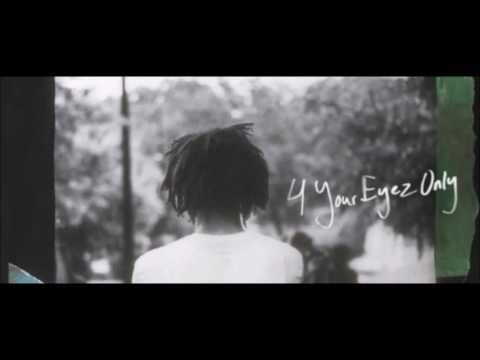
Album: 4 Your Eyez Only (2016)
Charted: 23
Play Video

Songfacts®:

  • Cole begins 4 Your Eyez Only with this slow, mournful jam, in which he describes his feelings of hopelessness and having nowhere to go.

    But what do you do when there's no place to turn?
    I have no one, I'm lonely, my bridges have burnt down
    Lord, Lord—
    The bells getting loud, ain't nowhere to hide


    Cole can't escape his depression. All he sees is "the bells getting loud," a reference to bells ringing at a funeral. Wrestling with suicidal thoughts, he asks further on in the verse, "Do I wanna die? I don't know."
  • The chilly instrumental was originally created by New Orleans native Elijah Scarlett. The NYU freshman came up with the beat one winter when he was struggling with the cold campus conditions. Dreamville president Ibrahim Hamad discovered the music on Soundcloud in January 2016 and reached out to the newcomer. Cole then added some horns, strings and background vocals.

    "I was pretty bummed out," Scarlett recalled to Genius about creating the beat." "It was kind of crazy because it feels like they really got the vibe down with all of the lyrics and the emotion of the song."

    "It's a lot prettier," Scarlett added of Cole's final version. "I thought they would probably change a bunch of stuff and it would kind of be a different thing but it was cool."
  • The title references Ernest Hemingway's 1940 novel For Whom the Bell Tolls. Hemingway wrote the book in Havana, Cuba; Key West, Florida; and Sun Valley, Idaho in 1939. The story was based on his experiences during the Spanish Civil War and tells the tale of a young American engaged in guerrilla warfare during that conflict.

    The novel dwells on the idea of death and suicide consistently looms throughout the story as an alternative to suffering.

    Hemingway got the book title from English metaphysical poet John Donne's 1624 work Meditation XVII. The line he quotes from reads: "And therefore never send to know for whom the bell tolls; It tolls for thee."
  • Ernest Miller Hemingway (July 21, 1899 – July 2, 1961) was an American novelist, short story writer, and journalist. His style of simple sentences attracted imitators and many of his works are considered classics of American literature. Other songs inspired by Ernest Hemingway include:

    "Mrs. Hemingway" by Mary Chapin Carpenter (about Hadley Richardson Hemingway, who was married to Ernest Hemingway between 1921 and 1927).

    "Hemingway's Whiskey" by Kenny Chesney (Pays tribute to living hard by name-checking the hard drinking, fast living Hemingway).

    "For Whom The Bell Tolls" by Metallica (The lyrics for this song about the futility of war are based on the Hemingway novel).

    "Toreador" by Band of Skulls (Inspired by Ernest Hemingway's book The Sun Also Rises).

    "Losing It" by Rush (The lyrics refer to Ernest Hemingway and his novels: The Sun Also Rises and For Whom the Bell Tolls).

Comments

Be the first to comment...

Editor's Picks

Brandi Carlile

Brandi CarlileSongwriter Interviews

As a 5-year-old, Brandi was writing lyrics to instrumental versions lullabies. She still puts her heart into her songs, including the one Elton John sings on.

Muhammad Ali: His Musical Legacy and the Songs he Inspired

Muhammad Ali: His Musical Legacy and the Songs he InspiredSong Writing

Before he was the champ, Ali released an album called I Am The Greatest!, but his musical influence is best heard in the songs he inspired.

Gary Brooker of Procol Harum

Gary Brooker of Procol HarumSongwriter Interviews

The lead singer and pianist for Procol Harum, Gary talks about finding the musical ideas to match the words.

Taylor Dayne

Taylor DayneSongwriter Interviews

Taylor talks about "The Machine" - the hits, the videos and Clive Davis.

Have Mercy! It's Wolfman Jack

Have Mercy! It's Wolfman JackSong Writing

The story of the legendary lupine DJ through the songs he inspired.

Black Sabbath

Black SabbathFact or Fiction

Dwarfs on stage with an oversize Stonehenge set? Dabbling in Satanism? Find out which Spinal Tap-moments were true for Black Sabbath.