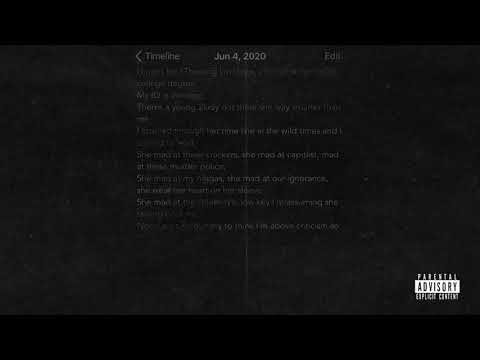
Snow On Tha Bluff

Album: single release only (2020)
Charted: 54
Play Video

Songfacts®:

  • Here, J. Cole delivers a single continuous verse that speaks on a range of topics including capitalism, celebrity culture, police brutality, wealth inequality, and racism.
  • Cole addresses the first part of the track to Chicago rapper and poet Noname, an outspoken political activist who has frequently stated her opposition to capitalism and celebrity culture. The lines are likely Cole's response after NoName called out top selling rappers for their social media silence amidst the protests following the killing of George Floyd. Without ever actually namedropping her, he praises the "young lady" for her intelligence but adds her methods may be less effective because of her "queen tone."
  • Lambasted on social media for his criticism of Noname, Cole responded on Twitter: "I stand behind every word of the song that dropped last night," he began. "Right or wrong I can't say, but I can say it was honest."

    Cole went on to praise Noname as a leader, saying, "She has done and is doing the reading and the listening and the learning on the path that she truly believes is the correct one for our people."

    He concluded: "I appreciate her and others like her because they challenge my beliefs and I feel that in these times that's important. We may not agree with each other, but we gotta be gentle with each other."
  • Cole has worked with Noname before. Both contributed uncredited vocals to Donnie Trumpet & The Social Experiment's 2015 track "Warm Enough."
  • Cole named the song after a 2011 movie Snow on tha Bluff, which tells the story of real life Atlanta robber and crack dealer Curtis Snow. The film's title refers to the protagonist, and to Atlanta's neighborhood The Bluff, which is infamous for crime and drug dealing. The motion picture's realistic drama documentary style gives the impression that the footage showing crimes being committed actually happened, but after investigation they were discovered to be fictional.

    But damn, why I feel faker than Snow on Tha Bluff?
    Well, maybe 'cause deep down I know I ain't doing enough


    Cole is wondering if there is some truth in Noname's criticism and worries that like the titular movie he is a fake. His songs like "Neighbors" discuss African-American plight, and many of his fans see him as a voice of his generation, but the rapper feels he has come up short in supporting the Black Lives Matter movement.

    Cole may be a bit hard on himself as he did take an active role in the protests in his hometown of Fayetteville, North Carolina.
  • J Cole self-produced the dreamy track with Kelvin Wooten (Anthony Hamilton's "Cool," Jill Scott's "So In Love").
  • Noname dropped an answer song called "Song 33" two days after "Snow" was released. On that track, she attacks Cole for focusing on her instead of more relevant topics.

Comments

Be the first to comment...

Editor's Picks

Chris Tomlin

Chris TomlinSongwriter Interviews

The king of Christian worship music explains talks about writing songs for troubled times.

John Kay of Steppenwolf

John Kay of SteppenwolfSongwriter Interviews

Steppenwolf frontman John Kay talks about "Magic Carpet Ride," "Born To Be Wild," and what he values more than awards and accolades.

Martyn Ware of Heaven 17

Martyn Ware of Heaven 17Songwriter Interviews

Martyn talks about producing Tina Turner, some Heaven 17 hits, and his work with the British Electric Foundation.

Sugarland

SugarlandSongwriter Interviews

Meet the "sassy basket" with the biggest voice in country music.

Song Titles That Inspired Movies

Song Titles That Inspired MoviesSong Writing

Famous songs that lent their titles - and in some cases storylines - to movies.

Director Paul Rachman on "Hunger Strike," "Man in the Box," Kiss

Director Paul Rachman on "Hunger Strike," "Man in the Box," KissSong Writing

After cutting his teeth on hardcore punk videos, Paul defined the grunge look with his work on "Hunger Strike" and "Man in the Box."