This teenage tragedy song tells the story of a young couple who are out on a date when their car crashes. The driver - the guy - blacks out. When he comes to, he holds the girl in his arms and gives her one last kiss before she dies. He knows she's in heaven, so he's doing his best to be good so he can see her again someday.
The song was written and
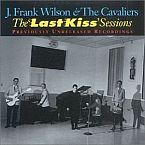
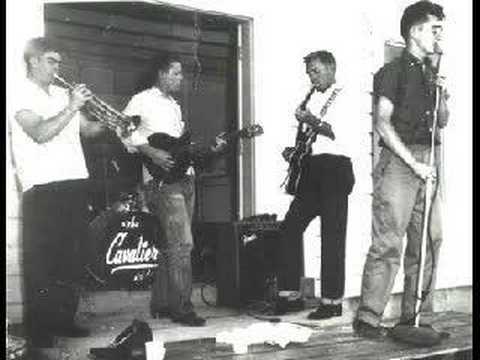
originally recorded by a Georgia singer named Wayne Cochran, who released his version in 1961. It was a local hit in Georgia, which prompted a Texas record company to record it with J. Frank Wilson & The Cavaliers and release it nationally in 1964. This version was a hit, rising to #2, held off by The Supremes' "
Baby Love."
Wayne Cochran, who wrote this song, lived on Route 1941 in Georgia, a busy road with lots of accidents. All the crashes he saw inspired his lyric.
When J. Frank Wilson & The Cavaliers turned this song into a hit, Wayne Cochran got some press attention and embellished a bit, claiming it was based on a tragic accident about 15 miles from his home.
The story is real. It happened when five teenagers were riding in a 1954 Chevy on Highway 341 in rural Barnesville, Georgia. The driver was J.L Hancock, a 16-year-old who was dating Jeanette Clark, also 16 and riding in the front seat next to him. Beside her was Wayne Cooper; two other passengers, Jewel Emerson and Ed Shockley, were in the back seat.
It was foggy, and by the time Hancock saw a flatbed truck stalled on the highway, it was too late. He crashed into it, going under the truck and killing everyone in the front seat; the two passengers in the back survived with serious injuries.
Cochran said the intense emotional response from the community fueled his lyric, but that accident took place on December 22, 1962, well after he released the song. It did make a great story and wasn't easy to fact check back then.
Cochran named the song "Last Kiss" because it was the dramatic high point of the song, and also because there was a song out by Floyd Cramer called "Last Date."
Copies of Cochran's original version were sold out of the trunks of cars; Major Bill Smith (producer of "Hey Paula" by Paul and Paula) bought a copy and persuaded J. Frank Wilson & the Cavaliers to cover it.
Cochran went on to have limited success in the Miami area playing Rhythm & Blues with his band Wayne Cochran And The C.C. Riders. He wrote "Going Back To Miami," which was featured on the Blues Brothers live album. The bass player for Wayne Cochran and the C.C. Riders was Jaco Pastorius, who went on to revolutionize the electric bass.
>>
Suggestion credit:
Rick - Wanganui, New Zealand and Steve - Cincinnati, OH
In 1973, this was revived in Canada by the group Wednesday. Their version went to #1 there and earned several Juno nominations, and an RPM award foroutstanding record sales in Canada. It also was released in the US the same year, selling over 200,000 copies.
>>
Suggestion credit:
Brad Wind - Miami, FL, for above 3
Pearl Jam introduced "Last Kiss" to a new audience when they
released it as a single in 1999. Their version also went to #2 and became the biggest chart hit of their storied career.
The band's producer, Son Roush, subsequently split the group to place lead singer J. Frank Wilson with better musicians. Four months after the release of this song, the new band were touring in Ohio. At about 5:15 a.m., Roush apparently fell asleep at the wheel. The car drifted left of center and rammed head-on into a trailer truck. Roush was killed instantly. Wilson survived with a few broken ribs and a broken ankle, but went right on with the tour, taking only a week off. People still remember him coming out on the stage on crutches to sing "Last Kiss" and "Hey, Little One." The second accident is what pushed this song to #2 on the national charts.
J. Frank Wilson & the Cavaliers never again cracked the Top 40. Wilson later retired from music and went to work in a nursing home. He died in 1991 at 49.