For Everyman

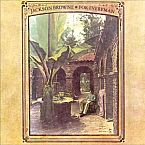
Album: For Everyman (1973)
Play Video

Songfacts®:

  • Jackson Browne spent a lot of time hanging out with famous friends in Southern California (one of whom played a big part in this song), but he stayed remarkably grounded, which served him well as a songwriter. In "For Everyman," he looked at how we as a society were changing, and what we shared together. He told the story behind it in Rolling Stone: "I remember being in Glenn [Frey] and Don Henley's apartment one night. The guy next door was playing this Grand Funk Railroad song, 'Get It Together.' I was thinking, 'Get what together?' That's what 'For Everyman' was.

    I wanted to delve into it more - to say what was lacking, what needed to be improved. It's about the expectations we had, all the changes in the '60s that had burned out by 1972, '73. It's meant to be an expression of the search for connection with others, for common purpose. Those concepts are so iffy. But you have to be willing to express your doubt, then find that inner resolve - that decision in yourself to try."
  • David Crosby sings harmony vocals on this song and played a big part in its inspiration. Browne explained in a radio interview:

    "A song like that had the potential to answer questions for myself. I was also very influenced by David Crosby. David had a boat and I was staying with him for a while on his boat. They would always talk about this trip they were going to make. They were going to go off to the South Pacific where you could still find islands there uninhabited, and I just thought it was really fatuous. It was too facile. It was like, 'Oh, we're gonna go off and live in the way we want to live and you will never see us again.' It was like, Neverland - too Peter Pan for me.

    Plus, I live on this boat with Crosby, but when we would drive through the city to the studio he's working in, you'd drive through the Divisadero and the Haight and you thought, 'What about all these people? Where are these people going to go?' Well, to be perfectly honest, I didn't have that confrontative dialogue with David because I wouldn't have butted into their little smoky dreams of utopia and brought them down. It's not in me to do that. But that's my way of bringing it up to myself and having the dialogue happen in a song. So that's really what 'For Everyman' is. It's an argument with myself about whether or not it's OK to go off and sail into the sunset into some dream world."
  • Running 6:20, "For Everyman" is the last song and title track to Jackson Browne's second album. He produced it himself, bringing in top musicians from the West Coast to play on it. The credits read:

    Mike Utley – Hammond organ
    Craig Doerge – acoustic piano
    David Lindley - guitar
    Leland Sklar - bass
    Russ Kunkel - drums

Comments

Be the first to comment...

Editor's Picks

Stephen Christian of Anberlin

Stephen Christian of AnberlinSongwriter Interviews

The lead singer/lyricist for Anberlin breaks down "Impossible" and covers some tracks from their 2012 album Vital.

Emilio Castillo from Tower of Power

Emilio Castillo from Tower of PowerSongwriter Interviews

Emilio talks about what it's like to write and perform with the Tower of Power horns, and why every struggling band should have a friend like Huey Lewis.

Art Alexakis of Everclear

Art Alexakis of EverclearSongwriter Interviews

The lead singer of Everclear, Art is also their primary songwriter.

Graham Bonnet (Alcatrazz, Rainbow)

Graham Bonnet (Alcatrazz, Rainbow)Songwriter Interviews

Yngwie Malmsteen and Steve Vai were two of Graham's co-writers for some '80s rock classics.

They Might Be Giants

They Might Be GiantsSongwriter Interviews

Who writes a song about a name they found in a phone book? That's just one of the everyday things these guys find to sing about. Anything in their field of vision or general scope of knowledge is fair game. If you cross paths with them, so are you.

Who's Johnny, And Why Does He Show Up In So Many Songs

Who's Johnny, And Why Does He Show Up In So Many SongsSong Writing

For songwriters, Johnny represents the American man. He has been angry, cool, magic, a rebel and, of course, marching home.