Get Up Offa That Thing

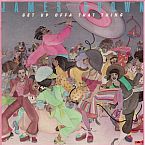
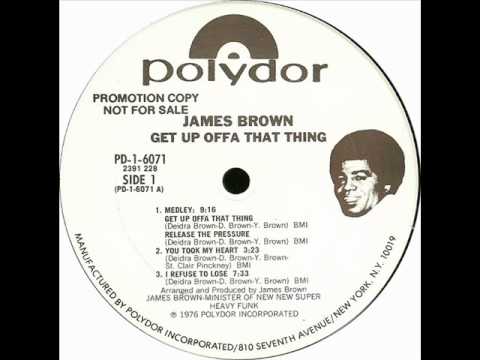
Album: Get Up Offa That Thing (1976)
Charted: 45
Play Video

Songfacts®:

  • Funk isn't just meant to be heard, it's meant to be experienced, and no one knows that better than James Brown, who wrote "Get Up Offa That Thing" to rouse an uninspired crowd at a Fort Lauderdale club. "The audience was sitting down, trying to do a sophisticated thing, listening to funk," he recalled in the 2014 biography James Brown: The Godfather Of Soul. "One of the tightest bands they'd ever heard in their lives, and they were sitting. I had worked hard and dehydrated myself and was feeling depressed. I looked out at all those people sitting there, and because I was depressed they looked depressed. I yelled, 'Get up offa that thing and dance til you feel better!' I probably meant until I felt better."
  • Brown, who owed millions in back taxes, didn't want his royalties to go to the IRS, so he gave the songwriting credit to his wife Deidre and daughters Deanna and Yamma.
  • This peaked at #4 on the R&B chart.
  • Brown performed this in the 1983 movie Doctor Detroit, about a mild-mannered professor (Dan Aykroyd) with a dangerous alter ego. Brown also re-recorded the tune for the soundtrack.
  • Hollie Farris, a trumpet player from Nashville, had just joined Brown's backing band and was shocked by Brown's method of laying down a track when he came into the studio to record "Get Up Offa That Thing." Multitrack recording had become the status quo, which involves recording instruments separately and piecing together the best performances. But Brown favored the energy of live studio takes. To Farris' dismay, he gave all the musicians their orders and started rolling the tape before any of them had ever practiced the tune. They recorded just two takes, and Brown went with the first version. "He didn't care if it had 'mistakes,'" Farris told biographer RJ Smith (The One: The Life and Music of James Brown). "All he cared about was the feel. If the song felt good, that was his song."
  • In the 1993 movie Sister Act 2: Back in the Habit, Whoopi Goldberg leads the nuns in a mash-up performance of this and "Dancing In the Street." It was also used in these movies:

    Harriet the Spy (1996)
    Muppets From Space (1999)
    Black Knight (2001)
    What A Girl Wants (2003) - sung by Oliver James
    Robots (2005) - Fender (Robin Williams) calls Rodney Copperbottom's (Ewan McGregor) questionable performance "a fusion of jazz and funk - it's called junk."
    Fish Tank (2009)
    Shaft (2019)

    And in these TV shows:

    Scandal ("First Lady Sings The Blues" - 2015)
    The Wonder Years ("Soccer" - 1991)
  • This also appears on several of Brown's live albums, including Hot On The One (1980), Live In New York (1981), Live At Chastain Park (1985), and Live At The Apollo 1995.
  • This was used in a 2012 Super Bowl commercial for the Volkswagen Beetle. In the ad, titled "Dog Strikes Back," a portly dog gets into shape so he can chase after the car.

Comments

Be the first to comment...

Editor's Picks

Chris Fehn of Slipknot

Chris Fehn of SlipknotSongwriter Interviews

A drummer for one of the most successful metal bands of the last decade, Chris talks about what it's like writing and performing with Slipknot. Metal-neck is a factor.

Todd Rundgren

Todd RundgrenSongwriter Interviews

Todd Rundgren explains why he avoids "Hello It's Me," and what it was like producing Meat Loaf's Bat Out of Hell album.

Steve Cropper (Booker T & the MG's, Blues Brothers)

Steve Cropper (Booker T & the MG's, Blues Brothers)Songwriter Interviews

Steve Cropper on the making of "In the Midnight Hour," the chicken-wire scene in The Blues Brothers, and his 2021 album, Fire It Up.

Corey Hart

Corey HartSongwriter Interviews

The Canadian superstar talks about his sudden rise to fame, and tells the stories behind his hits "Sunglasses At Night," "Boy In The Box" and "Never Surrender."

Have Mercy! It's Wolfman Jack

Have Mercy! It's Wolfman JackSong Writing

The story of the legendary lupine DJ through the songs he inspired.
Producer Ron Nevison

Producer Ron NevisonSong Writing

Ron Nevison explains in very clear terms the Quadrophenia concept and how Heart staged their resurgence after being dropped by their record company.